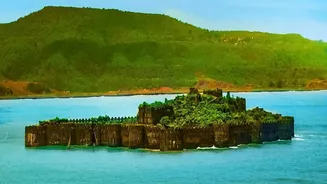


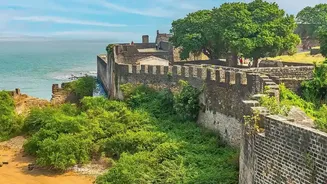


The salty spray of the Arabian Sea mists your face as the small sailboat approaches the colossal stone walls rising from the water. This is the timeless arrival at one of Maharashtra’s formidable sea forts, gateways to a storied maritime past.
An Unconquered Marvel: Murud-Janjira
Among the
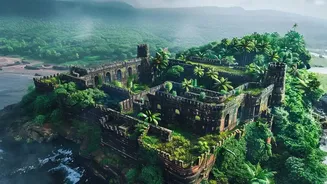
many sentinels lining the Konkan coast, Murud-Janjira stands out as a testament to strategic brilliance and enduring strength. Located off the coast of Murud village, this fortress is famed for being unconquered throughout its history, repelling attacks from Maratha, Portuguese, and British forces. Originally a wooden structure built by Koli fishermen in the 15th century to defend against pirates, it was later fortified into a stone bastion by Malik Ambar of the Ahmadnagar Sultanate. Its 19 imposing bastions, still armed with ancient cannons, and a cleverly concealed main entrance made it a nearly impregnable stronghold. The journey to the fort itself, via a sailboat from the Rajapuri jetty, is part of the experience, offering visitors a glimpse of the tactical challenges faced by would-be invaders centuries ago.
The Rise of the Heritage Traveller
The growing fascination with forts like Murud-Janjira is driven by a new kind of tourist: the heritage traveller. This discerning visitor seeks more than just a picturesque holiday. They are on a quest for authentic experiences that connect them to India's rich history, culture, and traditions. According to industry surveys, a significant majority of Indian travellers are now more likely to visit a place of heritage to better understand their roots. For them, a vacation is not just an escape but an immersive journey into the stories and legacies that have shaped the country. They want to walk through ruins and understand their significance, bridging the gap between the past and the present.
More Than Just Stone and Mortar
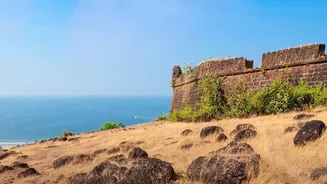
What makes these coastal forts so compelling for heritage enthusiasts? The appeal lies in their multi-layered offerings. Architecturally, they are marvels of 17th-century engineering, with massive walls designed to withstand both enemy cannons and the relentless tides. Beyond the structure, it is the stories of valour, strategy, and resilience that captivate visitors. Exploring the labyrinthine passages, the remains of palaces, and the freshwater lakes surprisingly found within these sea-bound structures offers a tangible connection to the past. For instance, Sindhudurg Fort, built by Chhatrapati Shivaji Maharaj, even houses a temple dedicated to the Maratha king and preserves his handprint and footprint, turning the site into a place of reverence.
A String of Coastal Sentinels
While Murudrdndunjira and Sindhudurg are among the most famous, they are part of a larger network of nearly 400 forts scattered across Maharashtra. The Konkan coastline is dotted with other significant marine fortifications, each with a unique story. There is the Vijaydurg Fort, one of the oldest on the coast, which is surrounded by the sea on three sides. Suvarnadurg was a key site for naval construction, while Kolaba Fort near Alibag remains a popular tourist destination. This 'Maratha Military Landscape', a series of 12 forts, was even India's nomination for the UNESCO World Heritage list, highlighting their collective historical and cultural importance.
Preserving the Past for the Future
The increasing footfall at these sites brings both opportunity and responsibility. Heritage tourism generates economic activity for local communities and can fund conservation efforts. However, it also puts pressure on these centuries old structures. Recognizing their value state authorities have initiated efforts to protect these forts from encroachment and ensure their preservation for future generations. For the heritage traveller a visit is not just about personal discovery but also about participating even indirectly in the conservation of this invaluable legacy. These forts are not merely relics they are living history and their survival depends on a balance between access and preservation.