


What Is the Harvest Moon?
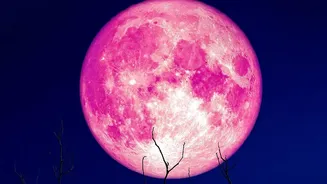
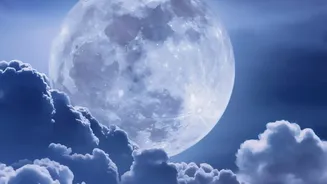
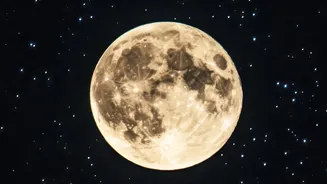
The Harvest Moon is not a different type of moon, but a name given to the full moon that occurs closest to the autumnal equinox, which marks the start of autumn in the Northern Hemisphere. The name has practical origins, dating back to a time before electricity.
For several nights around its peak, the moon rises very soon after sunset. This provided farmers with an abundance of bright moonlight, allowing them to work late into the evening to gather their crops. This period of extended natural light was crucial for bringing in the harvest before the onset of winter. While every month has a full moon with its own name, such as the 'Corn Moon' or 'Sturgeon Moon', the title of 'Harvest Moon' is given to whichever full moon falls nearest to the equinox, which can be in September or October.
When and Where to Look in India
For skywatchers in India, the 2026 Harvest Moon will reach its peak illumination on the night of Saturday, September 26. The exact time of peak fullness will be 10:19 PM IST. To see it, you simply need to look towards the eastern horizon around sunset. The moon will appear full and bright for the entire night, from dusk on September 26 until dawn on September 27. While the peak is at a specific time, the moon will look impressively full on the nights just before and after this date as well. For an added celestial treat, the planet Saturn will also be visible, appearing near the lunar disk shortly after moonrise. You won't need any special equipment to spot the Harvest Moon, but checking a local weather forecast for clear skies is always a good idea.
The 'Harvest Moon Effect' Explained
One of the most special things about the Harvest Moon is the 'Harvest Moon effect'. Usually, the moon rises about 50 minutes later each night. However, around the time of the autumnal equinox, this time difference shrinks significantly. The moon can rise as little as 20 to 25 minutes later for several consecutive nights. This happens because the moon's orbital path makes a narrow angle with the horizon at this time of year. The result is a series of bright, moonlit evenings, which gives the illusion of having several full moons in a row. This reliable burst of evening light is what made the Harvest Moon so valuable to agricultural societies.
Why It Looks Big and Orange
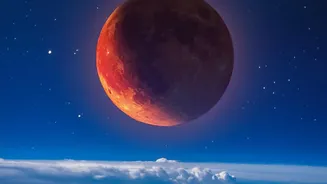
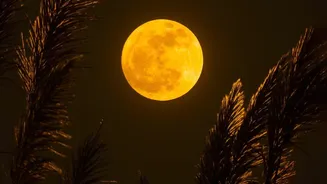
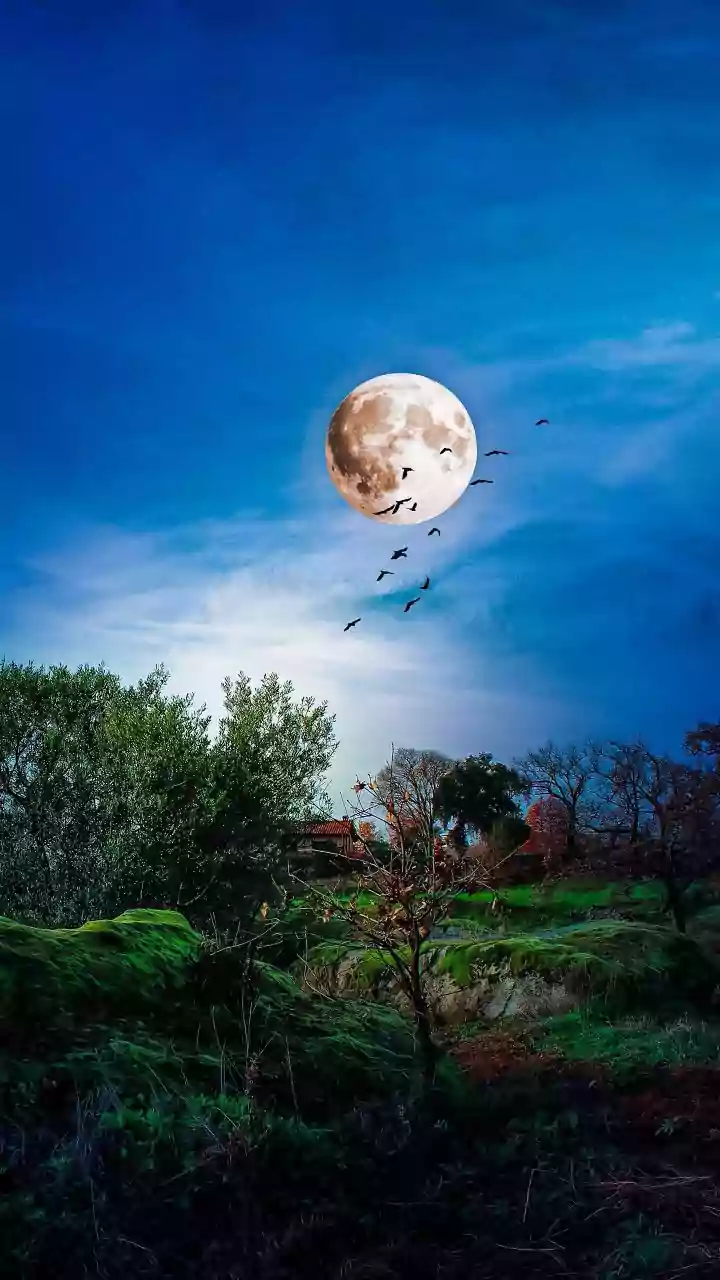
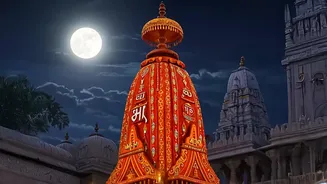
Many people notice that the Harvest Moon appears unusually large and vividly orange when it's near the horizon. The colour is a real physical effect. When the moon is low in the sky, its light travels through more of Earth's atmosphere to reach your eyes. The atmosphere scatters the shorter, blue wavelengths of light, allowing the longer, red and orange wavelengths to pass through, giving the moon a warm tint. The large size, however, is a fascinating trick of the mind known as the 'Moon Illusion'. The moon isn't physically bigger; it only appears so because your brain compares it to familiar objects on the horizon, like trees and buildings. When the moon is high in the sky with nothing to compare it to, it looks smaller. You can prove this by holding a small coin at arm's length to cover the moon—it will be the same size whether it's on the horizon or overhead.
Tips for the Best Viewing Experience
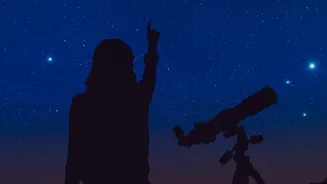
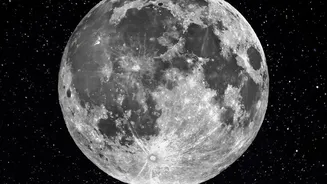
To make the most of the Harvest Moon, find a location with a clear view of the eastern horizon, away from the glare of city lights if possible. While the moon is beautiful to the naked eye, a pair of binoculars or a basic telescope can reveal stunning details on its surface. Because a full moon is so bright, there are no shadows, making it a great time to observe the difference between the dark lunar 'seas' (maria) and the lighter highlands. For those interested in photography, using a tripod is essential to keep your camera steady. The most dramatic photos are often captured just as the moon is rising above the horizon, where its colour is richest and you can frame it with foreground elements for a sense of scale. Above all, give your eyes a few minutes to adjust to the darkness to appreciate the full spectacle.