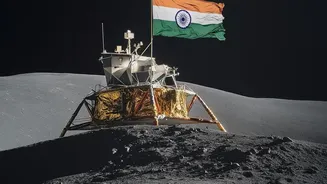








The Old vs. The New Space Race
For decades, a space career in India meant one thing: a coveted engineering or science position at the Indian Space Research Organisation (ISRO). The path was narrow, highly competitive, and focused primarily on traditional disciplines like aerospace
and mechanical engineering. While ISRO remains the backbone of India's space ambitions, the landscape has dramatically shifted since the sector was opened to private enterprise in 2020. Today, India’s space ecosystem is a buzzing hub of over 400 private companies, from rocket builders like Skyroot Aerospace and Agnikul Cosmos to satellite and data analytics firms like Pixxel. This privatisation has created a new kind of demand—one that values speed, versatility, and a much broader skill set than ever before.
Data is the New Rocket Fuel
Modern space exploration and commercialisation are built on data. This has made data analytics, artificial intelligence (AI), and machine learning (ML) some of the most critical skills for the new space age. Satellites now generate enormous volumes of data for everything from weather forecasting and agricultural monitoring to urban planning and defence. Companies need data scientists and analysts who can process this information and turn it into valuable insights. Furthermore, AI and ML are crucial for autonomous navigation, mission planning, and predictive maintenance of spacecraft. Even ISRO is increasingly leveraging AI in its missions. This means students with strong programming skills in Python, C++, and experience with data analysis pipelines are becoming as valuable as traditional engineers.
Beyond Engineering: The Ground Crew Expands
The growth of the space industry isn't just creating jobs for techies. As the sector commercialises, it requires a robust support system of non-technical experts. The popular image of a space career describes only a tiny fraction of the actual jobs available. With hundreds of startups navigating funding, regulations, and international partnerships, there is a growing need for professionals in business development, finance, and project management. The establishment of IN-SPACe, the regulatory body for the private space sector, highlights the importance of policy and governance. This has opened doors for experts in space law, who are needed to handle contracts, intellectual property, and international space treaties. The modern space ecosystem is a complex business, creating opportunities for students from management, law, and social science backgrounds who develop domain knowledge.
The Startup Mindset: Agility and Ownership
Working for a space startup is fundamentally different from a role in a large government agency. Companies like Skyroot and Agnikul are known for their fast-paced environments where engineers are expected to be versatile and take ownership of projects from design to testing. These small, agile teams mean that individual contributions have a massive impact, and the learning curve is exceptionally steep. Startups are not just looking for academic credentials; they seek hands-on builders and problem-solvers. This is why internships are becoming a crucial pathway into the private space sector, often converting directly into full-time job offers. The culture demands a blend of deep technical knowledge with soft skills like teamwork and problem-solving.
Charting Your Cosmic Course
For students in school today, preparing for a future space career means building a multidisciplinary foundation. Strong fundamentals in physics and mathematics remain non-negotiable for technical roles. However, proficiency in computer science is now equally important across the board. Aspiring engineers should look beyond core disciplines and explore certifications in areas like remote sensing, GIS, and embedded systems. For those outside of engineering, courses in data analytics can provide a powerful entry point into the sector. Above all, the new space era rewards practical experience. Participating in university clubs, building small projects, and seeking out internships with private firms can provide the hands-on skills that make a candidate stand out in this dynamic and expanding field.