







The Workweek Wave
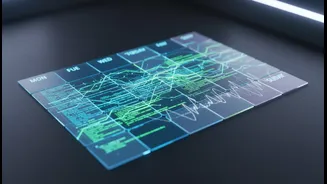
Recent studies from multiple sources, including AI company Anthropic and data firm Gener8, have uncovered a clear and consistent pattern: generative AI usage is not random. It ebbs and flows with the structure of our professional lives. Traffic on major
AI platforms like ChatGPT, Gemini, and Claude consistently peaks from Monday to Friday, with Mondays often being the busiest day as people kick off their week with planning, research, and content creation. From Tuesday through Thursday, activity remains high before tapering off on Friday as the weekend approaches. The data shows a significant drop-off on weekends, with some analyses noting a decline in total visits by as much as 23%. This rhythm strongly suggests that, for a large number of users, AI has become a primary tool for getting work done.
AI as the New Digital Colleague
The data tells a story of AI being treated less like an ever-present oracle and more like a digital coworker. The peak usage hours on weekdays, typically between 8 a.m. and 2 p.m., align squarely with the core business day. The types of queries made during this time reinforce the connection to work. Tasks like writing code, summarizing documents, drafting emails, and performing research dominate weekday interactions. This trend shows a shift from early experimentation with AI towards deep integration into professional workflows. Businesses are moving beyond pilot programs and are now embedding AI into core processes, from software development to marketing and financial reporting.
The After-Hours Productivity Spike
While the 9-to-5 workday provides the main pulse, a secondary pattern reveals the changing nature of work itself. Researchers have identified a notable late-night spike in AI usage during the week. This reflects what some call the “infinite workday,” where professionals use AI to catch up on tasks or explore new ideas long after traditional office hours. This after-hours engagement points to AI's role in a new rhythm of constant, low-level work, with one study noting that nearly 30% of professionals check messages after 10 p.m. AI becomes the tool of choice for these moments, blurring the lines between work and personal time.
How Weekends Change the Conversation
When the workweek ends, our relationship with AI changes, but it doesn't disappear. While work-related queries decrease significantly, the nature of personal queries shifts and grows. On Saturdays and Sundays, requests related to hobbies, travel planning, emotional support, and personal finance tend to rise. One study found that personal conversation requests jump from about 35% of interactions on weekdays to nearly 50% on weekends. This reveals a dual role for AI: a productivity engine during the week and a personal advisor or companion during leisure time. Interestingly, some data suggests that younger users, aged 18-24, show a much smaller dip in weekend usage compared to their older counterparts, indicating a more integrated, always-on relationship with the technology.
What This Means for the Future
This predictable weekly cycle provides a valuable snapshot of how AI is being adopted in 2026. It's currently an essential productivity tool that mirrors established professional routines. However, the growing use of AI for personal tasks on weekends suggests a future where these tools become even more seamlessly integrated into all aspects of our lives. As AI models become more capable, multimodal, and agentic—able to perform multi-step tasks autonomously—these patterns will likely evolve. The distinction between a 'work AI' and a 'personal AI' may dissolve, leading to a more holistic, continuous interaction that follows the rhythm of our lives, not just our jobs.