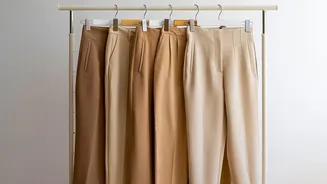







1. Conduct a Ruthless Closet Edit
Before you can build a functional wardrobe, you must understand what you already have. The first step is a thorough closet clean-out. Take everything out—yes, everything. Create distinct piles: keep, donate, sell, and repair. As you sort each item, be honest.
If you haven't worn it in over a year, if it doesn't fit properly, or if it makes you feel anything less than confident, it's time to let it go. Items that are overly worn, stained, or damaged should be discarded. This process is not just about decluttering; it's about making space for a wardrobe that truly serves your current lifestyle. Items with deep sentimental value that you don't wear can be stored safely elsewhere, freeing up prime real estate in your closet.
2. Define Your Personal Uniform
Your most-worn items offer valuable clues about your personal style. Identify the outfits you reach for repeatedly—the ones that feel comfortable and authentic. These combinations are your personal 'uniforms'. Most people's lives have a certain rhythm, split between work, home, and social activities. Aim to define a go-to uniform for each major part of your week. For example, your work uniform might be a tailored blazer with dark-wash jeans, while your weekend uniform could be a high-quality knit sweater and comfortable trousers. Having these reliable, pre-approved outfits acts as a safety net for busy mornings, eliminating decision fatigue and ensuring you always feel put-together.
3. Build a Core Capsule Wardrobe
A capsule wardrobe is a curated collection of versatile, high-quality essentials that can be mixed and matched to create numerous outfits. This isn't about extreme minimalism, but about building a strong foundation. Start with a clear color palette, typically two core neutral colors like black, navy, white, or beige, and then add one or two accent colors you love. Your capsule should include timeless pieces such as a crisp white shirt, a classic trench coat, a pair of well-fitting jeans, a simple black dress, and a neutral blazer. These foundational garments serve as the backbone of your closet, providing endless styling possibilities when paired with each other or with more trend-driven pieces.
4. Shop with Intention, Not Impulse
To maintain a curated wardrobe, you must change how you shop. Avoid impulse buys driven by sales or fleeting trends. Instead, shop with a specific list of needs or 'wardrobe gaps' you've identified. Before purchasing, pause and ask critical questions: Does this work with at least three other items I already own? Does it fit my lifestyle? Do I truly love it? Adopting a 'one in, one out' rule—where a new purchase requires you to donate or sell an existing item—can also help maintain balance. Another powerful mindset is to consider the 'cost per wear'. A more expensive, high-quality coat worn hundreds of times offers far better value than a cheap top worn only once. This reframes purchasing from a one-time expense to a longterm investment in your style.
5. Plan and Organize for Easy Access
A wellorganized closet makes getting dressed infinitely easier. Group like items together: hang all your blouses in one section, your trousers in another, and your dresses in a third. Many people also find it helpful to arrange items by color within each category. Your most frequently worn items should be front and center, while seasonal clothing like heavy winter coats or summer dresses can be stored in less accessible spots or underbed bins. To take the stress out of your mornings, try planning your outfits the night before. A simple closet valet rod or a designated hook where you can hang the next day's look can transform your routine, giving you back precious time and mental energy each day.