

A Historic Shift in the Skies
For over fifty years, the Indian Space Research Organisation (ISRO) was the sole custodian of India's space ambitions, earning a global reputation for cost-effective and successful missions. While ISRO developed a robust supply chain of over 500 private
enterprises for components, the sector remained government-led. This paradigm shifted dramatically in June 2020, when the government unlocked the space sector for private participation. This reform led to the creation of the Indian National Space Promotion and Authorisation Centre (IN-SPACe), a single-window agency designed to promote, authorise, and supervise private space activities. By enabling private companies to use ISRO’s world-class infrastructure and facilities, the policy has ignited an unprecedented boom in innovation and investment.
The Trailblazers: Meet the Startups
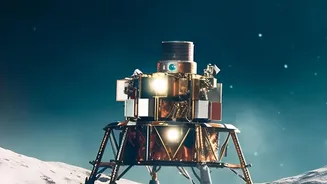
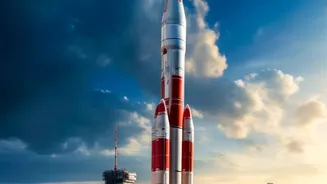
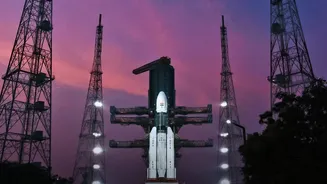
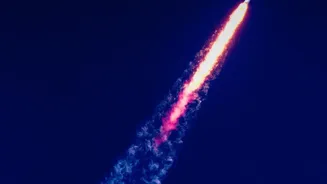
From just a handful six years ago, India is now home to over 400 space startups. Leading the charge is Skyroot Aerospace, which made history in July 2026 with the successful launch of Vikram-1, India’s first privately developed orbital rocket. This milestone made India only the third country, after the US and China, to have a private company achieve orbital launch capability. Another key player, Agnikul Cosmos, is pioneering 3D-printed rocket engines and has established its own private launchpad. These companies are focused on building launch vehicles to deploy small satellites, a market with immense global demand. Their success proves that private Indian firms are no longer just component suppliers but independent innovators.
More Than Just Rockets
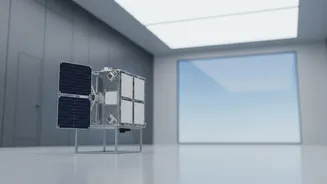
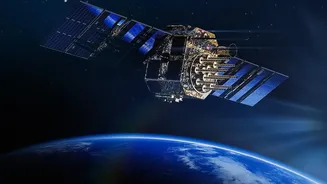
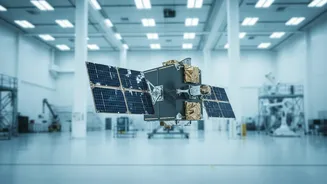
While launch vehicles grab headlines, the new space race extends across the entire value chain. Pixxel is building a constellation of hyperspectral imaging satellites that can monitor Earth in unprecedented detail, tracking everything from crop health to pollution. Hyderabad-based Dhruva Space provides end-to-end satellite solutions, from manufacturing small satellites to ground station services. Meanwhile, companies like Bellatrix Aerospace are developing advanced in-space propulsion systems, including 'space taxis' to move satellites between orbits. GalaxEye recently launched India's largest private Earth-watching satellite, which combines optical and radar sensors to see through clouds and darkness, a first-of-its-kind technology. These ventures highlight the diverse opportunities being unlocked, from data analytics to in-orbit services.
Fueling the Race: Policy and Investment
The rapid growth is underpinned by strong policy support and surging investment. The Indian Space Policy 2023 clearly delineates the roles of ISRO (R&D), NewSpace India Limited (NSIL) (commercialisation), and IN-SPACe (regulation), creating a stable ecosystem. This clarity has boosted investor confidence. The government has liberalised foreign direct investment (FDI) norms and established a dedicated venture capital fund to inject early-stage capital into promising startups. As a result, Indian space startups have attracted hundreds of millions of dollars in funding. This public-private partnership model frees up ISRO to focus on deep-space exploration and strategic national missions, while private players drive the commercialisation of space.
The Road Ahead: Challenges and Opportunities
The future looks bright, but the path is not without challenges. These startups face intense global competition, and scaling production from prototypes to reliable commercial services is a significant hurdle. However, the opportunity is immense. India's space economy, currently valued at around $8.4 billion, is projected to grow five-fold to over $40 billion by 2030, with ambitions to capture a larger share of the global market. By combining ISRO's legacy of cost-effectiveness with the agility and innovation of the private sector, India is well-positioned to become a dominant force in the global space economy. This new era is not just about building rockets; it's about building a robust, self-reliant, and commercially vibrant space ecosystem for the future.