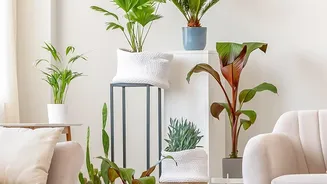






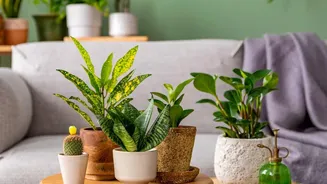
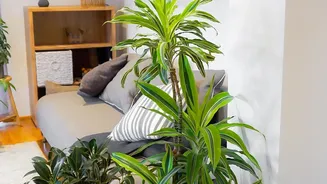
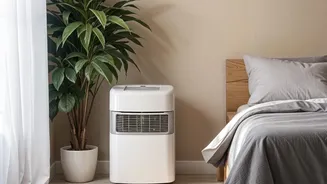
The idea of a lush, green houseplant quietly scrubbing your air clean is a beautiful one. But how does this natural solution stack up against a purpose-built machine? We're breaking down the science to see which is truly better for your home.
The Green Dream and the NASA Study
The belief
that houseplants are effective air purifiers stems largely from a landmark 1989 NASA study. Researchers, looking for ways to clean the air in sealed space stations, placed plants in small, airtight chambers and found they effectively removed harmful chemicals known as volatile organic compounds (VOCs). These VOCs, like benzene and formaldehyde, are common in homes, off-gassing from furniture, paints, and cleaning products. The study was scientifically sound and sparked a decades-long trend of promoting plants like snake plants and peace lilies as natural air filters. The appeal is obvious: a beautiful, living object that also improves your health. But the problem arises when we take those lab results and apply them to a real home.
A Reality Check on Plant Power
The NASA study's conditions—a small, sealed box—are nothing like your living room, which has constant air exchange from drafts, open windows, and ventilation systems. A 2019 review of decades of research concluded that in a normal home environment, the air cleaning effect of houseplants is negligible. The studies found that a building’s natural ventilation already removes pollutants far faster than a few plants can. To match the cleaning power of a building's typical air exchange rate, you would need an impractically large number of plants—somewhere between 10 and 1,000 plants per square meter. That would turn your living room into a dense jungle. While plants do absorb some VOCs, they are simply too slow to make a meaningful difference in a dynamic home environment. Furthermore, they can sometimes introduce allergens like pollen or mold from damp soil.
Enter the Machine: How Air Purifiers Work
Unlike plants, which are passive, air purifiers are engineered specifically to clean air at high volumes. Most quality purifiers use a combination of filters to do the job. A High-Efficiency Particulate Air (HEPA) filter is the industry standard, designed to capture 99.97% of airborne particles down to 0.3 microns in size. This includes common irritants that plants can't handle, such as dust, pollen, pet dander, and smoke particles. Many purifiers also include an activated carbon filter, which is crucial for adsorbing the very VOCs and odours that the original NASA plant study focused on. By actively pulling in large volumes of air and forcing it through these fine filters, a purifier can clean the entire volume of air in a room multiple times per hour.
What 'Clean Air Delivery' Really Means
This is where Clean Air Delivery Rate, or CADR, comes in. CADR is a performance metric that tells you how much clean air a purifier delivers in a specific amount of time, usually measured in cubic feet per minute (CFM) or cubic metres per hour (m³/h). Think of it as the horsepower of an air purifier. A higher CADR number means the unit can clean the air in a larger room more quickly. The rating is independently tested and broken down into three categories based on particle size: smoke (the smallest), dust (medium), and pollen (the largest). This allows you to compare the performance of different models on a level playing field. As a general rule, the CADR rating for smoke should be at least two-thirds of your room's area in square feet. This ensures the purifier is powerful enough to effectively cycle the air and reduce pollutant levels.
The Verdict: Different Tools for Different Jobs
When it comes to the raw performance of removing airborne pollutants, there is no contest: a properly sized air purifier is thousands of times more effective than houseplants. For anyone concerned about allergies, asthma, dust, or smoke, a purifier with a HEPA filter is the only practical and effective solution. However, this doesn't mean you should throw your plants out. Houseplants offer proven psychological benefits, reduce stress, and can add a small amount of humidity to dry indoor air. They are wonderful for aesthetics and creating a calming environment. The best approach is to see them not as competitors, but as complementary elements. Use an air purifier for the heavy lifting of cleaning the air, and keep your houseplants for the joy, beauty, and connection to nature they bring to your space.