




The Science of a Soggy Salad
The culprit behind a wilted salad is a simple process called osmosis. Plant cells, like those in lettuce leaves, are full of water, which creates turgor pressure that keeps them firm and crisp. Salad dressings, especially those containing salt and vinegar
(acid), have a higher concentration of solutes than the water inside the leaf cells. When the dressing coats the leaves, it draws water out of the cells in an attempt to balance the concentration. This loss of water leads to a drop in turgor pressure, causing the leaves to become limp, soft, and wilted. The heavier and saltier the dressing, the faster this process occurs.
Know Your Greens
Not all greens are created equal. Their structure determines how well they stand up to dressings. Delicate greens like butter lettuce, spring mix, baby spinach, and rocket have soft leaves that wilt very easily. They are best paired with light vinaigrettes. Sturdier greens such as romaine, iceberg, kale, and cabbage have more robust, crunchy leaves that can handle heavier, creamier dressings like a Caesar or ranch. Tougher greens like kale can even benefit from being massaged with an acidic dressing, which helps to break down their fibres and make them more tender.
The Dressing Divide: Light vs. Heavy
Salad dressings generally fall into two categories: vinaigrettes and creamy dressings. Vinaigrettes are typically a mix of oil and an acid like vinegar or lemon juice, often held together by an emulsifier like mustard. They are lighter and ideal for delicate leaves. Creamy dressings, on the other hand, are based on mayonnaise, yoghurt, or sour cream, making them much thicker and heavier. While delicious, these are the primary offenders when it comes to flattening fragile greens. When in doubt, always opt for a lighter dressing if you're working with tender leaves.
Timing Is Everything
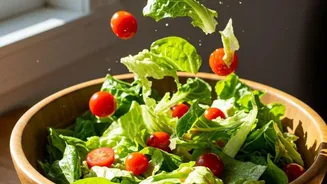
This is perhaps the most critical rule of salad making: dress your salad immediately before you serve it. Letting greens sit in dressing for even a few minutes can start the wilting process. If you're preparing for a party, you can get everything ready ahead of time, but keep the dressing and the greens separate until the very last moment. One professional trick is to pour the dressing into the bottom of the salad bowl, place the dry greens on top without mixing, and then toss everything together just as your guests are sitting down.
Master the Art of the Toss
How you dress the salad is as important as when. First, ensure your leaves are completely dry; water left on the greens will repel oil-based dressings and lead to a bland, unevenly coated salad. A salad spinner is your best friend here. Use a bowl that is much larger than you think you need; this gives you room to toss without crushing the leaves or spilling. Add the dressing slowly, starting with less than you think you need. Drizzle it down the sides of the bowl instead of directly onto the greens. Then, use your hands or a pair of tongs to gently lift and fold the greens, ensuring every leaf gets a light, even coating. The goal is for the leaves to glisten, not swim.
How to Revive Wilted Greens
If you find yourself with slightly wilted greens, don't despair. You can often bring them back to life. Prepare a large bowl of ice water. Submerge the limp leaves completely and let them soak for about 30 minutes. The cells will reabsorb water through osmosis, restoring their crispness. After their ice bath, be sure to dry the greens thoroughly before using them. This trick works best for whole leaves or heads of lettuce that have lost their pep in the fridge, but it won’t save a salad that has already been dressed.