
The Unmistakable Evening Star
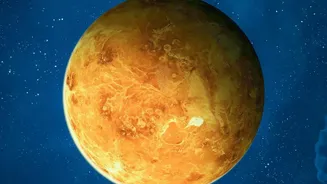
Often mistaken for a bright star or even an airplane, Venus has captivated skywatchers for centuries. It has been called the 'Evening Star' when it appears after sunset and the 'Morning Star' when it rises before dawn. What makes Venus so brilliantly
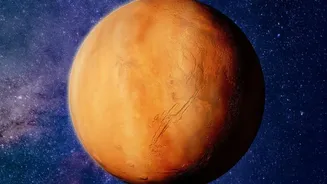
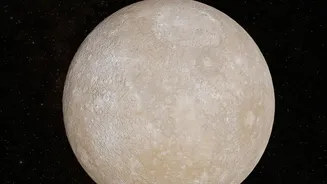
bright? It is not just that it is our closest planetary neighbour. Venus is shrouded in a thick layer of highly reflective clouds that bounce about 70% of the sunlight that hits them back into space. This incredible reflectivity, or albedo, makes it outshine every other star or planet in our sky. Unlike stars, which twinkle, Venus shines with a steady, serene, and silvery light, making it an easy target for even the most novice stargazer.
When and Where to Look in August 2026
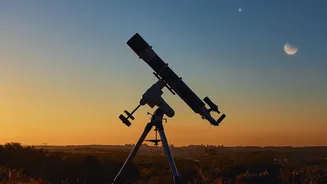
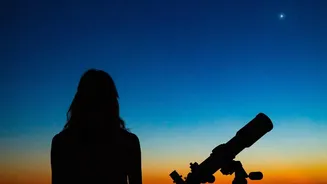
Timing and direction are everything in skywatching. For the entire month of August 2026, Venus will be the dazzling gem of the early evening sky. The best time to look is shortly after sunset. As the colours of dusk begin to fade, Venus will pop into view before any other stars. Your target direction is the west-southwest, the same direction where the sun just set. Throughout August, you can’t miss it; it will be a dominating, super-bright point of light low on the horizon. You do not need to wait for complete darkness. In fact, Venus is so bright it can often be seen in the deep blue of twilight. Around mid-August, on the 15th, you might even spot a slender crescent Moon near Venus, making for a beautiful celestial pairing.
A Simple Step-by-Step Viewing Guide
Finding Venus requires no special equipment, just your eyes and a little patience. First, find a viewing spot with a clear, unobstructed view of the western horizon. This could be a balcony, a rooftop, a local park, or any place away from the direct glare of tall buildings and streetlights. About 30 to 45 minutes after the sun has officially set, turn your gaze to the west. Scan the horizon for the brightest point of light there; that will be Venus. It shines so brightly that you will have no doubt once you spot it. Stay and watch for a while. As the sky grows darker, other stars will begin to emerge. You may notice the bright star Spica, in the constellation Virgo, appearing near Venus throughout the month.
Enhancing Your Experience
While Venus is stunning to the naked eye, a simple pair of binoculars can make the experience even more rewarding. Through binoculars, you will see that Venus is not just a point of light but a tiny disk. Depending on the day in August, you may even be able to discern its phase, similar to how the Moon has phases. During August 2026, Venus will appear as a thick crescent through a telescope. For those in India, another major celestial event this month is the Perseid meteor shower, which peaks around August 12-13. While the monsoon clouds can be a challenge, if you find yourself under clear skies away from city lights, you might be treated to shooting stars as a bonus to your Venus-gazing. Using a free stargazing app on your phone, like Star Walk or Stellarium, can also help you identify Venus, Spica, and any other constellations that are out.