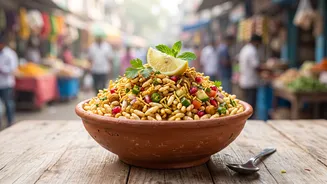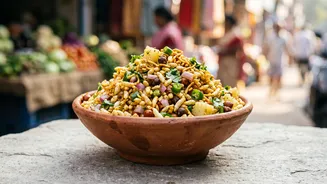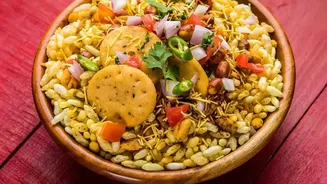




The Foundation: Perfectly Puffed Rice
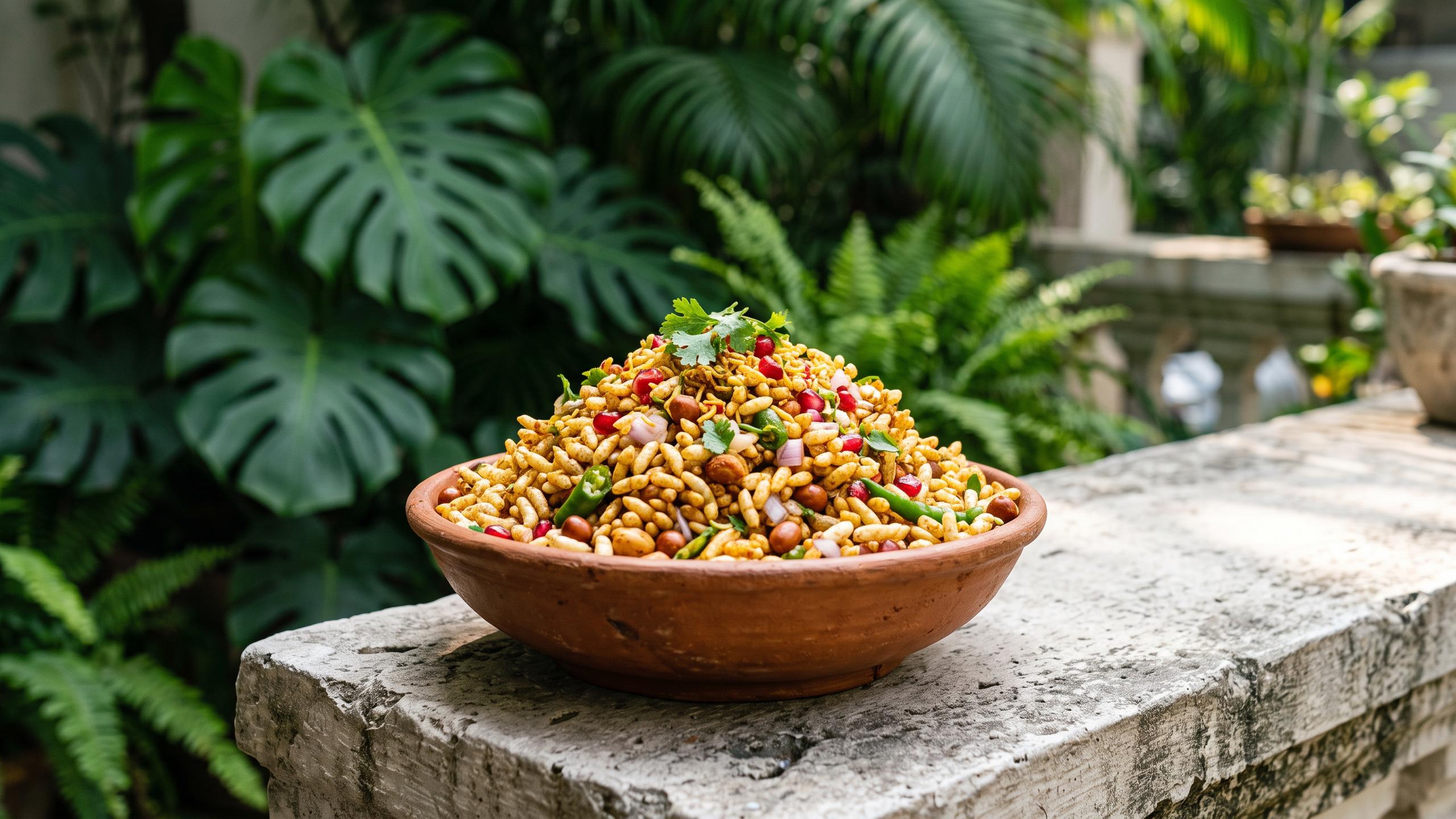
The journey into a bowl of Jhalmuri begins with its namesake, 'muri', or puffed rice. But not just any puffed rice will do. Traditionalists will tell you that the best muri is light, incredibly crisp, and dry, ensuring it doesn’t turn soggy the moment
the wet ingredients are added. It serves as the perfect neutral canvas, ready to absorb the explosion of flavours that are about to come. The quality of the muri is paramount; it provides the signature crunch that is the very backbone of the snack. Stale or chewy puffed rice can ruin the entire experience, which is why street vendors in Kolkata are particularly discerning about their supply, often toasting it lightly to guarantee maximum crispiness.
The Soul: Pungent Mustard Oil
If muri is the foundation, then 'shorsher tel', or mustard oil, is the soul. This is arguably the most critical ingredient and the one that definitively sets Bengali Jhalmuri apart. A generous drizzle of raw, cold-pressed mustard oil imparts a sharp, pungent flavour and a distinctively powerful aroma that cuts through all the other ingredients. Its fiery, nasal-clearing kick is non-negotiable for an authentic taste. This isn’t the refined, neutral-tasting mustard oil you might find elsewhere; it has to be the robust, unfiltered kind known as 'kacchi ghani'. Its potent flavour is what binds everything together, lending a characteristic heat and complexity that is impossible to replicate with any other type of oil.
The 'Jhal': A Trio of Heat
The 'jhal', or spiciness, in Jhalmuri comes from a calculated blend of different elements. First, there are finely chopped 'kancha lonka', or fresh green chillies, which provide a sharp, immediate heat. Next comes a sprinkle of red chilli powder for a deeper, more lingering warmth. But the secret weapon is often a special 'bhaja moshla'. This toasted spice mix typically includes dry-roasted cumin, coriander, and red chillies, which are then ground into a coarse powder. The roasting process unlocks a smoky, nutty aroma that adds incredible depth. This trifecta of heat ensures the spice is not one-dimensional but a complex, layered experience.
The Freshness: A Burst of Vegetables
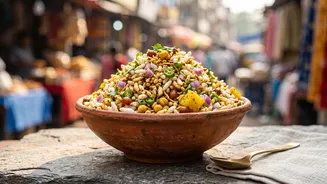
To balance the dry, crunchy, and spicy elements, a handful of fresh ingredients is tossed in. Finely chopped onions are a must, providing a sweetish crunch and a pungent bite. Juicy, deseeded tomatoes add a touch of moisture and a slight tang. A generous scattering of fresh coriander leaves brings a bright, herbaceous note that lifts the entire mixture. In some seasonal variations, you might find slivers of raw mango for a sour kick or grated coconut for a hint of sweetness and texture. Some vendors also add boiled and cubed potatoes, which soak up the spices beautifully.
The Crunch Factor: Meet Chanachur
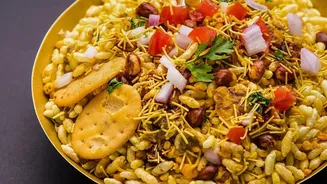
Beyond the muri itself, another layer of texture is crucial. This comes from 'chanachur', a quintessential Bengali snack mix that is a universe of flavour in itself. A good chanachur contains a variety of fried ingredients: crispy chickpea flour noodles (sev), fried lentils, flattened rice flakes (chivda), and roasted peanuts. It adds saltiness, its own blend of spices, and, most importantly, a diverse range of crunchy and crispy textures. Roasted or fried peanuts are also a common addition, offering a satisfying, nutty bite that complements the lighter crunch of the muri.
The Tangy Finish: A Squeeze of Citrus
No Jhalmuri is complete without a sour note to cut through the richness and spice. The most common way to achieve this is with a squeeze of fresh lime or 'gondhoraj lebu', a uniquely fragrant lime from Bengal. Its zesty juice and floral aroma brighten up the snack instantly. Some preparations also include a dash of tamarind water ('tetul jol') for a sweeter, fruitier tang. This final acidic touch is what makes Jhalmuri so refreshing and addictive, ensuring that each mouthful is perfectly balanced between spicy, savoury, and sour.