



The dream of self-driving vehicles is expanding from our roads to the high seas. In a significant leap for India's maritime ambitions, researchers at IIT Madras have developed SeaNav, a platform to bring autonomous shipping closer to reality.
What is SeaNav?
SeaNav, short
for Sea Navigation, is a state-of-the-art digital twin platform developed by the Department of Ocean Engineering at IIT Madras. It is not a physical ship but a highly realistic virtual environment designed for a critical purpose: to test, validate, and train the artificial intelligence behind autonomous maritime vessels. Testing self-driving navigation systems in the real world is incredibly expensive, complex, and potentially dangerous. SeaNav provides a safe and cost-effective digital playground to solve this problem. Built using the Unity3D game engine, it creates a high-fidelity simulation of the maritime world, complete with realistic ocean waves, vessel movements, and complex traffic scenarios.
A Digital Twin for the Real World
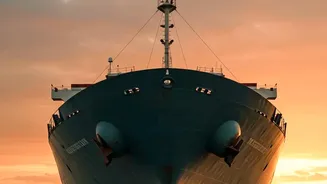
The core innovation of SeaNav is its 'digital twin' concept. The platform is calibrated against real-world data, specifically using a benchmark tanker vessel that is approximately 320 meters long. This ensures that the results from virtual tests closely mirror what would happen in actual commercial shipping operations. Unlike simpler simulators, SeaNav also models the limitations of a ship's sensors, such as noise and delays from radar and cameras. This allows developers to test whether an autonomous system can navigate effectively in challenging conditions like dense fog, heavy rain, or low visibility at night. The system also incorporates a Virtual Reality (VR) interface, allowing trainees and operators to experience the simulation from a ship's bridge using Meta Quest headsets for highly realistic training.
Aligning with National Ambitions
The development of SeaNav is perfectly timed with India’s strategic goals for its maritime sector. The platform directly supports the objectives of the government's 'Sagarmala Programme' and the 'Maritime India Vision 2030', both of which emphasize the need for smart ports, digital technologies, and autonomous systems to boost efficiency and global competitiveness. With over 80% of world trade transported by sea, the shift towards automation is seen as crucial for reducing operational costs, minimizing human error, and enhancing safety. By providing a platform for developing robust AI-assisted navigation, SeaNav can help strengthen safety and reduce collision risks at major Indian ports, including Chennai, Mumbai, Visakhapatnam, and Kochi.
Beyond Commerce: Defence and Safety
The applications for this technology extend far beyond commercial shipping. SeaNav’s ability to simulate multiple vessels at once makes it a valuable tool for applications in coastal surveillance, maritime defence, and even coordinating search-and-rescue operations. The platform allows for the safe training of both autonomous systems and human operators in a variety of emergency scenarios before they are deployed in real-world settings. According to Dr. Suresh Rajendran, an Associate Professor in the Department of Ocean Engineering at IIT Madras, the project combines digital twins, AI, and advanced sensor fusion to create a comprehensive training and validation environment. Smarter navigation strategies developed using the platform could also lead to reduced fuel consumption and a lower risk of environmental accidents.
The Road Ahead for Autonomous Shipping
While SeaNav represents a major step forward, the journey to fully autonomous shipping in India still faces hurdles. A robust legal and regulatory framework is needed to govern the operation of Maritime Autonomous Surface Ships (MASS), addressing issues of liability, cybersecurity, and data governance. India is still developing these regulations compared to leaders like Singapore and Norway. However, with indigenous projects gaining momentum and a growing market for autonomous vessel technology in India, innovations like SeaNav are critical building blocks. The success of student teams from IIT Madras in international autonomous ship competitions further highlights the growing expertise within the country, paving the way for a future where Indian technology plays a leading role on the world's oceans.