




The Anatomy of the Pull
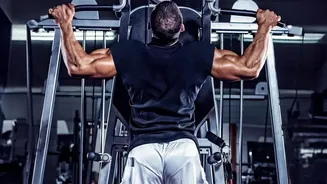
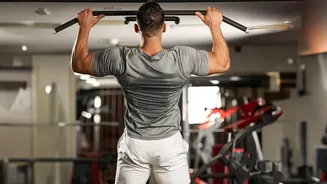
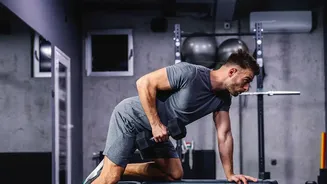
The seated row is a compound exercise, meaning it engages multiple muscle groups at once, making it incredibly efficient. The primary movers are the large muscles of your back. First, the latissimus dorsi, or 'lats', which are the broad muscles spanning
the sides of your middle back, are responsible for the main pulling motion. Working in tandem are the rhomboids, located between your shoulder blades, which are crucial for scapular retraction—the act of squeezing your shoulder blades together. The trapezius, particularly the middle and lower portions, also plays a significant role in stabilizing and moving the shoulder blades. These muscles work together to create the powerful 'rowing' motion that defines the exercise, building thickness and strength across the entire upper and middle back.
Supporting Muscles in the Movement
While your back muscles do the heavy lifting, they get significant help from other important groups. The biceps brachii in the front of your upper arm acts as a secondary mover, assisting in bending the elbow to pull the weight toward your torso. Your posterior deltoids, the muscles on the back of your shoulders, also activate to help pull your arms back. Furthermore, your forearms and grip strength are constantly challenged as you hold onto the handle. Finally, your core muscles, including the erector spinae along your spine, must work to keep your torso stable and upright, preventing you from using momentum. This turns the exercise into a comprehensive upper-body strengthener.
Mastering the Form: A Step-by-Step Guide
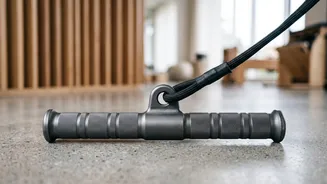
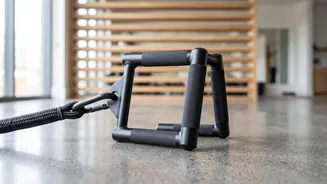
Proper form is non-negotiable for both safety and effectiveness. Start by sitting on the bench with your feet firmly on the footplates and knees slightly bent. Sit tall with a neutral spine, bracing your core. Grasp the handle with your arms fully extended but without letting your shoulders round forward. Initiate the movement by pulling your shoulder blades back and together, as if trying to pinch a pencil between them. Then, lead with your elbows, pulling the handle towards your torso until it's near your belly button. Your elbows should stay relatively close to your body. Pause for a second at the peak of the contraction, squeezing your back muscles. Slowly return the handle to the starting position under control, allowing your lats to stretch before beginning the next repetition.
Common Mistakes to Avoid
Several common errors can sabotage your results and increase the risk of injury. The most frequent mistake is using momentum by rocking your torso back and forth. This takes the tension off your back muscles and places stress on your lower back. Another pitfall is shrugging your shoulders up towards your ears, which shifts the work to your upper traps instead of your midback. Keep your shoulders down and back throughout the movement. Also, avoid rounding your back; always maintain an upright, neutral spine to protect it. Finally, don't just pull with your arms. The movement should originate from your back. If you feel it mostly in your biceps, reduce the weight and focus on squeezing your shoulder blades first.
Beyond the Gym: Posture and Stability
The benefits of a strong back extend far beyond the gym. In an era of desk jobs and screen time, many people develop poor posture, characterized by rounded shoulders and a forward head position. The seated row directly counteracts this by strengthening the very muscles responsible for pulling your shoulders back and maintaining an upright spine. A strong upper back provides a stable foundation for your shoulder joints, reducing the risk of discomfort and injury in daily activities and other lifts. By strengthening these posterior muscles, you create a more balanced physique, which not only improves your appearance but also enhances your overall functional strength and stability.