


Catch the Finale of the Perseid Meteor Shower
The Perseid meteor shower, one of the best celestial shows of the year, peaked around August 12-13 under ideal moonless conditions. But the show is not over yet. The shower remains active until around August 24, so you still have a chance to spot النهائية
of these 'shooting stars'. For your best chance, find a location away from city lights after midnight. Let your eyes adjust to the darkness for about 20-30 minutes and look towards the northeast. The meteors are debris from Comet Swift-Tuttle, and they streak across the sky as they burn up in our atmosphere. While the peak rate of up to 100 meteors per hour has passed, you can still catch a dozen or more per hour in the coming nights. Patience is key, so get comfortable and enjoy the cosmic fireworks.
A Parade of Planets Before Dawn
August is a fantastic month for planet-spotting, with several worlds making an appearance. In the early morning hours, you can witness a beautiful planetary display. Look towards the eastern sky about an hour or two before sunrise. You will find reddish Mars shining brightly, a distinctive sight. Lower towards the horizon, you might also catch a glimpse of the giant planet, Jupiter, though it will be challenging as it rises shortly before the sun. Higher in the sky, you will find yellowish Saturn, which rises in the evening and remains visible through the night. Earlier in the month, several planets aligned in a 'parade', and while they have now drifted apart, Mars and Saturn remain easy naked-eye targets for early risers.
Venus: The Dazzling Evening Star
You don't have to stay up late or wake up early to see every planet. Venus, the brightest of them all, is currently putting on a brilliant display as the 'Evening Star'. Look to the western sky shortly after sunset, and you can't miss it. It shines with a brilliant, steady white light that easily outshines every star in the sky. Throughout August, Venus has been a dominant feature of the evening twilight. It reached its greatest separation from the Sun on August 15, making it a prominent target all month long. If you have binoculars, you might even be able to observe its phase, similar to our Moon. Its commanding presence is a perfect and easy introduction to stargazing for the whole family.
Saturn: The Ringed Gem at Its Best
While its official 'opposition'—when Earth passes directly between it and the Sun—is on October 4, Saturn is already a magnificent target for skywatchers. The ringed planet rises in the east during the evening and is visible for most of the night, tracking across the southern sky. To the naked eye, it appears as a bright, yellowish 'star' that doesn't twinkle. But even a pair of good binoculars held steady will reveal that it's not a point of light but has a distinct oval shape. A small telescope is all you need to resolve its famous rings, a sight that has captivated observers for centuries. As it gets higher in the sky later in the night, the viewing becomes even clearer, making it a rewarding object to track over several hours.
Look for the Summer Triangle
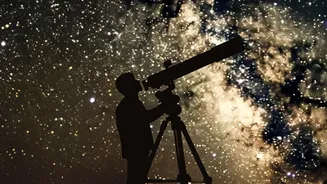
While you are out looking for planets and meteors, don't forget to appreciate the stellar backdrop. High overhead in the evening is a giant and easily recognisable pattern of three bright stars known as the Summer Triangle. This asterism is made of Vega, the brightest star in the constellation Lyra (the Harp); Deneb, in Cygnus (the Swan); and Altair, in Aquila (the Eagle). Vega is typically the brightest star you will see almost directly overhead after dark. From there, you can trace the triangle. This pattern is so large that the misty river of the Milky Way galaxy flows right through it. If you are in a dark location with minimal light pollution, finding the Summer Triangle can help you spot the faint, cloudy band of our own galaxy stretching across the sky.
The Full Sturgeon Moon
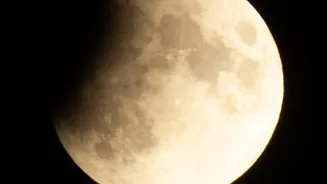
The month will close with a beautiful full moon on the night of August 28. This full moon is known by the traditional name 'Sturgeon Moon', a name originating from Native American tribes who found that the giant sturgeon fish were most easily caught during this time of year. As it rises in the east around sunset, it may appear large and golden-orange due to an optical effect called the Moon Illusion. While some parts of the world will witness a deep partial lunar eclipse on this night, the event will not be visible from India. Still, the sight of a bright, full moon rising is a timeless and beautiful event worth stepping outside for.