




The Trouble with Wheels
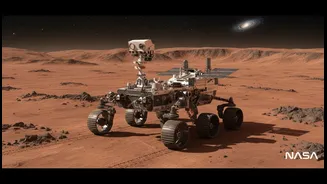
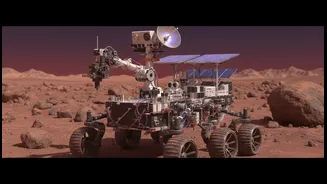
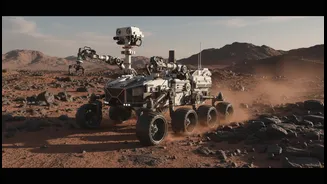
For decades, NASA’s six-wheeled rovers have been our reliable workhorses on Mars. From Spirit and Opportunity to the still-active Curiosity and Perseverance, the rocker-bogie suspension system has been a marvel of engineering. But Mars is not a parking
lot. It’s a world of sand traps that can ensnare a rover for good, and jagged, sharp rocks that can puncture and shred its aluminum wheels, as the Curiosity rover team discovered. These limitations mean that huge areas of Mars and other worlds—steep crater walls, deep canyons, and potential cave entrances—remain tantalizingly out of reach. To get to the most interesting science, NASA has concluded it needs to move beyond the wheel.
Introducing the STRIDE Initiative
In response to these challenges, NASA has launched the Science Transport & Robotic Innovation for Deployment and Exploration (STRIDE) program. Announced in 2026, STRIDE is a forward-looking initiative designed to partner with U.S. industry to develop the next generation of planetary explorers. The program aims to fund design studies and build prototypes for advanced robotic systems, including both surface and aerial vehicles. The goal is to identify and mature technologies from both established space companies and terrestrial robotics firms that can be adapted for the harsh Martian environment, enabling access to scientifically valuable regions that are currently impossible to reach.
Robots That Walk, Hop, and Squirm
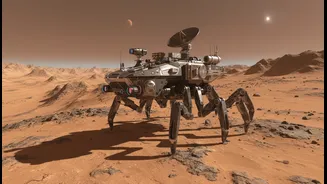
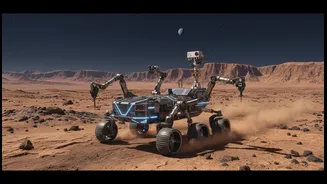
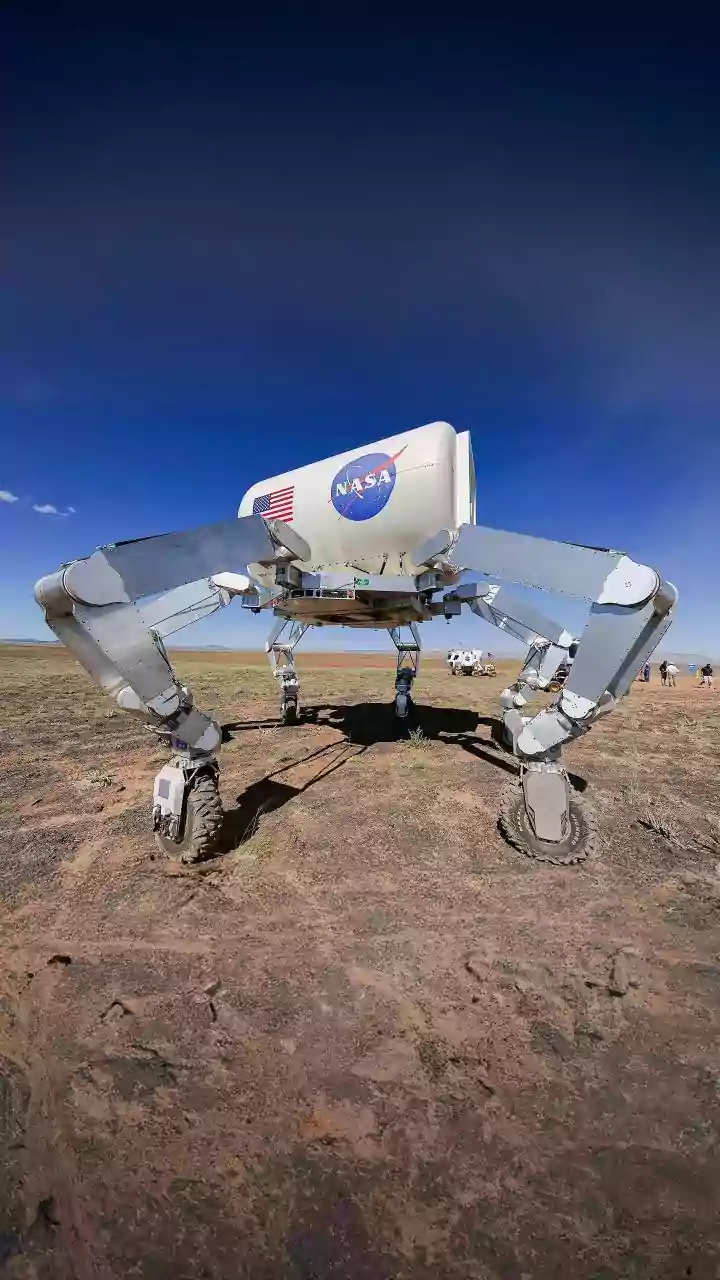
One of the most promising avenues of research is legged locomotion. Prototypes like the four-legged Olympus, tested in simulated Martian gravity, have demonstrated the ability to jump over obstacles that would stop a traditional rover. These 'Mars Dog' concepts could navigate rugged landscapes, climb steep slopes, and even explore underground lava tubes. Taking the concept even further is the LEAP (Legged Exploration Across the Plume) robot, a one-legged hopper designed to explore Saturn's icy moon Enceladus by making long, arcing jumps between scientific targets. Meanwhile, the recently tested ERNEST rover prototype, while still wheeled, incorporates active suspension that allows it to lift its wheels individually and perform 'wheel-walking' or 'squirming' motions to get past obstacles.
The Hybrid Drone-Rover Future
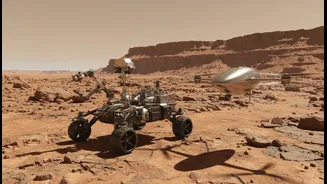
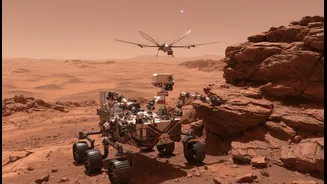
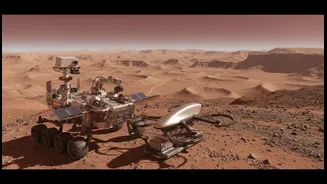
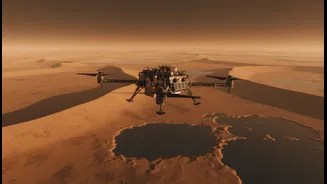
The wild success of the Ingenuity helicopter, which flew dozens of sorties as a scout for the Perseverance rover, proved the value of an aerial perspective. The STRIDE program is explicitly looking at aerial mobility systems as part of the solution. Future concepts envision hybrid systems that combine the endurance of a rover with the agility of a drone. A lander might deploy a team of robots, with a primary rover acting as a base and smaller, more agile robots—some walking, some flying—venturing out to explore complex terrain. This allows for a multi-pronged approach where a flying drone can map a safe path for a walking robot to enter a cave, a task that would be far too risky for a single, multi-billion-dollar asset.
New Robots, New Questions
This leap in capability brings a host of new challenges, the very 'new questions' the headline suggests. Firstly, power: legged locomotion and flight are far more energy-intensive than rolling. How can these robots be powered for long-duration missions far from their lander? Secondly, autonomy: a robot that can walk or fly needs incredibly sophisticated software to make its own decisions in real-time, lest a wrong step send it tumbling into a crevasse. NASA's ERNEST prototype is already being used to test these advanced autonomous navigation algorithms. Finally, this new mobility redefines mission planning. When your robot can go almost anywhere, where do you send it first? These new tools will force scientists to think not just like geologists, but like rock climbers, cavers, and pilots, opening up a new era of dynamic, high-reward planetary science.