



Meet the Roman Space Telescope
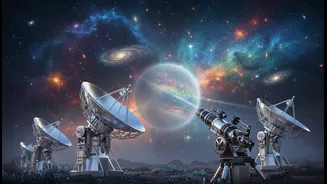
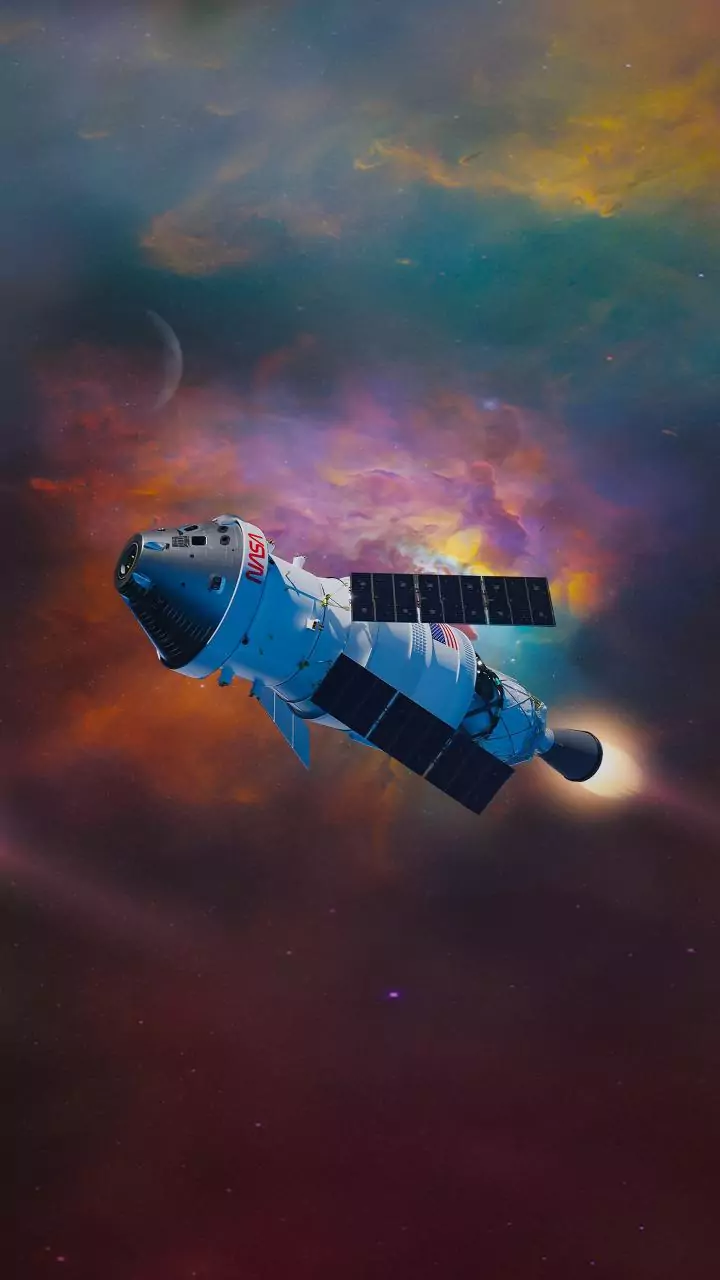
The mission at the heart of this new search is NASA’s Nancy Grace Roman Space Telescope, slated to launch in the mid-2020s. Named after NASA's first chief of astronomy, this next-generation observatory has a field of view 100 times larger than the Hubble
Space Telescope. While its primary goals include studying dark energy and the evolution of the universe, one of its most exciting tasks is to conduct a massive census of exoplanets. The Roman telescope will stare at a dense patch of stars toward the center of our Milky Way galaxy, monitoring hundreds of millions of them for tiny, tell-tale flickers. But instead of looking for dimming stars, the usual sign of a planet passing in front, Roman will be looking for a sudden, temporary brightening.
The Genius of Gravitational Microlensing
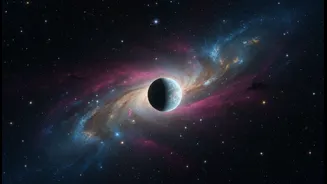
This brightening effect is the key to a technique called gravitational microlensing. First predicted by Albert Einstein's Theory of General Relativity, it’s a fascinating cosmic alignment. Gravity warps spacetime, so when a massive object like a star passes directly in front of a more distant star from our point of view, its gravitational field acts like a natural magnifying glass. This “lens” star bends and focuses the light from the background star, causing it to appear much brighter for a period of weeks or months. If that foreground star also has a planet orbiting it, the planet’s own smaller gravity creates a second, brief distortion—an extra flicker of light. By precisely measuring this light curve, astronomers can detect the planet and even estimate its mass.
Seeing What Other Methods Miss
Most of the thousands of exoplanets discovered so far were found using the transit method, which detects the slight dimming of a star as a planet crosses its face. This method is excellent but has a bias; it’s best at finding large planets orbiting very close to their stars. Gravitational microlensing is different. It is most sensitive to planets with wider orbits, from roughly Earth's distance from the sun outwards, and can detect planets with masses as low as Mars. This makes it uniquely capable of finding worlds in the cooler, outer regions of a solar system, a zone where other detection methods struggle. It complements other techniques by filling in a crucial gap in our planetary census, helping us understand what a 'typical' solar system really looks like.
A Hunt for Rogue and Icy Worlds
The true power of microlensing lies in its ability to find planets regardless of the light they emit. This means it can find “cold” worlds, like the ice giants Uranus and Neptune in our own system, that are too far from their star to be found easily by other means. Even more excitingly, microlensing is the only method that can reliably detect “rogue planets”—worlds that have been ejected from their original star systems and now wander through the galaxy in permanent darkness. These free-floating planets produce a microlensing signal on their own, a short, sharp brightening of a background star without the longer signal from a host star. Roman's survey is expected to find hundreds of these hidden worlds, transforming them from theoretical objects to a catalogued population.
A New Galactic Census
The Roman Space Telescope's Galactic Exoplanet Survey won't just be about individual discoveries. By scanning such a vast number of stars, the mission aims to perform a statistical census of planets in our galaxy. Scientists predict Roman could discover around 1,400 new planets, providing crucial data on the demographics of planetary systems. This will help answer fundamental questions: How common are Earth-mass planets? What about planets in wide orbits? How many rogue planets are drifting through interstellar space? The results will provide vital information for refining our models of planet formation and evolution. While microlensing events are one-time alignments that can't be observed again, the sheer volume of data will give us an unprecedented snapshot of the galaxy's planetary makeup.