
What Am I Looking For?
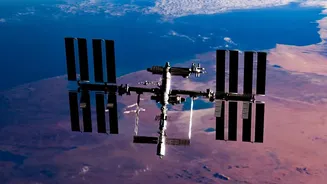
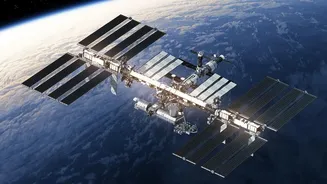
Forget what you think a space station should look like. From the ground, the ISS appears as a very bright, fast-moving point of light, similar to a planet or a particularly brilliant star. The key difference is its motion. While stars and planets seem
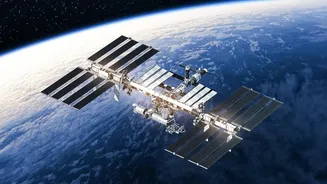
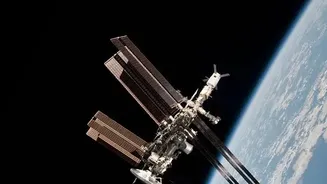
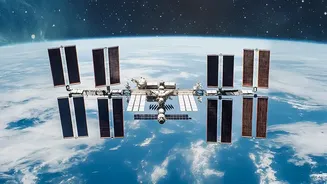
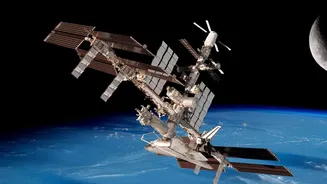
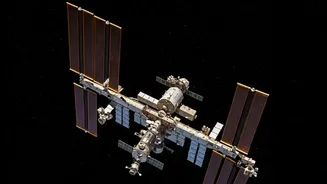
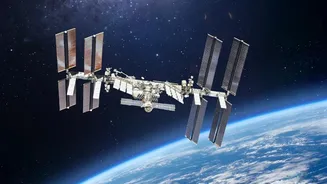
fixed in place, the ISS cruises across the entire sky in just a few minutes. It travels at a staggering 28,000 kilometres per hour, orbiting the Earth once every 90 minutes. You are not seeing the structure itself, but the reflection of sunlight off its massive solar panels and modules. Think of it as a football-field-sized mirror hurtling through the cosmos. It does not twinkle like a star and it certainly doesn't flash like an aeroplane.
It Is All About The Timing
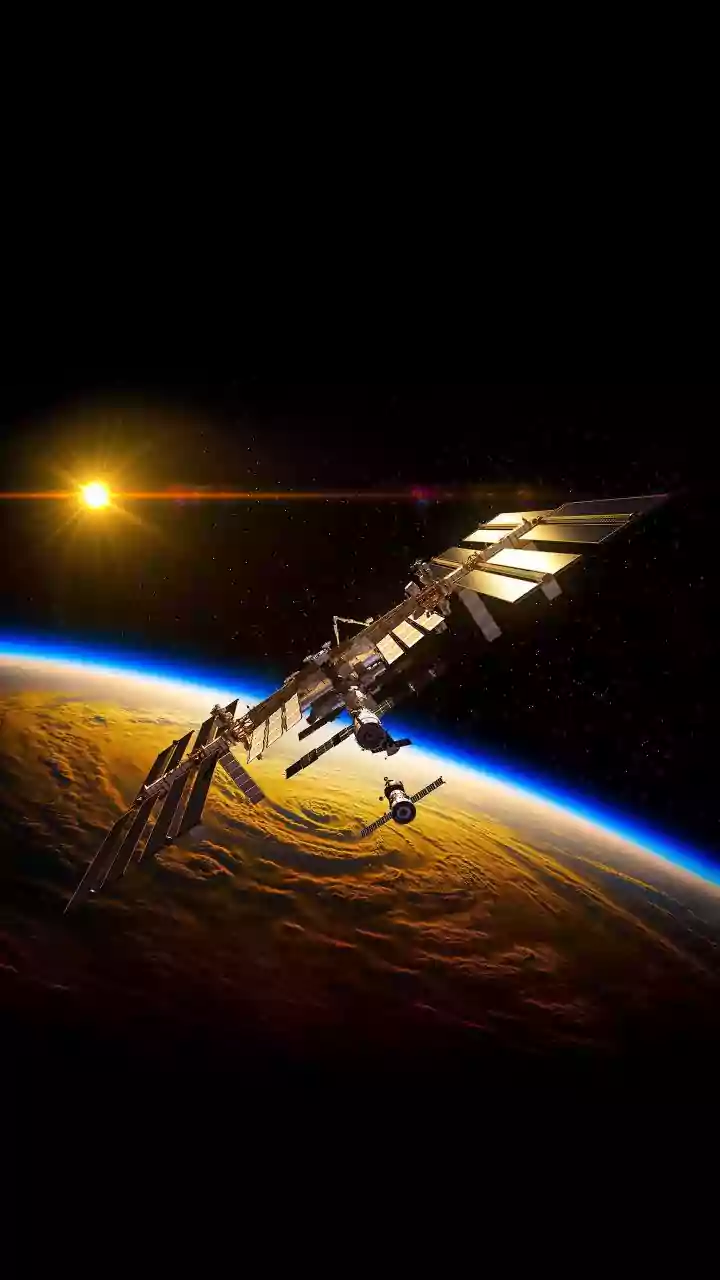
You cannot see the ISS just any time you feel like it. The viewing conditions have to be perfect, which is what makes a sighting special. There are two main requirements. First, it must be dark where you are. Second, the ISS itself, orbiting about 400 kilometres above the Earth, must still be flying in sunlight. This perfect alignment only happens in the period shortly after sunset or just before sunrise. During the middle of the night, the station is in Earth's shadow, making it invisible. At midday, the sky is too bright to see it. The prime viewing windows are within that magical hour or so at dawn and dusk when the sky is dark enough for you to see the reflected sunlight from above.
Your Toolkit: No Telescope Needed
This is the best part: you do not need any expensive or complicated equipment to see the space station. A telescope or binoculars will actually make it harder, as the station moves too quickly to track with a narrow field of view. All you truly need are your own two eyes. The most crucial tool is information: knowing exactly when and where to look. Thankfully, technology makes this incredibly simple. Several websites and smartphone apps are dedicated to providing precise viewing schedules for your exact location. They take the guesswork out of the entire process, leaving you free to enjoy the show.
A Step-By-Step Spotting Guide
Ready to try? First, visit NASA's official 'Spot The Station' website or download a reliable stargazing app like ISS Detector or Heavens-Above. Enter your city or allow the service to use your location. The tool will then generate a list of upcoming sighting opportunities. Pay attention to three key pieces of information: the date and time it will appear, the direction it will first be visible (e.g., 'appearing from the West-Southwest'), and the maximum height it will reach in the sky (measured in degrees, with 90 degrees being directly overhead). A higher degree means a better, brighter pass. A few minutes before the scheduled time, go outside, let your eyes adjust to the dark, and face the direction indicated. That is it.
Is That The ISS Or An Aeroplane?
This is the most common question for beginners. As the appointed time arrives, you will scan the horizon and see a light. How can you be sure? There are three simple tells. First, check for flashing lights. Aeroplanes have red and green navigation lights that blink consistently. The ISS is a solid, steady point of white or yellowish light with no flashing whatsoever. Second, listen. Even at a high altitude, you can sometimes hear the faint rumble of a plane. The ISS is completely silent as it glides through the vacuum of space. Third, consider its path. The ISS moves at a constant, determined speed on a smooth arc across the sky. It will not suddenly change direction or speed. Once you see it, the difference is unmistakable.