




ISRO: The Foundation of India's Space Ambition
For over five decades, the Indian Space Research Organisation (ISRO) has been the sole custodian of India's space dreams. From launching its first satellite, Aryabhata, to the historic Chandrayaan-3 lunar landing, ISRO has built a world-class space program
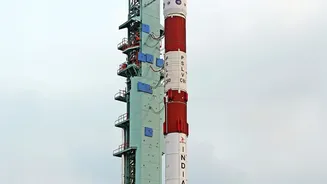
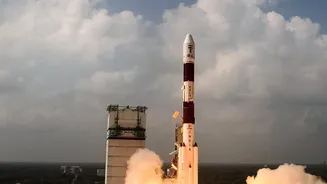
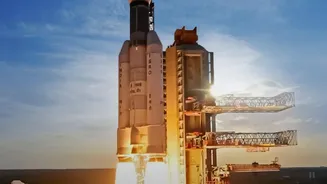
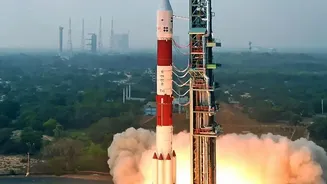
on a famously frugal budget. This journey was not just about spectacular missions; it was about building a foundation. ISRO developed robust launch vehicles like the PSLV and GSLV, established world-class launch infrastructure at Sriharikota, and fostered a deep pool of scientific and engineering talent. This formidable legacy created the very bedrock upon which a private space industry could be built. ISRO’s focus was primarily on national priorities rather than commercial services, which historically limited India's share of the global space economy to around 2%. Now, its role is evolving from being the sole player to becoming a mentor and enabler for a new generation.
A New Galaxy of Private Players
The 2020 policy reforms that opened the space sector have unleashed a wave of entrepreneurial energy. From just one registered space startup in 2014, India now has more than 400. Companies like Skyroot Aerospace, Agnikul Cosmos, and Pixxel are leading this charge. Hyderabad-based Skyroot Aerospace made history in July 2026 with the successful orbital launch of its Vikram-1 rocket, making India only the third country, after the US and China, with a private orbital launch capability. Chennai's Agnikul Cosmos is also a pioneer, successfully test-launching a rocket powered by the world's first single-piece 3D-printed engine. Meanwhile, Bengaluru's Pixxel is deploying a constellation of advanced hyperspectral satellites to provide high-resolution data for agriculture, climate monitoring, and more, having already launched its first private constellation. These startups are not just building hardware; they are creating new, cost-effective solutions for launch services and data applications.
The Policy Shift That Opened the Skies
This new era would be impossible without a deliberate and strategic policy shift from the government. The landmark Indian Space Policy 2023 clearly demarcated the roles for government and private entities. It repositioned ISRO to focus on advanced research, development, and national security missions. The policy allows Non-Governmental Entities (NGEs) to undertake end-to-end activities, from building and launching rockets and satellites to providing space-based services. Crucially, it established the Indian National Space Promotion and Authorisation Centre (IN-SPACe) in 2020. IN-SPACe acts as a single-window agency to promote, authorise, and supervise all private space activities, effectively serving as an interface between startups and ISRO. This has created a stable, predictable regulatory framework, encouraging investment and innovation.
From Mentorship to Shared Missions
The relationship between ISRO and the startups is not one of competition, but of synergy. ISRO is actively playing the role of a guiding partner. Through IN-SPACe, private companies get access to ISRO's invaluable testing facilities, technical expertise, and mentorship. Startups are not having to reinvent the wheel, which significantly lowers costs and accelerates development timelines. For example, both Skyroot and Agnikul have launched from ISRO's Satish Dhawan Space Centre. Furthermore, ISRO is facilitating the transfer of mature technologies to the private sector, allowing them to take over routine manufacturing and operational launches. This symbiotic relationship allows ISRO to concentrate on cutting-edge science and exploration, while private firms drive the commercialisation and scaling of proven technologies, creating a win-win for the entire ecosystem.
The Multi-Billion Dollar Opportunity Ahead
The potential economic impact is immense. India's space economy, valued at around $8.4 billion in 2023, is projected to grow nearly fivefold to between $40-45 billion by 2030. By 2040, it could even touch $100 billion. This growth is driven by the burgeoning demand for launch services for small satellites, satellite-based communication, and Earth observation data analytics. However, the path forward has its challenges. Startups will need to secure significant long-term funding to scale their operations from successful test flights to a regular cadence of commercial launches. They must also compete in a crowded global market and build resilient supply chains. Despite these hurdles, the combination of ISRO's deep institutional knowledge and the agility of private startups has positioned India to capture a much larger share of the global space market and cement its status as a major space power.