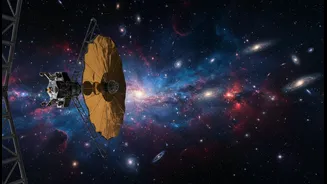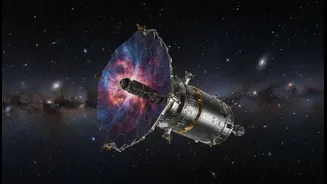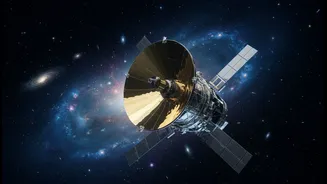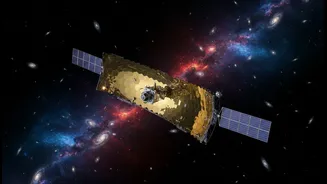




A New Eye on the Cosmos
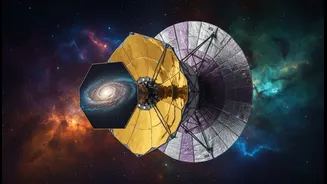
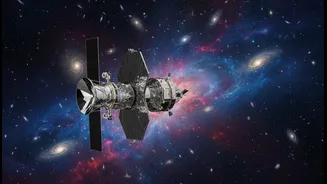
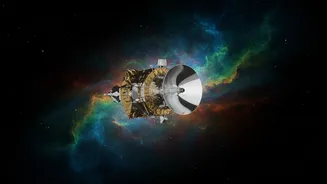
Scheduled to launch around August 30, 2026, NASA's Nancy Grace Roman Space Telescope is the agency's next great observatory. Named after NASA's first chief of astronomy, Nancy Grace Roman, it's engineered not to replace its famous predecessors, but to complement
them in a powerful new way. While the Hubble Space Telescope gave us breathtaking, high-resolution images and the James Webb Space Telescope peers deep into cosmic history, Roman is built for scale. It has a primary mirror the same size as Hubble's (2.4 meters) but boasts a field of view 100 to 200 times larger than Hubble's infrared camera. This means it can map vast stretches of the sky with the same level of detail that Hubble gets in a tiny patch.
Hubble's Legacy: The Sharp, Wide View
For over three decades, the Hubble Space Telescope has been our most iconic eye on the universe, operating primarily in visible and ultraviolet light. Its strength lies in capturing incredibly sharp images, revealing the intricate structures of galaxies, nebulae, and star clusters. Think of Hubble as a master portrait artist, focusing intensely on a subject to capture every fine detail. However, because its view is so narrow—often compared to looking through a pinhole—creating a complete picture of a large object like the Andromeda galaxy requires stitching together hundreds of individual images, a time-consuming process. Roman will be able to capture a similar-resolution image of that same area in a single shot.
Webb's Revolution: The Deep Infrared Gaze
The James Webb Space Telescope, on the other hand, is a master of depth. Its massive, gold-plated mirror is optimized to detect faint, infrared light that has traveled for billions of years across the expanding universe. This allows Webb to see the very first stars and galaxies as they were forming, effectively looking back in time. To achieve this, Webb has an extremely focused, narrow field of view and must be kept incredibly cold to detect faint heat signals from the dawn of time. It's like an archaeologist with a small, fine brush, delicately uncovering the most ancient artifacts. It provides unparalleled depth but in very small, specific locations at a time.
Roman's Grand Synthesis
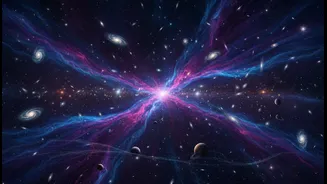
This is where the Roman Space Telescope forges its unique path. It combines the key attributes of both Hubble and Webb, but with a twist. It will observe in infrared light, like Webb, but its primary feature is its enormous field of view. Roman’s Wide Field Instrument will capture images with Hubble-like resolution but cover an area of the sky 100 times larger. To put it in perspective, scientists have said that one month of observation time on Roman will be equivalent to a century on Hubble. It’s a survey telescope, designed to create massive, high-resolution maps of the universe. Instead of a pinhole, Roman offers a panoramic window, allowing astronomers to study not just individual galaxies but the large-scale structure of the cosmos itself.
Unlocking Cosmic Mysteries
With this powerful combination of width and depth, Roman is set to tackle some of the biggest questions in astrophysics. Its two primary goals are to hunt for thousands of new exoplanets and to unravel the mysteries of dark energy and dark matter. By repeatedly surveying the same patch of sky, it can detect the tiny dip in starlight as a planet passes in front of it, or the subtle gravitational warping of light caused by a planet's mass—a technique called microlensing. For dark energy, Roman will map the distribution of billions of galaxies across space and time to understand how this mysterious force is accelerating the expansion of the universe. It will also spot transient events like exploding stars and black holes shredding nearby stars, providing a dynamic view of the cosmos.