





What is a Planetary Alignment?
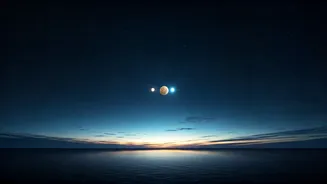
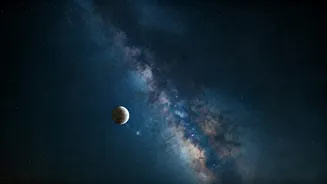
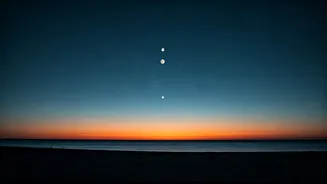
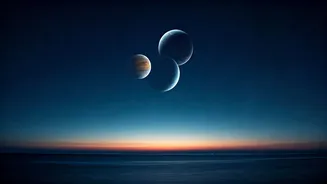
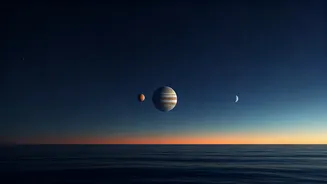
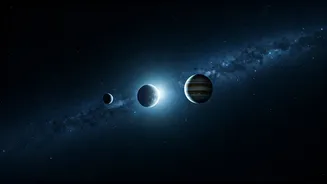
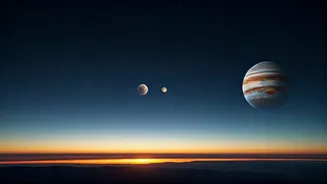
First, let's clear up a common misconception. A planetary alignment doesn't mean the planets are forming a perfectly straight line in space—that’s an event of almost impossible rarity. Instead, what we witness from our vantage point on Earth is the planets appearing
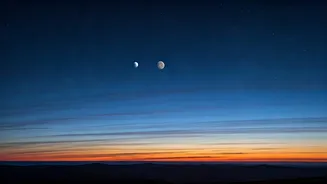
close to one another in a small section of the sky. It’s a beautiful line-of-sight illusion. As the planets orbit the Sun at different speeds and on different paths, our perspective changes. Occasionally, this celestial geometry makes them appear as neighbours in our night sky, creating a stunning visual treat.
Meet the Celestial Trio
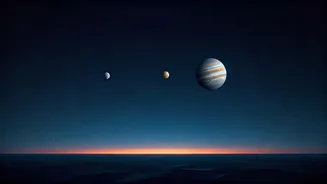
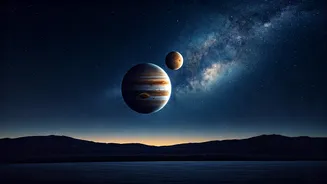
Each planet in this gathering has its own distinct personality. Venus is the undisputed queen of the show. Known as the “Evening Star” (or “Morning Star”), it shines with a brilliant, steady, silvery light. It's often the brightest object in the sky after the Sun and Moon, making it impossible to miss. Jupiter, the largest planet in our solar system, appears as a very bright, non-twinkling, cream-coloured star. Its light is constant and regal. Finally, there's Mercury. The smallest and innermost planet is notoriously elusive, often lost in the Sun's glare. Seeing it is a real prize for skywatchers. Its appearance in an alignment like this provides a rare and easy opportunity to spot it.
When and Where to Look
Timing and direction are everything. These types of alignments involving Mercury and Venus typically occur low on the horizon just after sunset or just before sunrise. For this specific kind of evening alignment, you'll want to start looking about 30 to 45 minutes after the sun has completely set. Find a location with an unobstructed view of the western horizon—the direction where the sun went down. The planets will be visible in the twilight glow. They won’t be there all night; as the Earth rotates, they will follow the sun and set below the horizon within an hour or two. So, don't wait too late. The best window is that magical hour when the sky is turning from deep blue to black.
Tips for the Best Viewing Experience
The best part about this celestial event is its accessibility. You don’t need any fancy equipment. Here’s how to get the best view: 1. **No Telescope Needed:** Your naked eye is perfectly sufficient to see all three planets. In fact, a telescope’s narrow field of view might make it harder to see the entire alignment at once. A pair of basic binoculars, however, can enhance the view and might even reveal Jupiter's four largest moons as tiny pinpricks of light next to the planet. 2. **Escape the Lights:** Find the darkest spot you can. City light pollution can wash out the fainter stars and make Mercury harder to spot. A park, a terrace, or the outskirts of town are ideal. Give your eyes at least 15 minutes to adjust to the darkness. 3. **Use a Stargazing App:** If you’re unsure what you’re looking at, a free stargazing app like Stellarium, SkyView, or Star Walk can be your best friend. Simply point your phone at the sky, and the app will identify the planets, stars, and constellations for you. It removes all the guesswork.
Why This Cosmic Meeting Is Special
While alignments aren’t astronomically rare, seeing a trio of bright planets, especially one that includes the shy Mercury, is a genuine treat. It’s a dynamic and ever-changing display. Night after night, you can watch their positions shift relative to each other. It’s a wonderful reminder of the grand, cosmic dance happening above our heads. It connects us to the vastness of the solar system in a very direct, visual way, turning the sky into a dynamic canvas rather than a static backdrop.