








The Rise of a Surprising Blend
At first glance, the combination sounds almost absurd. Gulab Jamun—the syrupy, decadent king of Indian sweets—blended into a smoothie with coconut milk? It’s a concept that would have been unthinkable a decade ago. Yet, on platforms like Instagram Reels
and TikTok, this unconventional drink has become a minor star. Food bloggers and home cooks are showcasing their versions, often garnished with crushed pistachios, a saffron strand, or even a whole, glorious jamun perched on the rim. The trend didn’t originate from a major restaurant chain or a celebrity chef, but bubbled up organically from digital creators experimenting in their kitchens. This user-generated authenticity is a key part of its appeal, feeling less like a marketed product and more like a shared discovery.
Nostalgia Meets Modern Wellness
The magic of the jamun smoothie lies in its brilliant fusion of two worlds. For many young Indians, gulab jamun is not just a dessert; it’s a memory. It’s the taste of festivals, family gatherings, and childhood celebrations. It represents comfort, indulgence, and tradition. By placing this nostalgic icon in a completely new context, the smoothie does something clever: it makes tradition feel fresh and relevant again. On the other side of the equation is coconut milk. As a dairy-free alternative, it taps directly into the global wellness zeitgeist. It's seen as lighter, more 'natural,' and suitable for various dietary preferences, from vegan to lactose-intolerant. This blend allows Gen Z to enjoy a flavour they love without feeling like they are consuming something 'old-fashioned' or overly heavy. It’s the perfect compromise between craving and conscience.
The All-Important 'Health Halo'
Let’s be honest: a smoothie with sugar-soaked gulab jamuns is hardly a health food. But perception is everything. The inclusion of coconut milk and the 'smoothie' format lend the drink a powerful 'health halo.' The term refers to the tendency for consumers to overestimate the healthfulness of an item based on a single positive attribute. For a generation hyper-aware of wellness trends but not always willing to sacrifice flavour, this is a winning formula. The smoothie feels less like a heavy, guilt-inducing dessert and more like an acceptable, slightly decadent snack. It allows for indulgence under the guise of a modern, health-adjacent beverage, making it easier to justify. It’s the sweet spot between a rich mithai and a green juice—and Gen Z is here for it.
Engineered for the Instagram Feed
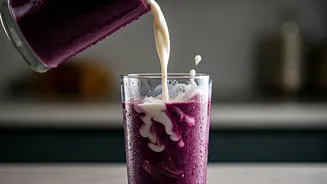
In the digital age, we eat with our eyes first. The Coconut Milk Jamun Smoothie seems tailor-made for social media. The creamy, beige-pink hue of the blended jamun and coconut milk is aesthetically pleasing and photographs beautifully. It stands out from the typical greens and purples of fruit smoothies. The potential for creative garnishing adds another layer of visual appeal. A sprinkle of emerald green pistachios, a dash of golden-brown cinnamon, or the deep red of a rose petal creates a striking contrast that is highly 'shareable.' This visual allure is not a trivial aspect; it’s a primary driver of trends among younger audiences. A dish that looks good on camera is a dish that is more likely to be tried, made, and posted, creating a cycle of viral replication.
A Creative Reinterpretation of Culture
This trend isn't about rejecting tradition; it’s about reinventing it. Gen Z’s relationship with its cultural heritage is complex and creative. They are not content to simply accept traditions as they are handed down. Instead, they interact with them, remixing and reinterpreting them to fit their contemporary lives. The jamun smoothie is a perfect example of this. It pays homage to a classic flavour profile while presenting it in a format that feels entirely current. It shows a generation that is proud of its roots but also globally connected and forward-looking. This is not about replacing the bowl of warm gulab jamuns at a wedding. It's about finding a new way to enjoy that beloved flavour on a regular Tuesday afternoon, on their own terms.