








The Rise of the Family-First Airport
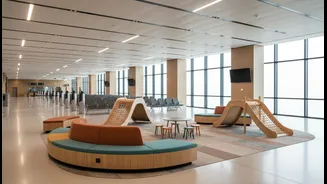
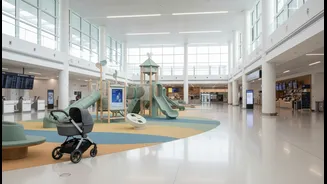
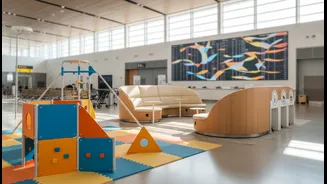
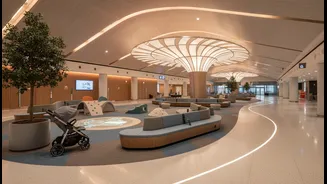
Traveling with children can be challenging, but airports worldwide are beginning to respond to the needs of the modern family. The concept of a 'family-friendly' airport goes beyond a simple baby changing table. Today, it encompasses a suite of amenities
designed to reduce stress and even make the airport experience enjoyable for kids and parents alike. These can include dedicated family security lanes, interactive play areas, private nursing rooms, and even stroller rentals. An IATA survey found that 68% of parents are more likely to spend money on food and shopping if an airport provides good family facilities, showing a clear economic incentive for airports to invest in their youngest travelers.
What to Look For: The Gold Standard
Top-tier family-friendly airports set a high bar. Istanbul Airport (IST), ranked by Skytrax as one of the world's best for families, offers features like interactive play zones and dedicated family security lanes. Other international hubs like Singapore Changi and Incheon in Seoul are famous for amenities ranging from movie theatres and themed play areas to gardens and even mini theme parks. These airports understand that for parents, a smooth journey means keeping children engaged and comfortable. Essential features include clean and accessible baby care rooms, kid-friendly dining options with high chairs, and stroller-friendly navigation throughout the terminals.
The Indian Context: Progress at Home
Indian airports are making significant strides. A recent 2026 ranking named Bengaluru's Kempegowda International Airport (KIA) and Hyderabad's Rajiv Gandhi International Airport (RGIA) as the third and fourth most family-friendly airports in the world, respectively. KIA is lauded for its family lounges, play areas, and India's first airport sensory room for neurodivergent passengers, while RGIA earned praise for its multiple kids' play zones and robust passenger support. Delhi's Indira Gandhi International Airport (DEL) also runs its 'Family@DEL' initiative, providing dedicated check-in counters, play areas in Terminal 3, and buggy services.
The Reality Check: Check the Airport Map
An airport may boast a state-of-the-art play area, but its value diminishes if it's located in a completely different terminal from your departure gate. Before you book a flight assuming a seamless layover, a crucial first step is to consult the airport's official map. Check where the advertised amenities are in relation to your airline's terminal and likely gate area. A fantastic playground is of little use if reaching it requires a long trek or another security screening, which is often impractical with tired children and carry-on luggage in tow.
The Reality Check: Are They Even Open?
Another critical detail is the operating hours of these facilities. Airport play areas, specific restaurants, and even dedicated family services are not always open 24/7. This is especially important for families traveling on red-eye flights or during off-peak hours. Arriving at an airport late at night expecting a play area to be open, only to find it closed, can be a major disappointment. Always check the airport's official website or contact them directly for the most current operating hours of the facilities you plan to use.
The Reality Check: Mind the Transfer Distance
Finally, consider the physical journey within the airport itself. Long walks between connecting flights can be exhausting for little legs. Some large international hubs can require 20 minutes or more just to walk from one gate to another. While some airports offer shuttle trains or buggy services, these may have their own queues and restrictions. Before booking a tight connection, factor in the time it will take to deplane, potentially clear security again, and walk with children to the next gate. A longer layover at an airport with well-placed, accessible amenities might be far less stressful than a short layover that turns into a frantic sprint.