








The Perennial Problem of Perishability
Floriculture is a significant industry in India, and the areas around Bengaluru are a major hub for high-quality rose cultivation. However, flowers are among the most perishable agricultural products. Traditionally, once a rose is cut, the clock starts
ticking. High temperatures cause rapid wilting and decay, leading to substantial post-harvest losses estimated to be as high as 30-40% across India. For the small and marginal farmers who dominate the sector, this spoilage represents a direct loss of income. They are often forced to sell their produce immediately at prevailing market rates, regardless of demand, to avoid a total loss. This lack of holding power puts them at a significant disadvantage, especially when dealing with middlemen and fluctuating market prices.
A Cool, Sustainable Solution
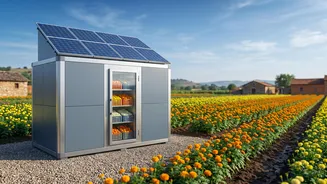
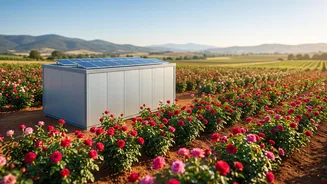
Enter the solar-powered cold chain hub. These are decentralized, walk-in cooling units installed near farm clusters, powered entirely by photovoltaic panels. This technology addresses two core challenges simultaneously: the need for immediate post-harvest cooling and the unreliability of grid electricity in rural areas. By providing a consistent, low-temperature environment (typically between 2°C and 8°C), these units can dramatically extend the shelf life of cut roses. The innovation lies in its simplicity and sustainability; it operates without dependence on a conventional power grid and has no running costs, making it an affordable solution for farming communities. Initiatives by organizations like The Energy and Resources Institute (TERI) have demonstrated the viability of these projects, such as one in Sadali village, Chikkaballapura, which serves hundreds of local farmers.
From Spoilage to Significant Gains
The impact on the ground is transformative. By pre-cooling their roses immediately after harvest, growers can preserve freshness and quality for several days. This simple act of temperature control nearly eliminates spoilage, which means more of their crop reaches the market in prime condition. One study noted that solar refrigeration can cut post-harvest losses by 35-52%. This improved quality allows farmers to command higher prices. They are no longer forced into distress sales. Instead, they can store their harvest and wait for favourable market conditions, such as the peak demand during wedding seasons or festivals like Valentine's Day. A project in Karnataka noted that farmers using a solar cold room could access it for half the cost of traditional storage, making it economically feasible for small growers.
Empowering Growers and Building Resilience
Beyond the immediate financial gains, these cold hubs are empowering Farmer Producer Organisations (FPOs) and individual growers. By aggregating their produce at a central cooling facility, farmers gain collective bargaining power and can access larger, more lucrative markets, including exports. The technology provides a buffer against market volatility and logistical delays, creating a more resilient business model. Farmers can better plan their sales and distribution, reducing their dependence on a long chain of intermediaries. This shift strengthens local economies and improves the livelihoods of the thousands of families who depend on floriculture. The successful implementation in villages like Sadali shows a robust framework for community-led innovation that builds confidence among the rural farming population.