



A Rare Celestial Alignment
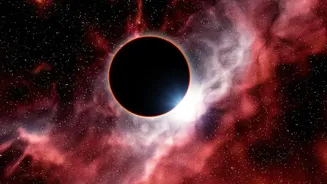
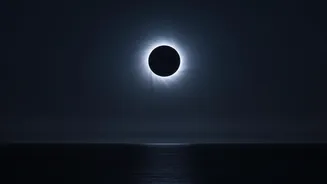
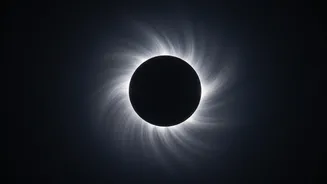
A total solar eclipse occurs when the Moon passes directly between the Sun and Earth, completely blocking the Sun's face. For a few fleeting minutes, day turns to an eerie twilight, and the Sun's magnificent outer atmosphere, the corona, becomes visible
to the naked eye. The 2026 event will trace a narrow path of totality across the globe, starting over northern Russia, sweeping across Greenland and western Iceland, and ending over northern Spain and a sliver of Portugal at sunset. While millions will witness a partial eclipse, only those within this specific corridor will experience the full, awe-inspiring moments of totality, which will last for a maximum of just over two minutes.
The Sun’s Mysterious Corona
The primary scientific draw of a total eclipse is the chance to study the solar corona. This gaseous halo is the outermost part of the Sun’s atmosphere and is, paradoxically, hundreds of times hotter than the Sun's surface below. It is also the source of the solar wind, a stream of charged particles that flows throughout our solar system. Normally, the Sun's brilliant surface, or photosphere, is so bright that it completely obscures the much fainter corona. During totality, the Moon acts as a natural cosmic shield, giving scientists a rare, unobstructed view. This brief window is crucial for understanding the physics that heat the corona to millions of degrees and drive space weather, which can affect satellites and power grids on Earth.
NASA's High-Flying Mission
To maximize this short viewing window, NASA is deploying its WB-57 high-altitude research aircraft. By flying at 50,000 feet along the eclipse path, the jet can stay inside the Moon’s shadow longer than any ground-based observer, extending its observation time to nearly three minutes. From above the clouds, a suite of sophisticated cameras will capture high-resolution images of the corona in multiple wavelengths of light. Researchers hope these images will reveal new details about the formation of solar prominences and the relationship between the corona and the solar wind. According to Kelly Korreck, NASA's eclipse program manager, these events allow scientists to study the corona in ways that are impossible from anywhere else.
Balloons, Students, and Citizen Scientists
NASA's efforts aren't limited to high-flying jets. The agency is also funding the Nationwide Eclipse Ballooning Project, where student teams from American universities will launch scientific balloons from Iceland and Spain. These balloons will carry instruments to study how the temporary loss of sunlight affects Earth's atmosphere, particularly the boundary layer closest to the ground. In Spain, balloons will carry 360-degree cameras for breathtaking views of the Moon's shadow on Earth and will measure changes in atmospheric ozone. NASA also encourages public participation through citizen science projects, which in the past have included collecting data on everything from cloud cover to animal behavior during an eclipse.
The Significance of the Path
The narrow path of totality for the 2026 eclipse is a key feature. While the partial eclipse will be visible across a vast area, totality is an exclusive event reserved for a small slice of the planet. This path crossing populated and accessible areas like Iceland and northern Spain makes it a major target for both scientific expeditions and tourism. For observers in Spain, the eclipse will occur late in the day, offering the rare and dramatic spectacle of a 'sunset eclipse,' where the Sun is low on the horizon during totality. This low angle presents unique challenges and opportunities for photography and atmospheric studies. The relatively short duration of totality—under two and a half minutes at its maximum—makes every second of observation incredibly precious for the scientists racing to gather data.