






The Case for Robots: Endurance and Efficiency
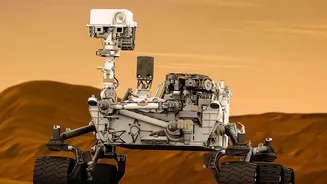
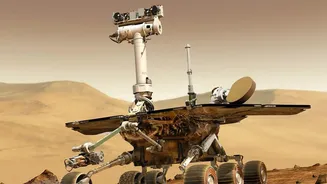
The primary argument for robotic missions is overwhelmingly practical: cost and safety. Sending a sophisticated rover like Perseverance to Mars costs under $3 billion. In contrast, estimates for a single crewed mission range from $100 billion to as high
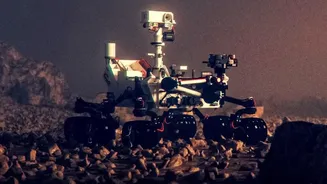
as $600 billion. This staggering difference is due to the immense requirements of keeping humans alive. Astronauts need air, water, food, and protection from the harsh radiation of deep space, all of which adds immense weight and complexity to a spacecraft. Robots, on the other hand, require none of this. They can be built to withstand extreme temperatures and radiation, operate for years without rest, and their loss represents a financial and scientific setback, not a human tragedy. These automated explorers serve as our tireless proxies, gathering crucial data and scouting terrain long before any human could arrive.
The Human Advantage: Adaptability and Intuition
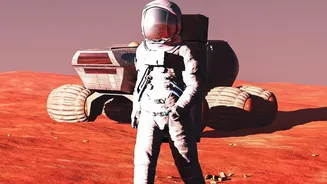
Despite their efficiency, robots are limited. The communication delay between Earth and Mars can be up to 24 minutes each way, making real-time control impossible. While rovers are becoming more autonomous, they are slow and methodical, covering in years what a human could explore in weeks. The true value of an astronaut lies in their adaptability and intuition. A human geologist can spot an unusual rock formation, improvise a tool, or make a split-second decision that a pre-programmed robot cannot. During the Apollo 15 mission, astronauts famously faked a seatbelt issue to stop and collect a scientifically significant rock that mission control had told them to bypass—a feat of rebellious curiosity a rover could never replicate. Humans can conduct complex fieldwork, repair broken equipment, and respond to unexpected discoveries in ways that are currently beyond any AI.
The Unseen Costs of Human Missions
The price tag of a human mission isn't just financial. The physiological and psychological toll on astronauts is immense. A round trip to Mars could take up to three years, subjecting the crew to prolonged exposure to cosmic radiation, which increases cancer risk, and the debilitating effects of microgravity, such as bone density loss and muscle atrophy. Beyond the physical challenges, the isolation and confinement of a tiny capsule for years on end present significant psychological hurdles. Ensuring the crew can work together effectively under extreme stress is a mission-critical challenge in itself. Every system, from life support to the return vehicle, must function perfectly, as there is virtually no margin for error when human lives are at stake millions of miles from home.
Beyond 'Versus': A Hybrid Future
Ultimately, the debate is evolving from 'robots versus humans' to 'robots with humans'. The consensus among space agencies like NASA is that the two are not competitors but partners in a collaborative exploration strategy. This 'Moon to Mars' approach uses robots as essential precursors. Robotic missions will continue to map the Martian surface, identify potential landing sites, search for resources like water ice, and even pre-position supplies and habitats before astronauts leave Earth. Once humans arrive, robots will act as assistants, performing dangerous or repetitive tasks like hauling equipment, inspecting the exterior of habitats, or scouting hazardous terrain. This symbiotic relationship leverages the endurance and precision of machines to maximize the safety and scientific output of human explorers.