






Beyond the Bubble Bath
For years, 'self-care' was a buzzword synonymous with indulgence—a weekend getaway, a lavish meal, or a day at the spa. While these are wonderful treats, the modern understanding of self-care is pivoting towards something more practical and profound.
It’s about building resilience, not just temporary escape. It’s about consistent, daily actions that regulate our nervous system, calm our minds, and ground us in our bodies. This new definition prioritises sustainability over spectacle. It asks not 'What can I do to feel good this weekend?' but 'What can I do to feel better every day?' This is where yoga, repositioned as a daily habit rather than a formal class, is finding its new role.
More Than Just a Workout
Many people are introduced to yoga as a form of physical exercise—a way to improve flexibility, build strength, and maybe burn some calories. And while it does all of those things, its true power as a self-care tool lies in the integration of mind and body. Unlike a high-intensity gym session that can sometimes spike cortisol (the stress hormone), a mindful yoga practice is designed to soothe it. The focus on controlled breathing, or pranayama, directly signals to your brain that it’s safe to relax. Each movement is an opportunity for a mental check-in. You’re not just stretching your hamstrings; you’re noticing tension, breathing into it, and consciously letting it go. This act of paying gentle, non-judgemental attention to your internal state is the very essence of care.
The Power of Five Minutes
The single biggest barrier to starting a yoga practice is often the perceived time commitment. The idea of a 90-minute class can feel impossible to fit into a packed schedule. But the 'everyday yoga' movement throws that assumption out the window. Studies on habit formation show that consistency trumps duration. A simple, five-to-ten-minute yoga routine performed daily can have a more significant cumulative impact on your stress levels, mood, and flexibility than one long, infrequent session. It’s about creating a small, achievable ritual. This micro-dose of mindfulness becomes a reliable anchor in your day, a moment to pause, breathe, and reconnect with yourself before the chaos of the world takes over.
Your Simple Starter Routine
You don't need a fancy mat or expensive gear to begin. All you need is a quiet corner and a few minutes. Here’s a simple sequence to get you started: 1. **Cat-Cow (Marjaryasana-Bitilasana):** Start on your hands and knees. As you inhale, drop your belly and look up, opening your chest (Cow). As you exhale, round your spine, tuck your chin, and press the floor away (Cat). Repeat 5-10 times to gently wake up your spine. 2. **Child's Pose (Balasana):** From all fours, sit back on your heels and fold your torso forward, resting your forehead on the floor. Let your arms rest alongside you or stretch them forward. Hold for 5-10 deep breaths to release tension in your back and quiet your mind. 3. **Downward-Facing Dog (Adho Mukha Svanasana):** From all fours, tuck your toes and lift your hips up and back, forming an inverted V-shape. Gently pedal your feet to stretch your calves. This pose energises the body and calms the brain. 4. **Seated Forward Bend (Paschimottanasana):** Sit on the floor with your legs straight out in front of you. Inhale to lengthen your spine, and exhale to gently fold forward over your legs. You don’t need to touch your toes; just go as far as feels comfortable. This is a great calming pose to end your mini-session.
Making It a Lasting Habit
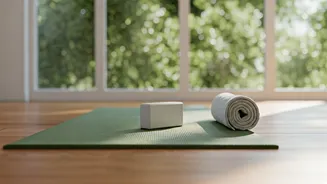
The key to making everyday yoga stick is to remove friction. Don't set an ambitious goal of 30 minutes if you know you only have five. Try 'habit stacking'—link your new yoga habit to an existing one. For example, decide to do your five-minute routine right after you brush your teeth in the morning or just before you get into bed at night. Leave your yoga mat unrolled in a visible spot as a visual cue. The goal isn’t perfection; it’s presence. Some days you may only have time for a few deep breaths in Child's Pose. That’s okay. The act of showing up for yourself, even for a minute, is what builds the foundation of true, sustainable self-care.