







A Universe of Moving Targets
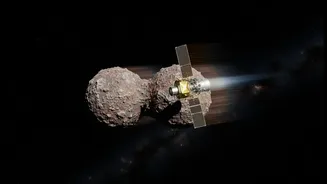
Every day, our planet moves through a cosmic neighbourhood filled with asteroids and comets. While most are harmless, some, known as Near-Earth Objects (NEOs), follow orbits that bring them close to Earth. We currently know of more than 25,000 NEOs. A
tiny fraction of these could one day pose an impact risk. The key to planetary defence is finding these objects, tracking their paths with extreme precision, and determining if they are a threat. This is a monumental task that relies on telescopes around the globe collecting thousands of observations every night.
The Problem with 'Fuzzy' Data
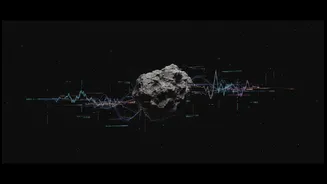
Spotting a new NEO is often just the beginning. The initial observations can be faint and cover only a tiny part of the object's journey through space. This limited information makes calculating a precise orbit difficult. It's like trying to predict a car's entire cross-country route after seeing it for only a few seconds. To make matters worse, data comes from many different telescopes, each with its own characteristics, and sometimes observations can have inconsistencies. This 'fuzziness' in the data is the biggest challenge for planetary defenders; a fuzzy orbit means a fuzzy risk assessment.
ESA's New Sentinel: The Meerkat System
This is where the European Space Agency (ESA) comes in with its new generation of data analysis tools. At the forefront is the Meerkat Asteroid Guard, an automated system that runs 24/7. When a new potential NEO is spotted anywhere in the world, Meerkat gets to work. It doesn't just calculate one possible orbit; it uses a clever technique called 'systematic ranging' to compute a grid of thousands of possible orbits based on the limited data available. This allows it to quickly assess whether any of those potential paths could lead to an impact with Earth, typically within the next 30 days. If it finds a significant risk, Meerkat automatically sends alerts to scientists for immediate follow-up observations.
From Raw Data to Clearer Risk
Meerkat and its companion system, Aegis (which handles long-term risk), are designed to improve observation quality from the ground up. They help astronomers prioritise which objects need more attention. A recent update, Meerkat 2.0, introduced new features to help analysts judge the quality of an orbital solution. One metric, for instance, helps determine if the system has found a reliable result or if the data is too messy, which can help avoid false alarms. By providing specialised plots and data, these tools help observers point their telescopes in the right place at the right time to get the crucial follow-up data needed to turn a fuzzy orbit into a sharp, predictable path.
Tools for Everyone
Beyond the expert-focused systems, ESA has also released a public 'NEO Toolkit'. This suite of web-based applications allows professional and amateur astronomers—and anyone with an interest—to visualise asteroid data in powerful new ways. Tools like the Orbit Visualisation Tool and the Flyby Visualisation Tool let you see how asteroids move through the solar system and simulate their close approaches to Earth. Another, the Observation Planning Tool, helps astronomers schedule their observations for the best possible conditions. The latest addition, the Synodic Orbit Visualisation Tool, offers a unique perspective that makes it easier to understand when and how an object can be observed from Earth. These publicly available tools foster collaboration and transparency, empowering a global community to contribute to the planetary defence effort.