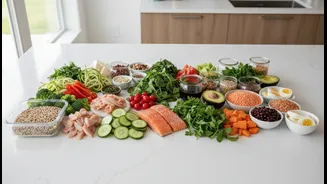









Portion Control: A Tool for Balance
At its best, portion control is a mindful practice, not a mathematical one. It’s about understanding what a balanced serving of food looks like and using that as a guide to nourish your body effectively. Think of it as building awareness. It helps you recognise
appropriate amounts of protein, carbohydrates, and vegetables on your plate, which can prevent the discomfort of overeating and promote stable energy levels. This approach is flexible, encouraging you to listen to your body’s natural hunger and fullness signals. Unlike strict dieting, healthy portioning isn't about forbidding foods; it's about finding a sustainable balance that allows you to enjoy variety without stress or guilt. It’s a skill that builds a healthier, more intuitive relationship with food over the long term. The goal isn't to eat as little as possible, but to eat just enough to feel satisfied and energised.
The Danger of Restrictive Dieting
Restriction is portion control’s toxic cousin. It operates on rigid rules, deprivation, and guilt. While a diet that severely limits calories or cuts out entire food groups might lead to short-term weight changes, it often comes at a significant psychological cost. Research shows that restrictive eating is linked to increased anxiety, preoccupation with food, and mood disturbances. This approach can trigger a harmful cycle: the body and mind feel deprived, leading to intense cravings and eventual bingeing, which is then followed by feelings of failure and even tighter restrictions. This isn't a failure of willpower; it's a predictable biological and psychological response to starvation. Over time, this cycle can damage your relationship with food, making you distrust your own hunger signals and see meals as a source of stress rather than nourishment and pleasure.
Meal Subscriptions: A Double-Edged Sword
Meal subscription services are marketed as a perfect solution, offering built-in portion control that takes the guesswork out of healthy eating. For many, this is a huge benefit. These services can introduce you to new, healthy ingredients and help you understand what a balanced meal looks like, reducing reliance on less nutritious takeaways. However, this convenience can become a crutch. Handing over all control to a pre-packaged box can prevent you from learning to listen to your own body. Some users find the portion sizes too small, leaving them hungry and feeling deprived—a gateway to the restrictive mindset. Furthermore, many services use diet-centric language like “low-calorie” or “guilt-free,” which reinforces the idea that food is something to be controlled and feared rather than enjoyed. The pre-portioned meal can start to feel like a rigid limit, where eating more is a failure and eating less is a victory, echoing the damaging patterns of diet culture.
How to Use Meal Kits Wisely
To get the best out of a healthy meal subscription without falling into the restriction trap, the key is to stay in charge. View the provided meal as a starting point, not a non-negotiable rule. Are you still hungry after finishing? That’s okay. Supplement the meal with a side salad, a piece of fruit, or a serving of yoghurt. Your body’s needs change daily based on activity level, stress, and sleep. On the other hand, if the portion feels like too much, don’t force yourself to finish it. Save the leftovers for later. The goal is to use the service for its convenience and nutritional foundation while still honouring your internal hunger and satisfaction cues. Pay attention to how you feel. If you find yourself obsessing over the portion sizes or feeling anxious about the food, it might be a sign that the service is feeding into a restrictive mindset rather than supporting your well-being.