







The Old Way of Flying East
For decades, flying from the United States to Southeast Asia followed a predictable pattern. You would almost certainly book with a major legacy airline and connect through one of a handful of fortress hubs, either on the West Coast, like Los Angeles
(LAX) and San Francisco (SFO), or in Asia, such as Tokyo (NRT) or Hong Kong (HKG). This hub-and-spoke system, dominated by airline alliances, was efficient for carriers but often resulted in high prices and lengthy travel times for passengers. The major airports and the legacy airlines that called them home held a virtual monopoly on trans-Pacific travel, dictating prices, schedules, and routing options. For travelers not living in a major gateway city, this meant at least two stops, and often more, to reach destinations like Bangkok or Ho Chi Minh City.
A New Generation of Carriers
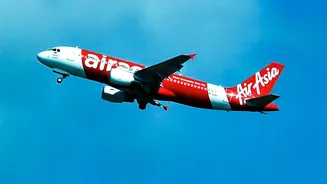
That long-standing model is now facing its most significant threat. A new generation of ambitious, low-cost carriers, primarily from Asia, is rewriting the rules. Airlines like AirAsia X and VietJet are expanding their fleets with new, highly fuel-efficient long-haul aircraft. While non-stop budget flights to the U.S. remain rare, these airlines are pioneering a different strategy: creating affordable and convenient one-stop itineraries that bypass traditional, congested hubs. For example, AirAsia X has been vocal about its plans for U.S. expansion, potentially using a stop in Europe or the Middle East to connect its vast Southeast Asian network to the American East Coast. This approach allows them to offer competitive fares that legacy carriers, with their higher overhead costs, struggle to match.
Why Hubs Are Feeling the Heat
The challenge isn't just about price; it's about connectivity. By creating new pathways, these budget airlines are diverting traffic that once flowed exclusively through major metropolitan airports. Instead of flying from Cincinnati to San Francisco to connect to Asia, a traveler might find a cheaper, albeit less luxurious, option connecting through a different set of airports entirely. This trend is forcing a strategic pivot even among U.S. carriers. United Airlines, for example, is aggressively expanding its own network into Southeast Asia from its SFO hub, adding more service to Manila and launching one-stop routes to Bangkok and Ho Chi Minh City, explicitly to meet rising demand and compete in this changing landscape. The established hubs are no longer the only game in town, putting pressure on them to maintain their competitive edge.
The Traveler's New Calculus
For American travelers, this disruption translates directly into more choice and, often, lower costs. The rise of budget long-haul travel introduces a new calculation. The sticker price for a flight on a low-cost carrier can be dramatically lower, but it comes with trade-offs. These airlines are masters of unbundling, charging extra for everything from checked bags and seat selection to onboard meals. The experience is decidedly no-frills. However, for a budget-conscious traveler, the ability to reach a destination like Phuket or Da Nang for hundreds of dollars less can be a powerful incentive. This new competition is also putting downward pressure on the 'basic economy' fares offered by legacy airlines, creating a more competitive market overall. The ultimate winner is the consumer, who now has the power to choose between the full-service convenience of a legacy carrier and the bare-bones value of a budget airline.