




A Partnership Reaching New Frontiers
The strategic partnership between India and the United States has reached a new zenith, with space as its final frontier. Recent years have seen a significant acceleration in collaboration, moving from purely scientific endeavours to a robust, commercially
focused alliance. Key frameworks like the U.S.-India Initiative on Critical and Emerging Technology (iCET) and India's signing of the Artemis Accords have laid the groundwork. In May 2022, leaders from both nations launched iCET to enhance cooperation in advanced fields, including space technologies. This was followed by India becoming a signatory to the Artemis Accords in 2023, joining a U.S.-led framework for peaceful and responsible lunar exploration. These agreements are more than just diplomatic milestones; they signal a shift from government-led projects to fostering an integrated commercial space ecosystem between the two democracies.
From Policy to Payloads
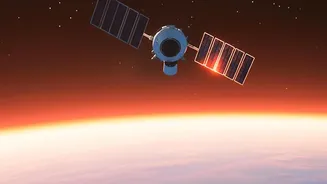
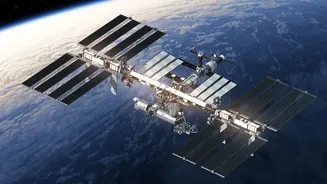
This enhanced cooperation is already bearing fruit. A prime example is the NASA-ISRO Synthetic Aperture Radar (NISAR) mission, a joint satellite launched in 2025 to map Earth's surface in unprecedented detail. This $1.5 billion project, one of the world's most expensive Earth-imaging satellites, showcases the level of trust and technical integration between NASA and ISRO. Looking forward, the partnership is set to get even closer. Plans are in motion for a joint mission to the International Space Station (ISS), which will see an Indian astronaut train at NASA's Johnson Space Center. Furthermore, NASA has extended a formal invitation for ISRO to participate in its ambitious program to build a permanent base on the Moon's south pole, a significant step in deep-space collaboration.
Unlocking the Commercial Cosmos
The real game-changer lies in the commercial opportunities this opens up for Indian industry. As ISRO pivots from being the sole operator to a facilitator, India's private space sector is booming. The country now has over 400 space startups, a massive leap from just a handful a decade ago. This growth is being actively encouraged by policy reforms, including the Indian Space Policy 2023 and new FDI rules that allow up to 100% foreign investment in satellite manufacturing without government approval. According to the U.S. Department of Commerce, these reforms could help India's share of the global space market grow from under 2% to 10% in the next five to seven years. Initiatives like the India-US Defence Acceleration Ecosystem (INDUS-X) are creating 'Space Innovation Bridges' to directly connect Indian startups with the American market, offering mentorship, funding, and contracts.
The New Industrial Revolution in Space
The opportunities span several key sectors. The most immediate is satellite manufacturing and services. With interoperability becoming a focus under the Artemis Accords, Indian firms that can build components and systems compatible with global standards will have a significant advantage. There's also a burgeoning market for launch vehicles and associated services. Skyroot Aerospace's launch of India's first privately developed rocket, Vikram-S, with support from ISRO, is a testament to this potential. Furthermore, the vast amounts of data from joint missions like NISAR will fuel a downstream economy in analytics, catering to sectors like agriculture, disaster management, and climate change monitoring. This creates a demand for Indian tech companies to process and productize space-based data for commercial use.
Building a Two-Way Street
The collaboration is not a one-way street. U.S. space companies are increasingly looking at India as a vital partner and market. In February 2026, a U.S. trade mission brought executives from 14 leading American space companies, including SpaceX and Amazon, to Bengaluru to explore joint ventures and partnerships. At the same time, a growing number of Indian startups are looking to establish a manufacturing and operational presence in the United States. This two-way flow of capital, talent, and technology is creating a deeply integrated commercial space corridor. Seven Indian startups were recently selected for a special Indo-US program to work directly with the U.S. Department of Defense and major companies like Lockheed Martin, giving them unprecedented access to the world's largest defense and space market.