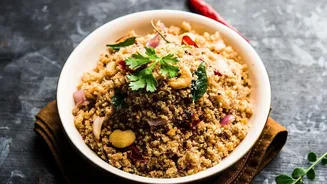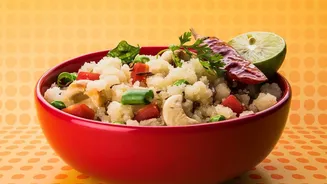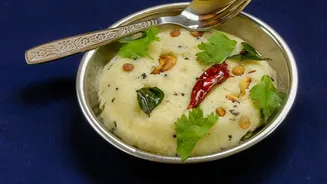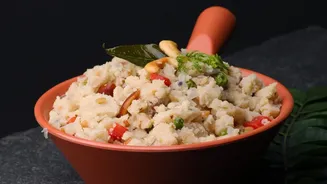


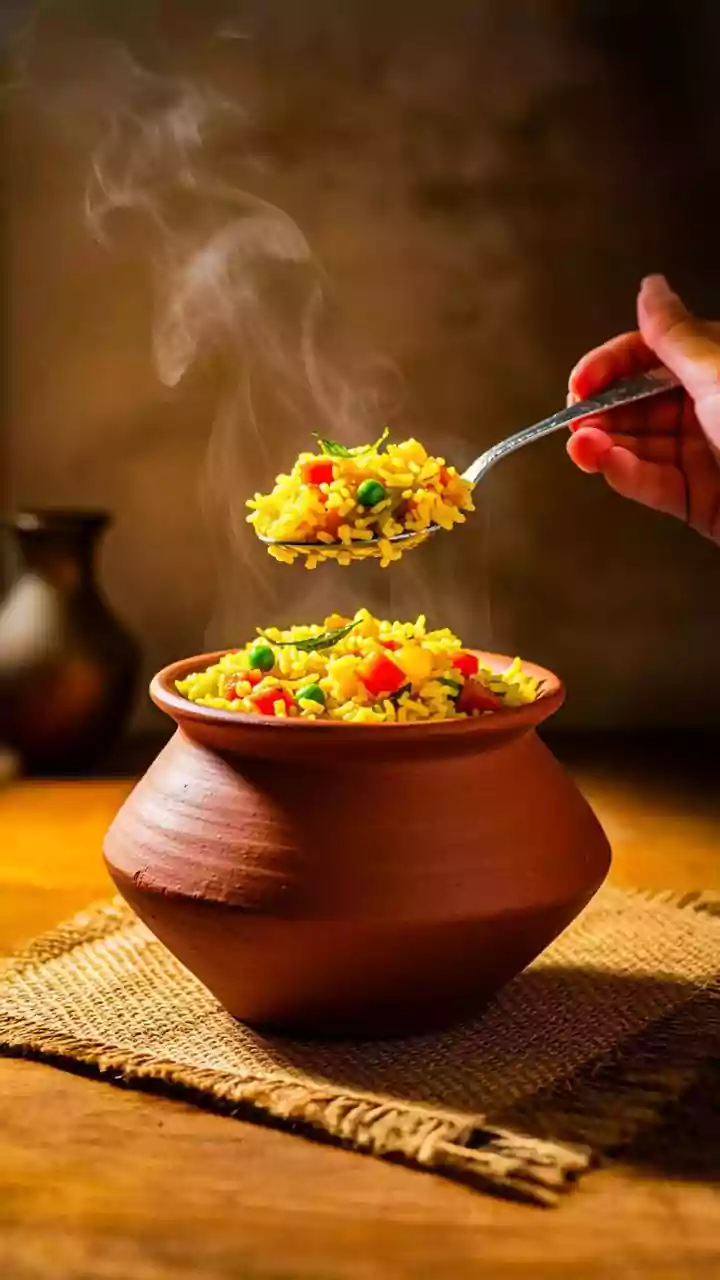
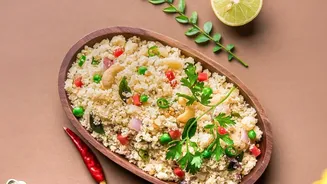
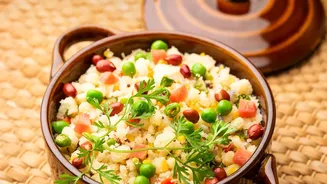
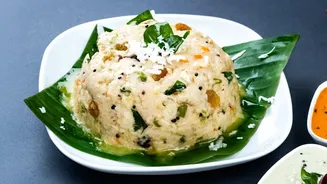
A staple across India, upma is the ultimate quick-fix breakfast. But beyond the classic semolina dish lies a diverse world of regional variations, each with its own unique character, texture, and flavour, proving this simple dish is anything but boring.
The Classic: Rava Upma
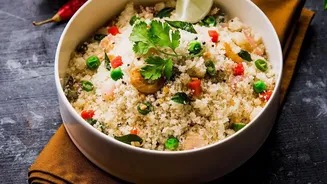
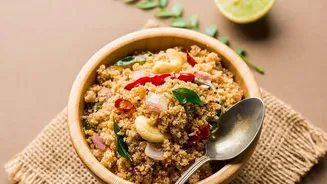
Before we travel, let's start at the beginning. The most common form of upma is made from dry-roasted semolina, or rava. It’s a simple preparation involving a tempering of mustard seeds, lentils, curry leaves, and ginger cooked in oil or ghee. Hot water is then added, and the roasted rava is stirred in until it absorbs the liquid and becomes soft and fluffy. Often studded with cashews for a bit of crunch, this version is the familiar, comforting base upon which many regional variations are built. It is known as Uppittu in Karnataka and Uppumavu in Kerala and Tamil Nadu.
Karnataka’s Spicy Khara Bath
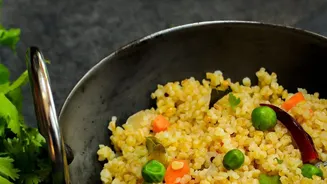
In Karnataka, upma is elevated to a spicier, more aromatic level with Khara Bath. The name itself translates to 'spicy bath'. While it shares its semolina base with regular upma, the flavour is dramatically different thanks to the addition of a special spice blend, typically a vangi bath or bisi bele bath powder. This powder, a mix of roasted dals, coriander, cinnamon, and other spices, gives Khara Bath its signature fragrance and taste. Loaded with vegetables like carrots, beans, and capsicum, it is more savoury and complex than its simpler cousin. It's famously served alongside its sweet counterpart, Kesari Bath, in a combination known as 'Chow Chow Bath'.
Tamil Nadu’s Rich Rava Kichadi
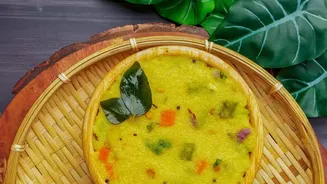
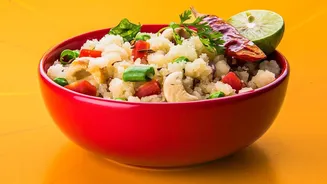
Often seen at weddings and special occasions, Rava Kichadi from Tamil Nadu is a richer, more indulgent take on upma. While the ingredients are similar, the key differences lie in the texture and the generous use of ghee. Kichadi is typically smoother and softer, often made with fine rava, and has a vibrant yellow hue from turmeric. It's almost always cooked with a medley of vegetables like tomatoes, carrots, and peas. The liberal amount of ghee and the addition of roasted cashews make it a more luxurious dish compared to the everyday upma.
Maharashtra’s Flavourful Sanja
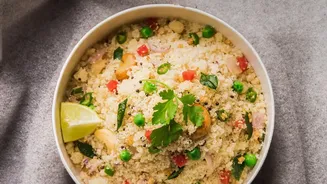
In Maharashtra, the local version of rava upma is called Sanja. While very similar to the classic, Sanja often includes onions, turmeric powder, and sometimes peanuts for crunch. Some recipes also call for the use of buttermilk or curd, which adds a subtle tanginess to the final dish. It's a wholesome and flavourful preparation, often enjoyed for breakfast or as an evening snack, served hot with a wedge of lime and sometimes a garnish of fresh coconut or sev.
The Tangy Puli Upma of Andhra & Tamil Nadu
Moving away from semolina, Puli Upma is a unique preparation popular in Andhra Pradesh, Telangana, and parts of Tamil Nadu. 'Puli' means tamarind, which is the star ingredient. This dish is made with coarse rice flour or rice rava, which is cooked in a tangy tamarind extract seasoned with red chillies and other spices. The final texture is often crumbly and not porridge-like, resembling tamarind rice (puliyodarai). It's a dish that requires skill to balance the sour and spicy notes, resulting in a breakfast that is anything but ordinary.
The Quick-Fix: Aval Upma
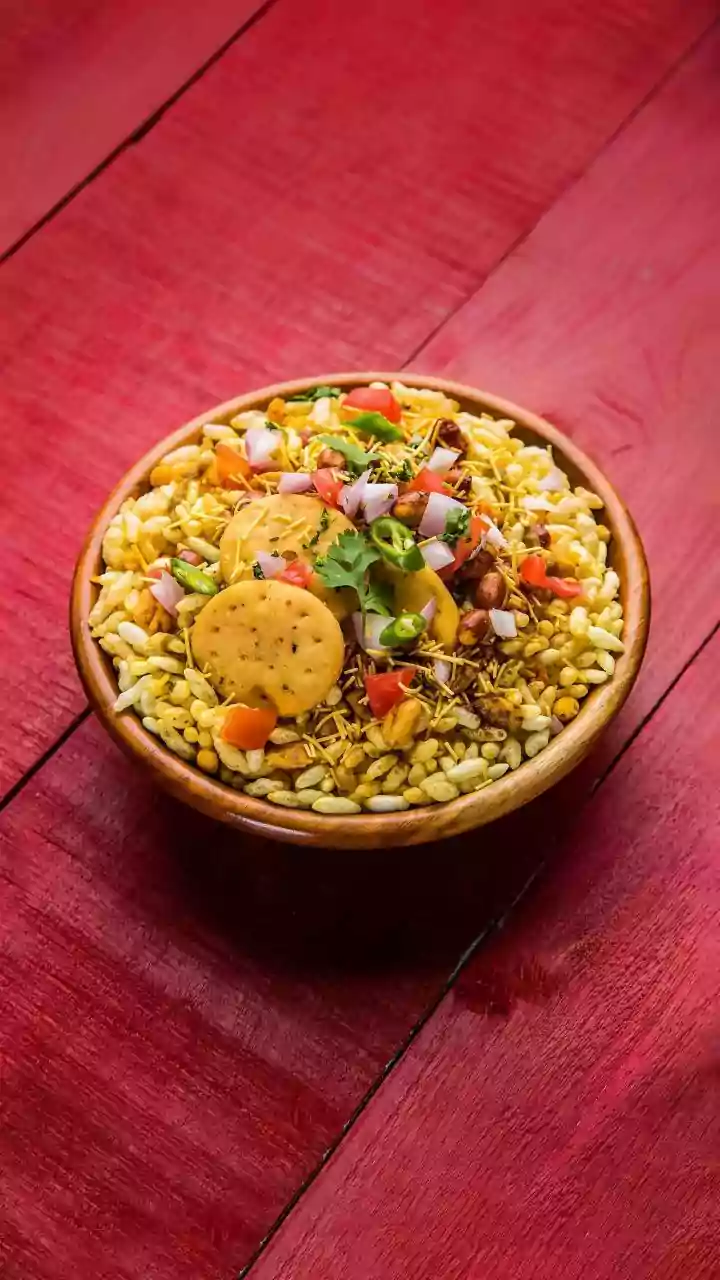
For mornings when you're truly short on time, Aval Upma is the answer. Made from aval (poha or flattened rice), this version is one of the quickest to prepare. The poha is first rinsed to soften it and then tossed with a flavourful tempering of onions, spices, and sometimes vegetables. There are many variations; some recipes call for a paste of coconut and red chillies to be mixed in, while others keep it simple with turmeric, lemon juice, and peanuts. It’s a light yet filling option that comes together in minutes.