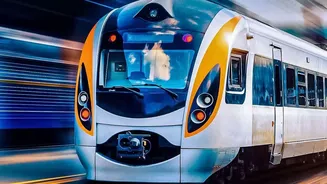







Indian Railway Catering and Tourism Corporation (IRCTC) is rethinking its onboard dining experience, launching a pilot project with a more compact food menu on select Vande Bharat sleeper trains to enhance quality and consistency.
Which Routes Are Affected?
This new menu trial is not
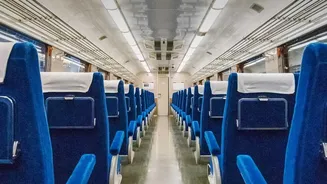
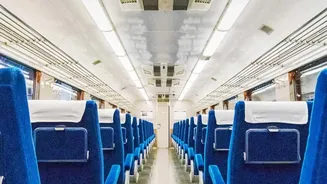
a network-wide change but a focused pilot project that began on November 1, 2026. It is currently being implemented on three specific Vande Bharat sleeper routes. Passengers travelling on the New Delhi-Varanasi, Mumbai-Bengaluru, and Howrah-Kamakhya (in Guwahati) services are the first to experience these changes. IRCTC officials have stated that they will carefully evaluate passenger feedback from these trial routes before making any decisions about continuing the new menu or expanding it to other Vande Bharat services across the country.
Less is More: What's on the New Menu?
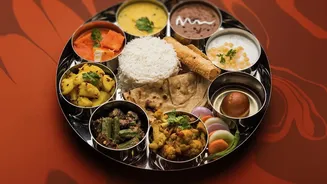
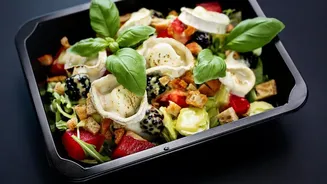
The core idea behind the trial is 'fewer items, better quality'. The previously elaborate meal trays, which could have as many as eight to ten items, have been streamlined to feature about four core components. For breakfast, passengers can now choose from a simplified list that includes options like idli and vada with sambar, poha, or upma. Several items have been removed from the breakfast tray, including soup, omelettes and sandwiches, buttermilk, and chocolates. For lunch and dinner, the focus is on a staple combination of chapati, rice, dal, and one main dish, which can be a vegetarian option or a chicken preparation for non-vegetarians. Accompaniments such as dry vegetables, curd, salad, pickles, and sweets are no longer part of the standard meal service under this trial.
The 'Why' Behind the Change
This menu overhaul is a direct response to persistent passenger complaints regarding the quality, hygiene, and consistency of food served on trains. In recent years, there have been several reports of issues ranging from cold meals to more serious hygiene lapses. Railway officials believe that managing a large and varied menu presents significant operational challenges, especially with limited pantry space and staff on a moving train. By simplifying the menu, IRCTC aims to make it easier to monitor every dish, maintain freshness, and ensure a consistent standard of quality for all passengers. The move is seen as a shift in strategy, prioritizing the quality of a few well-prepared dishes over a large but difficult-to-manage variety.
Lighter Trays and New Partners
The change is not just in the variety but also in the weight of the meal. The total weight of a meal tray has been reduced from approximately 700-750 grams to about 450-500 grams. Officials have clarified that this reduction comes from removing entire items, not from decreasing the portion sizes of the remaining dishes. To execute this quality-focused approach, IRCTC is collaborating with new partners, including large-scale cloud kitchens and established hospitality groups that also cater to airlines. For instance, partners like the Mayfair Group, TajSATS, and Sarovar Portico Group are now involved in preparing and supplying meals for these routes, bringing their expertise in large-scale, quality-controlled food production.
What's Next for Vande Bharat Dining?
While the current trial simplifies the menu, IRCTC is also exploring ways to incorporate more regional flavours. On the Mumbai-Bengaluru route, for example, there is passenger demand for popular Maharashtrian dishes like 'puran poli' and 'zunka bhakar', which are now under consideration. This suggests a two-pronged strategy: simplifying the base menu for quality control while thoughtfully adding regional specialities that enhance the travel experience. The success of this pilot project will be determined by passenger feedback. If travellers respond positively to the higher-quality, albeit smaller, meals, this model could be rolled out to other premium and long-distance trains in the Indian Railways network, potentially setting a new standard for onboard catering.