








A Ghost of a Star
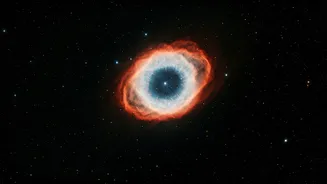
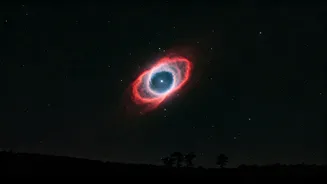
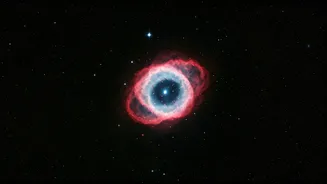
So, what exactly is this cosmic ring everyone’s so excited about? The Ring Nebula, officially known as Messier 57 (M57), is what astronomers call a planetary nebula. But the name is a little misleading—it has nothing to do with planets. It’s actually
the beautiful, glowing remains of a sun-like star that has reached the end of its life. Imagine a star puffing its outer layers of gas into space, like a final, grand sigh. The hot, tiny core left behind, called a white dwarf, illuminates these expanding gases, making them glow in ethereal colours. From our vantage point on Earth, about 2,300 light-years away, this structure looks like a perfect, tiny smoke ring or a cosmic Cheerio floating in the darkness. It’s a stunning preview of what will happen to our own Sun, albeit in about five billion years.
Finding Your Way with the Summer Triangle
The reason for the buzz right now is all about location, location, location. The Ring Nebula is conveniently located in the constellation Lyra, which is part of a very famous and easy-to-spot asterism: the Summer Triangle. This giant triangle is not a constellation itself but is formed by three of the brightest stars in the summer sky: Vega (in Lyra), Deneb (in Cygnus), and Altair (in Aquila). From late spring through summer, this trio dominates the eastern sky after sunset in India. Once you find the brilliant star Vega, you're in the right neighbourhood. The Ring Nebula lies between the two stars at the bottom of Lyra's parallelogram shape. The Summer Triangle acts as a giant celestial map, guiding even novice stargazers towards this deep-sky treasure. It’s at its highest and clearest in the middle of the night during these months, making it prime viewing time.
The Power of a Stargazing Club
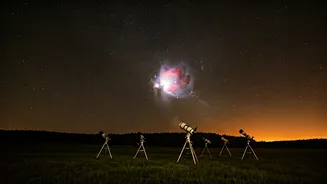
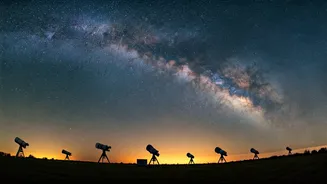
While you can technically hunt for the nebula alone, there’s a special magic in doing it with a group. Amateur astronomy clubs across cities like Mumbai, Delhi, Bengaluru, and Pune are organising star parties at dark-sky locations away from city light pollution. For many, this is the only way to see faint objects like M57. But these clubs offer more than just access to powerful telescopes. They are communities built on shared passion. Experienced members guide beginners, pointing out constellations and sharing stories about the cosmos. There’s a collaborative spirit in finding an object together, a collective gasp when the faint, ghostly ring finally drifts into the eyepiece. It’s a social event that connects people not just to the universe, but to each other, turning a solitary hobby into a shared adventure.
Your Guide to Joining the Hunt
Feeling inspired to look for it yourself? Here’s how to get started. First, find a dark spot. The biggest enemy of stargazing is light pollution, so getting away from city lights is crucial. Second, manage your expectations with equipment. While you can't see the Ring Nebula with the naked eye, a good pair of binoculars on a tripod can reveal it as a tiny, fuzzy star. To see its famous ring shape, you’ll need a telescope—a 4-inch or larger one is usually recommended. Third, use technology to your advantage. Stargazing apps like Stellarium or SkyView can use your phone’s GPS to show you exactly where to point your telescope. Locate the Summer Triangle, find Vega, and then slowly scan the area of Lyra. Be patient; deep-sky objects are faint and require your eyes to adapt to the dark. The best tip? Look for a local amateur astronomy club online. They welcome newcomers and are your best ticket to a guided tour of the cosmos.