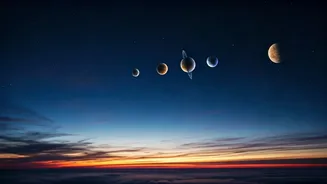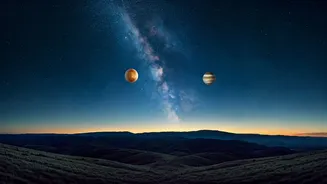





What is a Planetary Lineup?
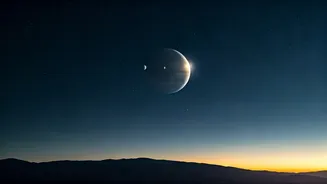
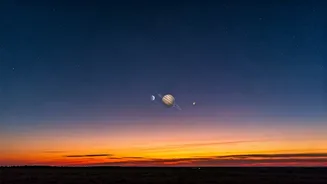
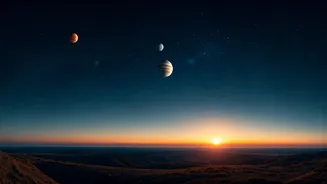
A planetary lineup, sometimes called a planetary parade, occurs when several planets appear close together in the sky from our vantage point on Earth. It's not that the planets are actually in a straight line out in space—their orbits are all on different
planes. Instead, it's a beautiful optical illusion created by their current positions in their respective journeys around the Sun. Tonight’s event is special because it involves a handful of planets, including some that are often difficult to spot. For observers in India, this gathering will be low on the western horizon, making for a dramatic but challenging celestial treasure hunt.
The Celestial Cast of Characters
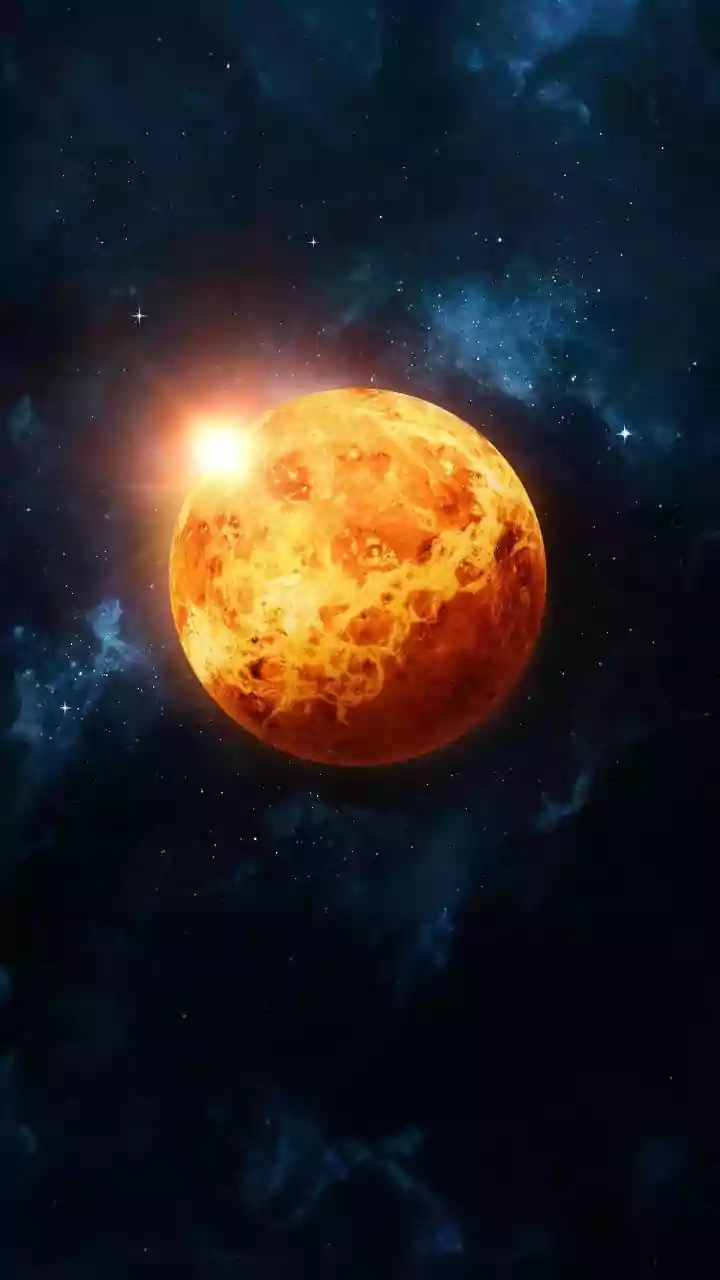
This evening's sky features a stunning cast. You’ll be looking for five planets: Jupiter, Mercury, Venus, Uranus, and Mars. The brightest and easiest to spot will be Venus, which will shine brilliantly as the 'Evening Star'. Below Venus, and much harder to see, will be Jupiter and Mercury, very close to the horizon and fading fast in the twilight glow. Above Venus, you'll find the reddish hue of Mars. The biggest challenge will be Uranus, a faint blue-green dot located near Venus, which will almost certainly require binoculars to distinguish from a star. Think of it as a celestial roll call, with each planet offering a different level of viewing difficulty.
When and Where to Look
Timing and location are everything. The best viewing window is a very narrow one: from about 30 to 60 minutes after the sun has fully set. You need the sky to be dark enough to see the planets, but not so dark that the lowest ones have already dipped below the horizon. Your direction is crucial: face directly west, where the sun just went down. Find a spot with an unobstructed view, away from tall buildings or trees. If you're in a city, escaping the worst of the light pollution by heading to a park, a rooftop, or the outskirts will dramatically improve your chances of seeing the fainter planets like Mercury and Uranus.
Do I Need a Telescope?
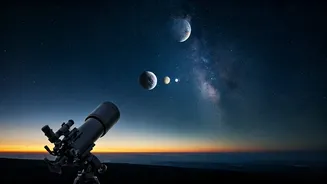
Good news: you don't need expensive equipment to enjoy the show. Venus, Mars, and possibly Jupiter will be visible to the naked eye. However, a good pair of binoculars will be your best friend tonight. Binoculars will make spotting Jupiter and Mercury much easier against the twilight glare. More importantly, they are essential if you want to catch a glimpse of Uranus. A telescope would, of course, offer a spectacular view, potentially showing you the moons of Jupiter or the ice-giant tint of Uranus, but it’s not a necessity for the thrill of simply spotting the alignment.
Tips for Capturing the Moment
Photographing this event with a smartphone is tricky but not impossible. First, stabilise your phone. Use a small tripod or prop it securely against a stable object. Any handshake will result in a blurry mess. Turn off your flash and use your phone's 'Night Mode' or 'Pro Mode'. In Pro Mode, you can increase the exposure time (try a few seconds) and set the focus manually to infinity (often shown with a mountain icon). Don't expect to capture all five planets in detail. Your best bet is to frame the shot around the brilliant Venus, with the landscape and twilight colours creating a beautiful scene. Manage your expectations; the goal is to capture the memory, not a NASA-quality image.