






The Annual Burn Cycle
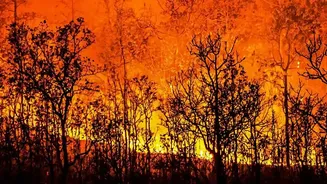
The smoke that plagues North India each year primarily comes from crop residue burning, a practice locally known as 'parali' burning. After harvesting rice (paddy), farmers in states like Punjab, Haryana, and Uttar Pradesh are left with stubble—the stalks
and roots remaining in the field. With a very short window to clear the land and sow the next crop, typically wheat, many farmers see burning as the quickest and cheapest solution. This practice became widespread with the rise of mechanised harvesting, which leaves behind taller stalks than manual methods. While economically convenient for individual farmers, this synchronised burning by thousands creates a massive air pollution event that affects millions.
From Rural Fields to Urban Lungs
The smoke doesn't stay on the farms. Prevailing northwesterly winds during October and November carry the plume of pollutants across the entire Indo-Gangetic Plain. Cooler autumn temperatures create a phenomenon called temperature inversion, which traps the smoke close to the ground, preventing it from dispersing into the upper atmosphere. This creates a thick, persistent smog that settles over major urban centres. While Delhi's hazardous air quality gets the most attention, cities like Kanpur, Lucknow, Chandigarh, and Amritsar are also severely affected. Studies have shown this transported smoke can be responsible for a significant portion of the particulate matter in these cities during peak burning season.
What's in the Smoke?
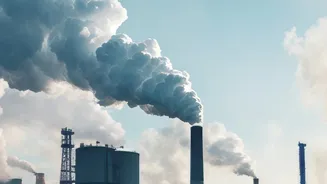
Crop residue smoke is a toxic cocktail of harmful pollutants. The most dangerous component is fine particulate matter, or PM2.5—tiny particles less than 2.5 micrometres in diameter. These particles are so small they can bypass the body's natural defences, penetrating deep into the lungs and even entering the bloodstream. The smoke also contains larger PM10 particles, black carbon, carbon monoxide (CO), nitrogen oxides (NOx), and other volatile organic compounds (VOCs). Together, these pollutants create the dense haze that reduces visibility and poses serious health risks.
The Heavy Toll on Public Health
The health consequences of exposure to this smoke are severe and well-documented. Short-term effects include irritation of the eyes, nose, and throat, coughing, and wheezing. For individuals with pre-existing conditions like asthma or chronic obstructive pulmonary disease (COPD), it can trigger severe attacks. The long-term impacts are even more alarming. Consistent exposure to high levels of PM2.5 is linked to an increased risk of heart disease, strokes, and lung cancer. Studies have attributed tens of thousands of premature deaths in India annually to pollution from agricultural burning, with children and the elderly being the most vulnerable.
The Path to Clearer Skies
Tackling stubble burning is a complex challenge that requires a multi-pronged approach. The government has been promoting in-situ (in-field) management techniques through subsidies for machinery like the Happy Seeder and Super Seeder, which allow for planting the next crop without clearing the stubble. Another solution is the PUSA decomposer, a microbial spray that speeds up the decomposition of the residue. Ex-situ (off-field) solutions involve collecting the straw and using it for other purposes, such as generating energy in biomass or compressed biogas (CBG) plants. However, challenges like the high cost of machinery, lack of a robust collection infrastructure, and farmer hesitancy have slowed adoption. Long-term strategies also include crop diversification to reduce the total area under paddy cultivation.