




The Ripple Effect of Predators
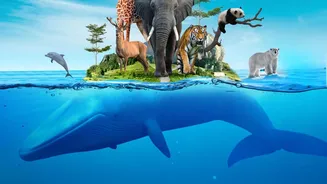
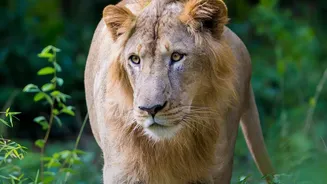
At the top of the food chain, apex predators have no natural predators of their own. Lions, wolves, tigers, and great white sharks are classic examples. Their role, however, goes far beyond simply hunting. They are 'keystone species', meaning their presence
has a disproportionately large effect on their ecosystem. By controlling the populations and behaviours of their prey, they trigger a domino effect known as a 'trophic cascade'. This process starts at the top and tumbles down through every level of the ecosystem, influencing everything from plant life to the physical landscape itself. Removing them can cause an entire system to unravel; reintroducing them can be a powerful way to stitch it back together.
The Wolves Who Changed Rivers
The most famous example of a trophic cascade unfolded in Yellowstone National Park. After wolves were eliminated from the park in the 1920s, the elk population exploded. Without their primary predator, the elk herds lingered in one place, particularly along riverbanks, overgrazing young willow and aspen trees. This left no food or building material for beavers, who also disappeared. The loss of trees and beaver dams led to increased erosion, and the rivers became wider and less stable. When wolves were reintroduced in 1995, the ecosystem began a remarkable recovery. The wolves didn't just reduce the elk population; their presence created a 'landscape of fear', forcing the elk to move more frequently. This allowed the willows and aspens to recover, which in turn brought back the beavers. The new beaver dams created habitats for other species, and the stabilised riverbanks reduced erosion. Incredibly, the wolves had indirectly changed the course of the rivers themselves.
Guardians of the Kelp Forests
A similar story plays out beneath the waves. Along the Pacific Coast, sea otters are the unlikely guardians of vibrant kelp forests. These marine mammals are voracious eaters, with a particular appetite for sea urchins. When sea otter populations were decimated by the fur trade, urchin numbers skyrocketed. These spiky grazers devoured the kelp, creating vast underwater deserts known as 'urchin barrens' that could support little other life. By reintroducing otters or allowing their populations to recover, the urchins are brought back under control. This allows the kelp forests—often called the 'rainforests of the sea'—to flourish, providing food and shelter for a huge diversity of fish and other marine creatures. Healthy kelp forests are also champions of climate change mitigation, absorbing significant amounts of carbon dioxide from the atmosphere.
India's Tiger, India's Forests
In India, the fate of the nation's forests is inextricably linked to its iconic apex predator, the tiger. Project Tiger, launched in 1973 when the population had dwindled, is now one of the world's most significant conservation success stories. India is now home to nearly 75% of the world's wild tigers. But Project Tiger is about more than just saving one species. Protecting tigers means protecting the vast forest ecosystems they require to survive. These tiger reserves act as crucial carbon sinks, with one study estimating that the protection of these forests avoided over a million tonnes of carbon emissions between 2007 and 2020. A healthy tiger population is a direct indicator of a healthy forest, which in turn secures water sources, supports biodiversity, and provides livelihoods for local communities.
A Complicated Restoration
Despite these successes, reintroducing apex predators is not a simple fix. These projects are complex and can face significant challenges. The modern world is not the same as the one these predators left; landscapes are now fragmented by roads, farms, and cities, increasing the potential for human-wildlife conflict. Critics also point out that the Yellowstone story, while powerful, might be oversimplified, with other factors like drought and the presence of other predators like bears also playing a role in the ecosystem's changes. Successful reintroductions require careful planning, scientific study, and community buy-in to manage the inevitable conflicts that arise when humans and large carnivores share a landscape.