





A Canvas of Stars and Stone
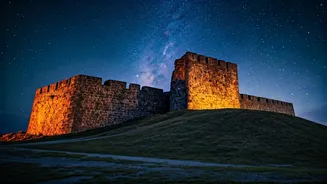
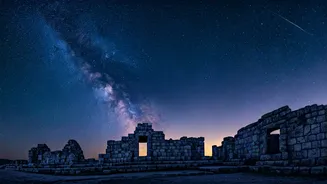
Imagine this: It’s well past midnight. You are perched atop a hill fort in the Sahyadris, the city lights a distant, forgotten glow. The air is cool and carries the faint scent of earth and history. Above you, the Milky Way arches across the sky in a brilliant,
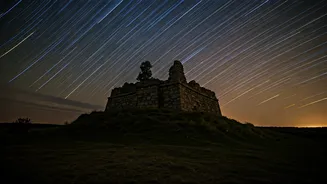
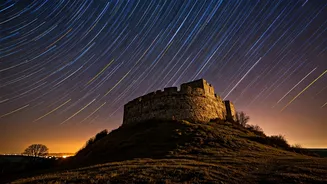
glittering swathe that no city dweller ever sees. In front of you, the jagged silhouette of a bastion, once a lookout for advancing armies, now stands as a stoic subject. This is the new battleground for a dedicated group of Indian photographers, who trek to these remote forts not for conquest, but for creation. Armed with cameras, tripods, and immense patience, they are the artists behind the epic long exposure photographs that have been lighting up social media feeds.
Painting with Time and Light
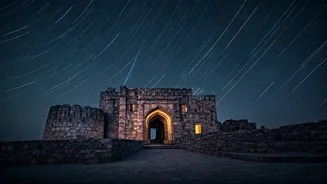
What exactly is a long exposure photograph? In simple terms, it’s a photographic technique where the camera's shutter is left open for an extended period—from a few seconds to several minutes, or even hours. While our eyes see a scene in a single instant, a long exposure shot captures the movement of everything that happens during that time. A passing car becomes a streak of red light. The movement of stars across the night sky, caused by the Earth’s rotation, becomes a mesmerizing arc or a swirling vortex of light trails. By leaving the shutter open, the camera gathers more light than the human eye ever could, revealing the faint glow of distant nebulae and the full, spectacular spread of our galaxy against the dark, imposing shapes of the forts.
Where History Meets the Cosmos
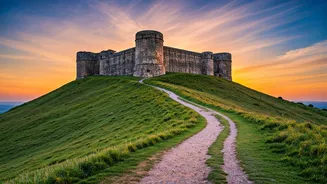
But why ancient hill forts? The answer lies in the powerful juxtaposition. These structures—from the formidable forts of Maharashtra like Raigad and Torna to the majestic citadels of Rajasthan—are symbols of human ambition, power, and history. They are grounded, earthly, and heavy with the past. The night sky, in contrast, represents the infinite, the eternal, and the cosmic. Bringing these two elements together in a single frame creates a profound visual narrative. It’s a dialogue between the transient efforts of humanity and the unchanging vastness of the universe. Furthermore, their remote locations offer what is essential for this kind of photography: dark skies, free from the light pollution that plagues our cities and obscures the stars.
The Modern-Day Sentinels
The photographers who undertake these projects are a special breed. They are part trekker, part historian, and part artist. The process is far from easy. It often involves arduous night treks, carrying heavy equipment up steep and sometimes treacherous paths. It requires meticulous planning, checking weather forecasts, and knowing the precise moon phase—a full moon can be too bright, while a new moon provides the darkest canvas. Once on site, they become modern-day sentinels, standing watch for hours, taking test shots, adjusting settings, and waiting for the perfect moment. Some even use a technique called 'light painting,' where they use torches or other light sources to manually illuminate parts of the fort during the long exposure, adding another layer of artistry and drama to the final image.
A New Form of Heritage Conservation
In a way, this photographic trend is a new form of heritage appreciation and conservation. These stunning images do more than just earn 'likes' online; they introduce India's magnificent historical architecture to a new generation, framed in a way that feels both epic and contemporary. They spark curiosity and encourage people to see these forts not as dusty relics, but as living, breathing spaces that continue to inspire awe. By showcasing their beauty against the backdrop of the cosmos, these photographers remind us of the enduring legacy of these structures and their timeless place in our landscape. They are capturing the soul of the fort, a soul that only reveals itself long after the sun has set.