






Why August is a Great Month for Saturn
Throughout August 2026, Saturn is on a journey towards its 'opposition', which will occur in early October. Opposition is a key astronomical event when Earth passes directly between the Sun and an outer planet, in this case, Saturn. For viewers on Earth,
this means the planet is at its closest and appears at its biggest and brightest in our sky. While the peak is in October, the entire period leading up to it, including all of August, provides excellent viewing opportunities. The planet will be visible for most of the night, rising in the east around mid-evening and travelling across the sky until dawn. This extended visibility makes it easier for everyone, from seasoned astronomers to curious first-timers, to get a good look.
When to Look: Key Dates and Times
Saturn will be a prominent feature in the sky all month long. In early August, you can expect it to rise a couple of hours before midnight. By the end of the month, it will be rising much earlier, around 10 p.m. local time. On the nights of August 30th and 31st, the waning gibbous Moon will pass close to Saturn, making the planet exceptionally easy to locate. For the best views, plan your stargazing session for any clear night after midnight, when the planet has climbed higher in the sky, away from the atmospheric haze near the horizon. During the pre-dawn hours, Saturn will be high in the sky, offering a prime viewing window before the sun begins to brighten the sky. There is also a major planetary alignment happening around August 12th, where Mars and Saturn will be the easiest naked-eye planets to spot in the morning sky.
Where in the Sky to Find Saturn
Finding Saturn is straightforward. It will rise in the east and travel westwards across the sky throughout the night. This month, Saturn is located in the constellation Pisces, near its border with Cetus. It will shine with a steady, yellowish-white light, unlike stars which tend to twinkle more. For those in India, look towards the eastern sky in the late evening, and track it as it moves higher and towards the west as the night progresses. By the pre-dawn hours, it will be high in the western sky. Using a stargazing app on your smartphone can be an invaluable tool. These apps use your phone’s location to show you a real-time map of the sky, allowing you to point your device upwards and instantly identify planets, stars, and constellations.
What You Will Need: Naked Eye, Binoculars, or Telescope?
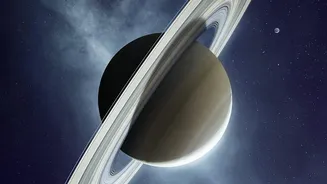
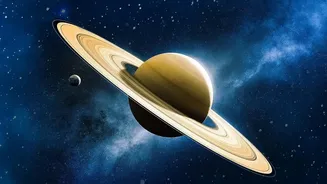
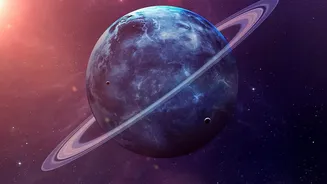
The beauty of this event is that Saturn is bright enough to be easily seen with the naked eye. It will look like a bright, non-twinkling star. However, to see what makes Saturn truly famous—its glorious rings—you will need some form of magnification. A good pair of binoculars will begin to reveal that Saturn is not just a point of light but has a slightly elongated shape, which is the effect of its rings. For a truly breathtaking view, a small telescope is recommended. Even a modest beginner’s telescope can clearly show the rings as a distinct structure separate from the planet itself. This year is particularly good for viewing the rings, as their tilt towards Earth has increased, making them more clearly visible than in recent years.
Tips for the Best Viewing Experience
To maximise your stargazing success, try to get away from bright city lights. Light pollution washes out fainter objects in the night sky and reduces contrast. Head to a park, a rooftop, or the outskirts of your city for a darker sky. Locations like Ladakh, Spiti Valley, the Rann of Kutch, and parts of the Western Ghats are renowned for their dark skies, but any spot with less artificial light will improve your view. Allow your eyes about 15-20 minutes to fully adapt to the darkness; this will help you see much more. Finally, be patient. Celestial events unfold slowly. Give yourself time to simply sit back and enjoy the majestic sight of the ringed planet making its steady journey across the cosmos.