

The Search for Lunar Gold: Water Ice
The most valuable resource on the Moon isn't a precious metal, but frozen water. For decades, scientists have theorized its existence, and recent missions have confirmed it. This ice is concentrated at the lunar South Pole, hidden in permanently shadowed
regions (PSRs) — craters and depressions that haven't seen direct sunlight in billions of years. These areas are among the coldest places in our solar system, which has allowed water ice to remain preserved, likely mixed in with the lunar soil, or regolith. NASA's goal is to tap into this frozen reservoir, as it can provide drinking water, radiation shielding, and most importantly, the core components of breathable air and rocket fuel: oxygen and hydrogen.
Meet the Robotic Prospector
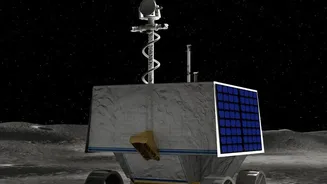
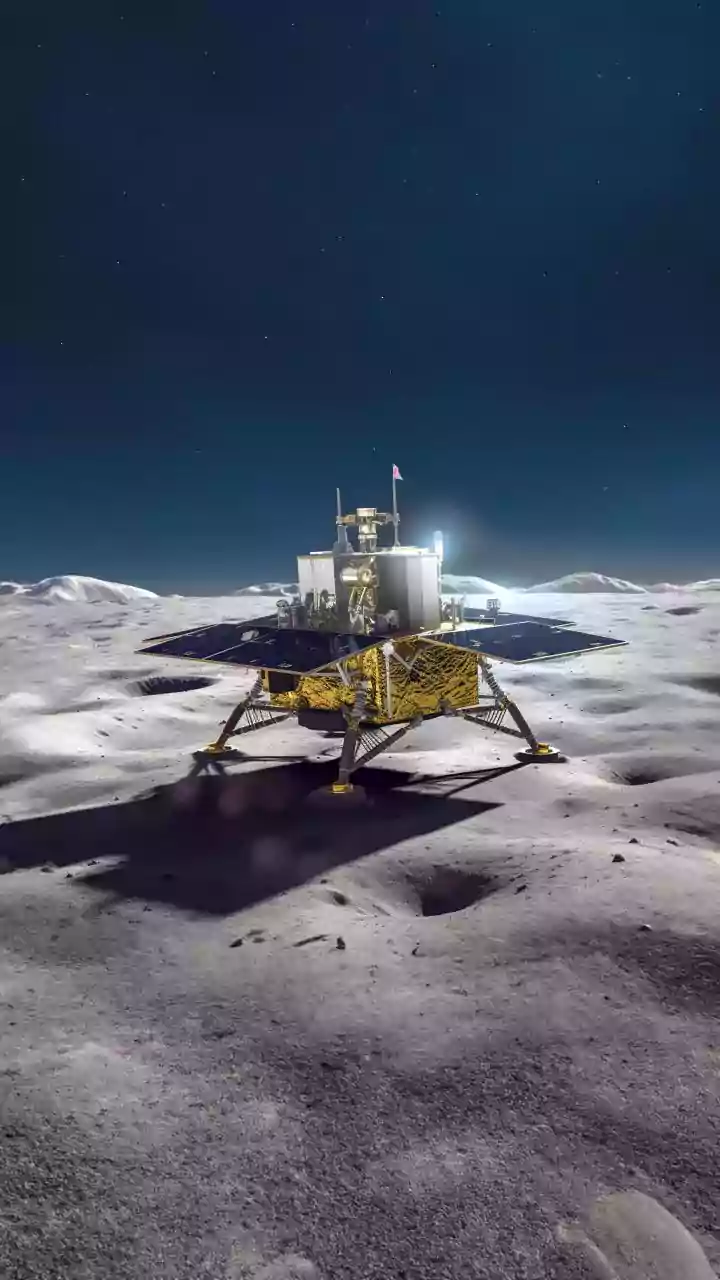
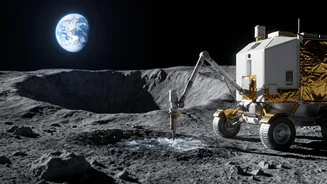
Before astronauts can set up camp, NASA needs a detailed map of these ice deposits. This is the job of robotic scouts. The flagship of this effort is the Volatiles Investigating Polar Exploration Rover, or VIPER. This golf-cart-sized rover is designed to navigate the treacherous, dark, and frigid terrain of the South Pole. Equipped with headlights, a drill, and a suite of scientific instruments, VIPER's mission is to measure exactly where the ice is, how much is there, and how deep it's buried. By drilling up to a meter into the lunar soil, it will create the first-ever resource maps of another celestial body, telling future missions precisely where to land and begin extraction operations.
The Extraction Process: From Ice to Vapor
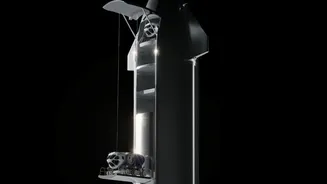
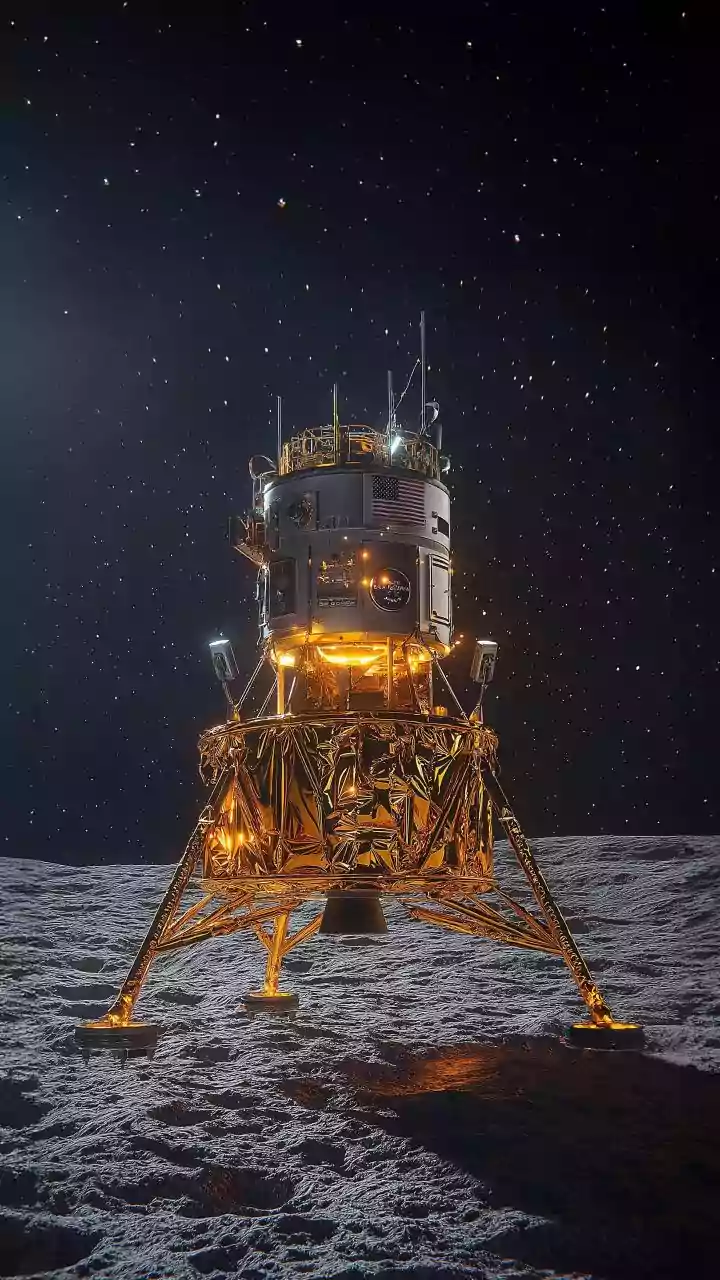
Extracting the ice from the frozen regolith is a major engineering challenge. The leading concept involves a process similar to mining, but with a high-tech twist. A robotic system will scoop or drill into the ice-rich soil and deposit it into a heated container. As the regolith is heated to hundreds of degrees, the water ice will skip the liquid phase and turn directly into vapor, a process called sublimation. This water vapor is then captured and collected in a tank, where it will re-freeze into purer ice or be stored as liquid water. This method separates the valuable H2O from the dust and rock it's been mixed with for eons. The ability to perform this In-Situ Resource Utilization (ISRU) is a cornerstone of the Artemis program's strategy for sustainability.
Making Air from Water
Once collected, the water is ready for the most crucial step: being transformed into breathable air. This is achieved through a well-understood chemical process called electrolysis. An electrolysis unit, powered by solar panels positioned in nearby sunlit areas, will pass an electric current through the water (H2O). This current splits the water molecules into their constituent elements: hydrogen and oxygen. The oxygen can then be stored in tanks to supply life support systems for habitats and rovers, providing breathable air for astronauts. The hydrogen, meanwhile, becomes a powerful, clean rocket propellant, which can be used to refuel spacecraft for return trips to Earth or for future voyages to Mars.
Why This Changes Everything
The ability to generate oxygen and fuel on the Moon is a game-changer for space exploration. Currently, every kilogram of supplies—including water, air, and propellant—must be launched from Earth, a process that is incredibly expensive. Sourcing these critical supplies directly from the Moon dramatically reduces the cost and logistical complexity of long-duration missions. It makes a sustainable lunar base camp economically feasible and transforms the Moon from a temporary destination into a vital stepping stone. By proving we can live off the land, the Artemis program aims to create a blueprint for future human settlements across the solar system, starting with Mars.