



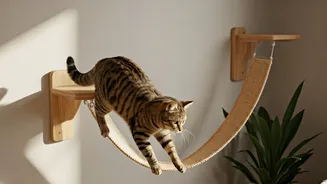




Why Cats Crave Height
To understand the appeal of wall steps, we need to think like a cat. In the wild, their ancestors used high vantage points for two key reasons: safety and hunting. From a high perch, a cat can survey its territory for potential threats (like rival animals
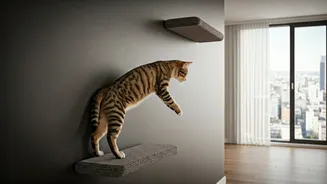
or larger predators) and opportunities (like unsuspecting prey). This instinct is deeply ingrained in our domestic companions. Even in the safest of homes, a cat feels more secure and in control when it can look down upon its domain. By providing vertical space, you’re not just giving them a fun toy; you’re satisfying a fundamental biological and psychological need. A cat without access to vertical territory is like a bird that can’t fly—it’s missing a key dimension of its natural world. This can lead to stress, anxiety, and boredom, which often manifest as unwanted behaviours like scratching furniture or aggression.
The Benefits of a Cat Superhighway
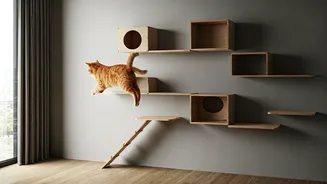
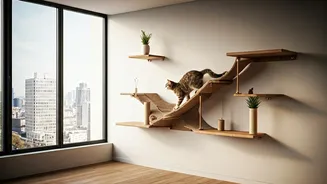
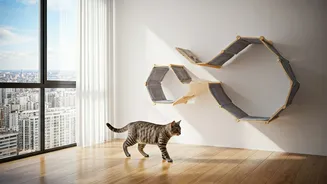
Creating a 'cat superhighway'—a network of shelves, steps, and perches—does more than just appease a cat's instincts. It provides crucial physical and mental stimulation. For an indoor cat, climbing and leaping between steps is a fantastic form of exercise that helps maintain a healthy weight and muscle tone. It also serves as a powerful form of environmental enrichment, breaking up the monotony of life indoors and preventing boredom. In multi-cat households, vertical space is a game-changer. Cats use height to establish social hierarchy and avoid conflict. A high-ranking cat might claim the top perch, while another can use a lower step to steer clear of a housemate. This 'timesharing' of space reduces tension and competition over resources like food bowls or litter boxes, fostering a more harmonious environment for everyone. It gives them options to be together or apart, on their own terms.
Planning Your Layout
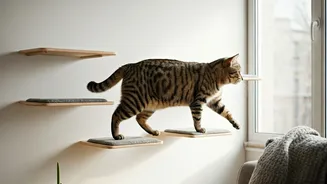
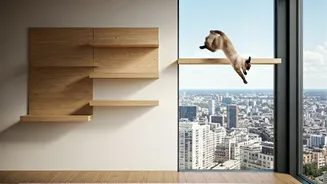
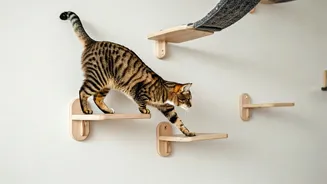
Before you start drilling holes, take some time to plan. The best cat walls are more than just a random assortment of steps; they are intentional pathways that lead somewhere desirable, like a window perch with a view of the birds or a cosy, high-up cat bed. Watch where your cat already likes to hang out. Do they try to climb the bookshelf or stare longingly at the top of the kitchen cabinets? Use this as a clue for where to start your highway. When spacing the steps, consider your cat’s age and agility. A young, athletic cat can easily handle a leap of a few feet horizontally and vertically. For an older cat, a kitten, or one with mobility issues, you’ll want to place the steps closer together to create a more ramp-like ascent. A good rule of thumb is to keep steps within 30-40 cm of each other, both vertically and horizontally, adjusting as needed. The goal is a path that is challenging but not impossible.
Installation: Safety is Everything
This is the most critical step. A wobbly or poorly secured shelf is a major hazard. The golden rule is to always anchor the steps into wall studs. A simple stud finder is an essential tool for this project. Drywall anchors alone are not strong enough to support the weight of a cat landing on them repeatedly and will eventually fail. Use sturdy brackets and screws that are rated to hold significantly more weight than your cat. When choosing or building your steps, make sure the surface provides good grip. Unfinished wood, sisal rope, or carpet remnants are excellent choices. Avoid smooth, glossy surfaces like painted or laminated wood, which can cause your cat to slip. The depth of the step should be sufficient for your cat to sit on comfortably—at least the length of their body from chest to rump. Check every step for stability after installation by pushing down on it firmly before you let your cat explore.
Encouraging Your Feline Explorer
Some cats will take to their new climbing wall immediately, but others might be more cautious. Never force your cat onto the steps. Instead, use positive reinforcement to build their confidence. Place their favourite treats on the first few steps to entice them to investigate. You can also use a feather wand or laser pointer to guide them up the path, turning it into a fun game. Make the destination worthwhile. A comfy bed, a sprinkle of catnip, or a special perch at the end of the route will give them a reason to make the journey. Patience is key. Let your cat explore at their own pace. By making it a positive and rewarding experience, you’ll help them discover the joy and freedom of their new vertical world, one confident step at a time. Soon enough, you'll find them ruling their kingdom from their new favourite spot.