

What is a Reusable Launch Vehicle?
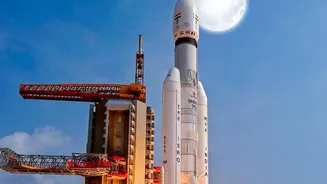
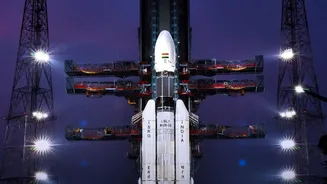
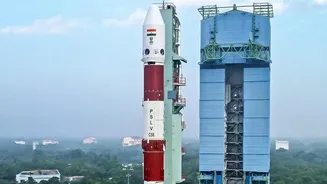
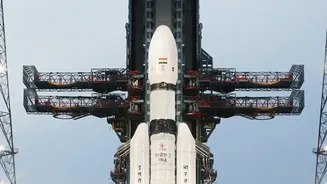
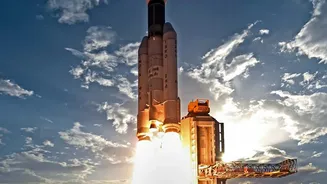
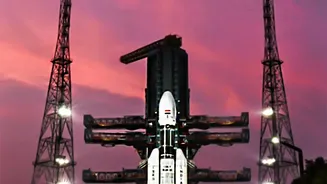
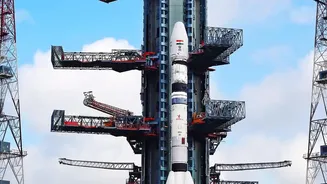
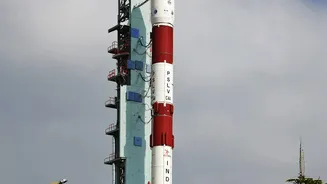
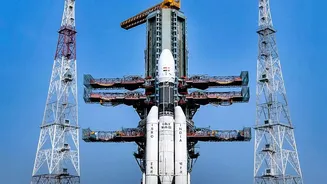
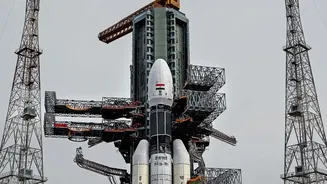
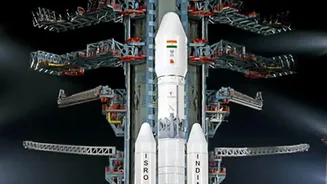
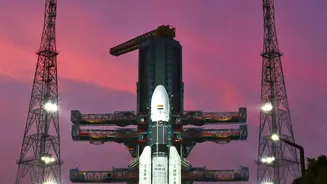
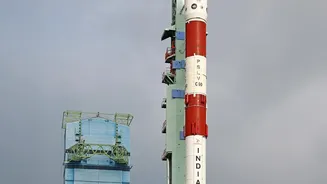
For decades, launching satellites into space has been an expensive, one-time affair. Traditional rockets, like ISRO’s own powerful PSLV and LVM3, are expendable. This means that the entire rocket, or most of it, is discarded after a single use, burning
up in the atmosphere or falling into the ocean. Think of it like buying a new car for a single trip and then throwing it away. A Reusable Launch Vehicle, or RLV, changes this entire model. The goal is to create a vehicle whose most expensive parts can be recovered, refurbished, and flown again, drastically cutting down the cost of accessing space. ISRO's ambitious project in this domain is a winged technology demonstrator named 'Pushpak'.
Meet 'Pushpak': India’s Autonomous Space Shuttle
Pushpak is at the heart of ISRO's RLV-Technology Demonstrator (RLV-TD) programme. It is a scaled-down, uncrewed, winged vehicle designed to test the critical technologies needed for a full-fledged reusable launch system. The most crucial of these is the ability to land on a runway autonomously. In a series of successful Landing Experiments (LEX) conducted at the Aeronautical Test Range in Chitradurga, Karnataka, ISRO has proven this capability. In these tests, an Indian Air Force Chinook helicopter lifted Pushpak to an altitude of 4.5 kilometres and released it. From there, the vehicle's onboard computers took over, navigating its own way to the runway and executing a precise, high-speed landing at over 320 kmph, faster than a commercial aircraft. These successful trials, which have tested the vehicle in increasingly challenging conditions, validate India's homegrown navigation, control, and landing systems.
The Promise: Sustainable and Budget-Friendly Space Access
The two biggest drivers behind developing RLV technology are sustainability and cost. By reusing the launch vehicle, ISRO aims to dramatically reduce the cost per kilogram to launch a payload into orbit. Some estimates suggest the cost could be slashed by as much as 80%, potentially bringing it down from around $20,000 per kg to $4,000 per kg or even less in the future. This makes space missions more affordable, opening the door for more frequent commercial launches, scientific missions, and supporting ambitious future projects like the Bharatiya Antariksh Station (India’s own space station). Furthermore, reusability is inherently sustainable. It reduces the manufacturing demand for new rocket stages for every mission and minimises the amount of debris left to float in orbit or discarded in our oceans.
The Long Road Ahead
While the landing experiments are a massive leap forward, the journey to a fully operational, two-stage-to-orbit (TSTO) reusable vehicle is long and complex. The recent tests demonstrated a perfect landing, but the vehicle has not yet been to space. Future milestones for the RLV programme will involve an Orbital Re-entry Experiment (OREX). This will see Pushpak launched into orbit on a conventional rocket, spend time in space, and then perform a controlled re-entry through the atmosphere, withstanding extreme temperatures, before making its autonomous landing. Developing technologies like air-breathing scramjet engines for powered flight within the atmosphere is another key area of focus. These challenges are significant, but ISRO is methodically building its capabilities, positioning India among a select group of nations mastering this next-generation space technology.