

A New Atlas for Lunar Water
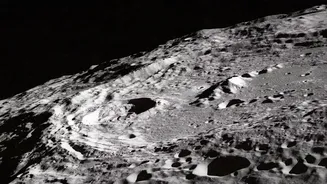
For decades, scientists have known that water ice exists on the Moon, primarily tucked away in permanently shadowed craters at the poles where temperatures are colder than anywhere in the solar system. However, recent findings, particularly from India's
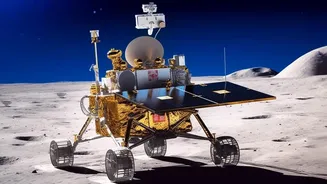
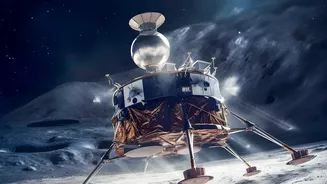
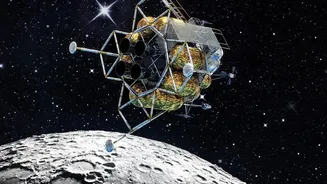
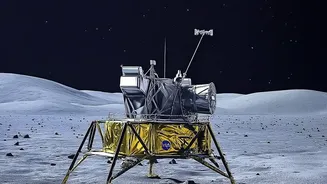
Chandrayaan-3 mission, are revolutionizing this understanding. Data from its lander, which touched down near the south pole in 2023, revealed that subsurface ice might be more widespread and accessible than previously thought. Analysis of temperature variations showed that even areas outside the coldest craters could host stable ice deposits just below the surface, influenced by local slopes and shadows. This is crucial because it expands the potential real estate for resource extraction, moving it from treacherous deep craters to more accessible terrain. These findings, combined with data from orbiters like NASA's Lunar Reconnaissance Orbiter, are contributing to a comprehensive map of lunar water—the first step toward planning a mining operation.
From Ice to Rocket Fuel
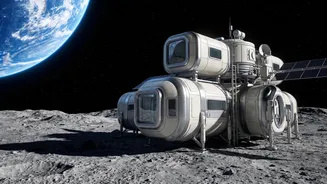
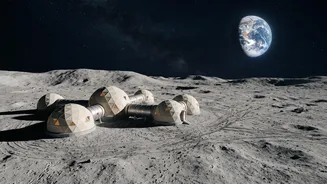
So, why is frozen water such a game-changer? The answer lies in basic chemistry. Water (H₂O) can be split into its constituent elements: hydrogen and oxygen. When cryogenically cooled into liquid form, these two elements are the primary components of powerful and efficient rocket propellant. This process, known as in-situ resource utilization (ISRU), is the cornerstone of making space exploration sustainable. Instead of hauling every drop of fuel from Earth—a prohibitively expensive task due to our planet's strong gravity—future missions could refuel at a lunar base. NASA is already actively testing the technology to make this a reality. Projects like CryoFILL at NASA's Glenn Research Center are developing and testing cryocoolers and liquefaction systems designed to turn mined lunar oxygen gas into a usable liquid propellant under lunar conditions. The goal is to create a fully functional 'gas station' on the Moon.
The Economics of Deep Space
The ability to produce fuel on the Moon fundamentally alters the economics of space travel. Launching mass from Earth is incredibly costly; every kilogram of payload requires many more kilograms of propellant just to escape Earth's gravity. A lunar refueling depot breaks this cycle. A rocket launching to Mars, for instance, could leave Earth with only enough fuel to get to lunar orbit, top up its tanks with locally sourced propellant, and then continue its journey. This allows for significantly heavier payloads, such as more scientific equipment, larger habitats, or more supplies for astronauts. Studies have shown that while the initial investment in mining and processing infrastructure is high, the long-term savings are enormous, making missions to Mars and beyond more feasible. Water becomes the 'oil of space', and the Moon transforms from a destination into a critical logistics hub for the entire solar system.
A New Era of Lunar Ambition
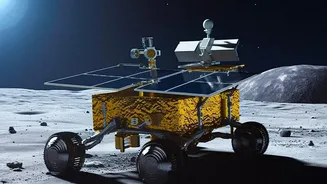
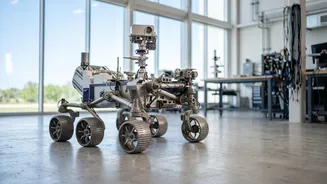
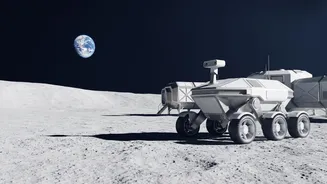
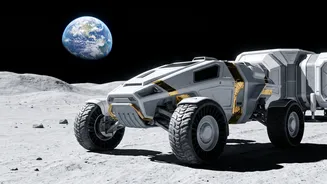
This potential has sparked a new wave of lunar ambition from both national space agencies and private companies. NASA's Artemis program, which aims to establish a sustainable human presence on the Moon, is heavily reliant on ISRU. Future rovers, such as those planned for the LUPEX mission (a collaboration between Japan's JAXA and India's ISRO), will carry instruments like NASA's Neutron Spectrometer System specifically to hunt for and characterize these ice deposits up close. The European Space Agency's Prospect mission, planned for 2027, will drill into the lunar surface to analyze ice composition directly. This international focus underscores a global consensus: the Moon's resources are the key to our future in space. These detailed water maps are not just scientific curiosities; they are treasure maps guiding the next generation of explorers and entrepreneurs toward building a true spacefaring economy.