








The Automation of Admin
Teacher workload is a significant challenge, with studies showing many educators work well over 50 hours a week. Much of this time is spent on administrative tasks like creating lesson plans from scratch, developing assignments, and grading. This is where
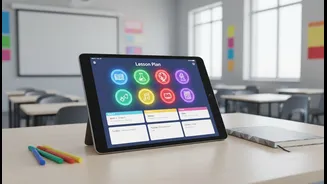
Artificial Intelligence enters the picture as a powerful assistant. AI tools designed specifically for educators can automate many of these repetitive tasks. A teacher can input a topic, grade level, and learning objectives, and an AI platform can generate a structured lesson outline, suggest relevant resources, and even create draft quizzes in minutes. This process, which could otherwise take hours, becomes a matter of moments, providing a solid starting point that saves valuable time.
A Tool, Not a Replacement
A common fear is that AI will make teachers obsolete, but the reality is more nuanced. AI-generated lesson plans are best seen as a first draft, not a final product. These tools lack the deep, personal knowledge a teacher has about their students. An AI cannot know that a particular class responds well to visual aids, that a few students need extra help with a specific concept, or that a real-world event just happened that could make a lesson more relevant. The true value of these tools is in handling the structural, time-consuming parts of planning, freeing up the teacher to focus on the uniquely human aspects of education: connection, empathy, and tailoring content to the specific needs of their classroom.
More Time for Creativity
Paradoxically, by automating parts of the planning process, AI can actually foster more creativity in the classroom. When teachers are not bogged down by paperwork, they have more mental energy to design engaging, interactive, and memorable learning experiences. That reclaimed time can be spent developing a hands-on project, organising a spirited classroom debate, or providing one-on-one support to a struggling student. AI can even act as a creative partner, helping a teacher brainstorm new ideas or find novel ways to explain a difficult concept. By removing the fear of the blank page, AI empowers teachers to be more ambitious and innovative in their instructional design.
The View from the Indian Classroom
In India, the conversation around AI in education is rapidly gaining momentum, driven by initiatives like the National Education Policy (NEP) 2020, which emphasizes technology-driven learning. The government has signalled its intent to integrate AI at all levels of education. Indian ed-tech companies are already developing platforms that offer personalised learning and assist teachers with curriculum design. However, significant challenges remain. The digital divide means that access to the necessary infrastructure is uneven, particularly in rural areas. There is also a critical need for comprehensive teacher training to ensure educators are equipped to use these tools effectively. Addressing these issues of access, training, and data privacy will be crucial for the successful and equitable integration of AI in Indian schools.