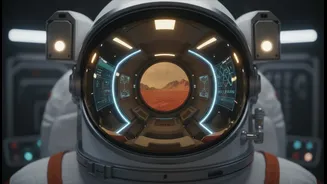





What is an Analogue Mission?
Before humanity takes one giant leap onto the Martian surface, we must take many small, simulated steps on our own planet. This is the core idea behind NASA's analogue missions. These are ground-based projects that mimic the challenges of deep space exploration
in a controlled setting. By placing crews in locations that have physical or psychological similarities to space, NASA can study how humans cope with the five main hazards of spaceflight: radiation, distance from Earth, hostile environments, gravity fields, and, most importantly for these missions, isolation and confinement. From undersea labs like NEEMO to mock habitats in volcanic craters, these missions provide invaluable data on everything from crew psychology to life-support systems, helping NASA test protocols and technologies before astronauts’ lives depend on them millions of miles from home.
Welcome to Mars Dune Alpha
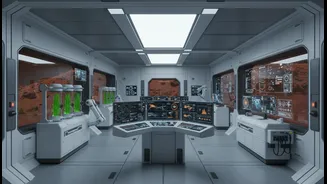
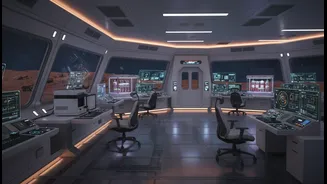
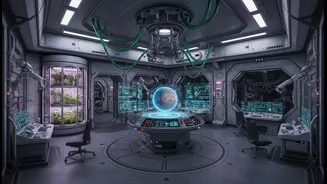
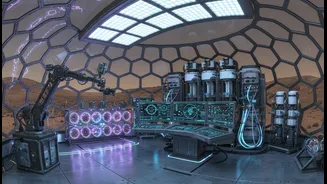
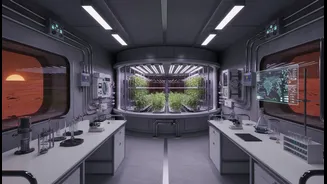
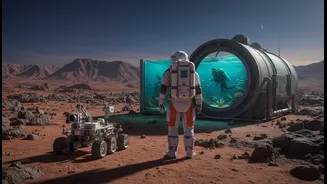
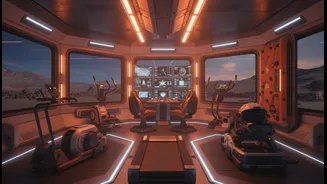
The latest and most ambitious of these programs is CHAPEA (Crew Health and Performance Exploration Analog). It involves a series of three year-long missions where a four-person crew lives and works inside Mars Dune Alpha, a 1,700-square-foot habitat at Johnson Space Center in Houston. The habitat, ingeniously created by construction technology company ICON and architecture firm BIG, is 3D-printed. Inside, the crew has private quarters, a kitchen, and areas for medical checks, recreation, and growing crops. They conduct simulated spacewalks in an attached sandbox filled with red sand, face unexpected equipment failures, manage limited resources, and even experience a 22-minute communication delay with mission control to simulate the real-time lag between Earth and Mars.
The Right Stuff, But on Earth
So, who is NASA looking for to undertake this grueling year of isolation? The application calls aren't for just anyone, but they're more accessible than the traditional astronaut corps. NASA seeks highly motivated U.S. citizens or permanent residents, typically between 30 and 55 years old. Candidates need a master's degree in a STEM field like engineering or biology, plus at least two years of professional experience, or equivalent experience like 1,000 hours of pilot-in-command time. Crucially, they must pass the same physical and psychological screenings as astronaut candidates to ensure they are fit for a demanding, long-duration isolation mission. The first CHAPEA mission, which concluded in early July 2024, featured a crew that included a research scientist, an engineer, an emergency medicine physician, and a microbiologist, demonstrating the diverse, highly skilled teams required.
More Than a Technical Challenge
The main goal of CHAPEA isn't just to see if the toilet breaks; it's to see how the crew handles it when it does. The most complex and unpredictable variable in any long-duration space mission is the human element. How do four people coexist in a small space for 365 days under constant stress? How do they solve problems when help is 40 minutes away round-trip? Data on the crew's physical and behavioral health is the mission's gold. Researchers study everything from their diet and sleep patterns to their team dynamics and mental resilience. This psychological and social data is arguably more valuable than any engineering schematic, as it will inform everything from crew selection and training to daily schedules for the actual, multi-year journey to Mars.
The Next Frontier is Here
NASA is already building on the success of CHAPEA. A new call has gone out for the Moon and Mars Exploration Analog (MMEA), an even more complex simulation set to begin no earlier than August 2027. This year-long mission will combine a deep-space transit simulation with a planetary surface stay, using multiple habitat modules to mimic an entire mission profile. This is why NASA's analogue program deserves our attention. While rocket launches provide the spectacle, this methodical, human-centric research is the unglamorous but essential foundation for our interplanetary future. It's where the abstract dream of Mars exploration gets real, tackling the practical, messy, and deeply human challenges that lie ahead. The road to Mars is being paved not just with steel and fire, but with data from ordinary people in an extraordinary simulation.