







What Exactly is a Negative Pull-Up?
A negative pull-up is an exercise that focuses only on the lowering (or eccentric) portion of a pull-up. Instead of trying to pull your body up to the bar, you start at the top of the movement—with your chin already over the bar—and then lower yourself
down as slowly and with as much control as possible. This is typically done by using a box, bench, or a small jump to get into the starting position, bypassing the upward pulling phase entirely. The entire point is to fight against gravity on the way down, finishing when your arms are fully extended in a 'dead hang' position.
The Science Behind 'Negative' Strength
The magic of the negative pull-up lies in eccentric muscle contraction. Muscles are capable of generating more force when they are lengthening under tension (eccentric) compared to when they are shortening (concentric). Think about it: it's easier to control a heavy object on its way down than to lift it up. Negative pull-ups leverage this principle, allowing you to work with your full body weight even if you can't perform a regular pull-up yet. This controlled lowering creates significant time under tension, which stimulates muscle fibers, builds strength, and improves grip and body control.
How to Perform a Perfect Negative Pull-Up
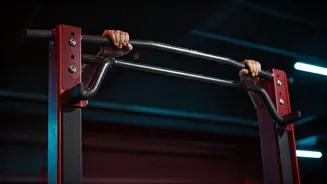
Proper form is crucial to maximize benefits and prevent injury. First, place a sturdy box or bench under a pull-up bar. Use it to get into the top position, grabbing the bar with an overhand grip (palms facing away), slightly wider than your shoulders. Get your chin over the bar. Before you lower, engage your back by pulling your shoulder blades down and back. Step off the box and begin to lower your body with deliberate control. Aim for a slow, steady descent of at least 3 to 5 seconds. Fight the urge to just drop. Keep your core tight to prevent swinging. The repetition is complete when your arms are fully extended at the bottom. Step back onto the box and repeat.
Common Mistakes That Hinder Progress
The most common mistake is lowering too quickly. If you're dropping in under three seconds, you're relying on gravity, not building strength. Another frequent error is not using the full range of motion; make sure you lower all the way to a dead hang with straight arms. Also, avoid letting your shoulders shrug up towards your ears; keep them packed down and back to properly engage your lats. Finally, don't use momentum. Each rep should be controlled and deliberate, resetting on the box each time instead of trying to swing or kip back up.
Building Your Routine for Best Results
Consistency is key. Aim to incorporate negative pull-ups into your routine 2-3 times per week, allowing for at least one day of rest in between for recovery. A good starting point for beginners is to perform 3 sets of 3-5 repetitions. The main goal isn't the number of reps, but the quality and duration of the lowering phase. Once you can comfortably complete your sets with a 5-second descent, you can progress by increasing the lowering time to 8, or even 10 seconds.
So, is the Strength Gain 'Instant'?
While the headline's promise of 'instant' strength might be an overstatement, the progress you can make with negative pull-ups is often surprisingly fast. Because you are overloading the muscles with your full body weight, the strength adaptations can be significant. Many people who are unable to do a single pull-up find that after consistently training negatives for 4 to 8 weeks, they are able to achieve their first full, unassisted repetition. It’s not magic, but it is one of the most direct and effective methods for building the specific strength required to conquer the pull-up.