







The Martian Air Problem
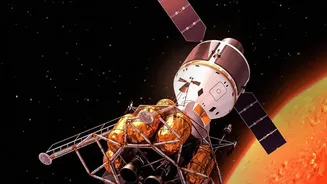
Landing astronauts on Mars is a monumental challenge, but keeping them alive is even harder. The biggest showstopper is the lack of breathable air. The Martian atmosphere is incredibly thin—about 100 times less dense than Earth's—and what little is there
is 96% carbon dioxide (CO2). For long-term missions, trucking tanks of oxygen 140 million miles from Earth is simply not feasible. A crew's return journey alone would require tons of oxygen for rocket propellant, far more than any current spacecraft could carry. This is where a concept called In-Situ Resource Utilization, or ISRU, comes in. It's a simple, elegant idea: live off the land. Instead of packing everything, future explorers will need to make their own essentials, and the first item on the list is oxygen. Scientists realised that the problematic CO2-rich atmosphere was also the solution.
From Bad Air to Breathable Oxygen
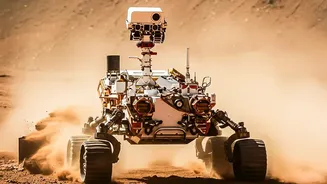
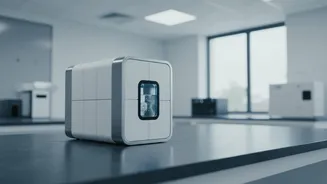
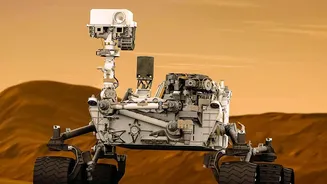
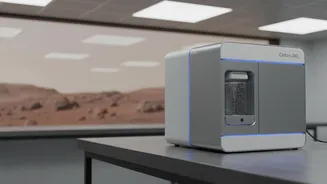
The core technology for turning Martian air into oxygen is called solid oxide electrolysis. Think of it as a fuel cell running in reverse. The process involves taking in Martian air, filtering out the pervasive red dust, and compressing it. Then, it's heated to a scorching 800 degrees Celsius and zapped with electricity. Inside a device called a solid oxide electrolyser, the intense heat and electrical current work together to split the CO2 molecules into two parts: breathable oxygen (O2) and carbon monoxide (CO). The oxygen is collected, while the carbon monoxide is vented back out. NASA's Perseverance rover carried a lunchbox-sized demonstration of this technology called MOXIE (Mars Oxygen In-Situ Resource Utilization Experiment). Between 2021 and 2023, MOXIE successfully and repeatedly proved this process works on another planet, producing about 122 grams of high-purity oxygen.
The Search for Peak Efficiency
While MOXIE was a historic success, it was just a first step. The main challenge now is optimisation. Scientists are working to make the process more efficient, durable, and energy-conscious. One of the biggest hurdles is the immense energy required. The process needs high temperatures, and generating that heat and the necessary electricity on Mars, likely from solar panels, is a huge power drain. Another issue is material durability. The high-temperature, corrosive process can degrade the components of the electrolyser over time. Researchers are experimenting with new electrode and catalyst materials, such as nickel-based catalysts combined with cerium oxide, to make the reaction happen more effectively at lower temperatures. Other developments include new plasma-based technologies that can split CO2 without the extreme heat, potentially offering a more efficient pathway. Each tweak aims to get more oxygen for less power.
Scaling Up From a Toaster to a Factory
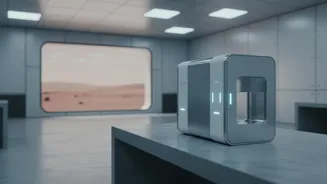
The word 'scalable' is crucial. MOXIE was a small-scale proof of concept, producing about 10-12 grams of oxygen per hour—enough for a small dog to breathe for a bit. A system to support a human crew and fuel a Mars Ascent Vehicle for the trip home needs to be hundreds of times larger, operating continuously for months. This leap in scale presents enormous engineering challenges. A full-sized plant would be a dedicated facility, not a small box on a rover. It would need a robust power source, likely its own solar farm, and advanced autonomy to run without constant human supervision. Scientists are already using the data from MOXIE's 16 successful runs to model how such a scaled-up system would perform, accounting for the harsh Martian environment, including extreme temperature swings and dust storms. These models help refine the design for a future oxygen factory that is not just bigger, but also smarter and more resilient.