




Rethinking a ‘Day’ and ‘Year’
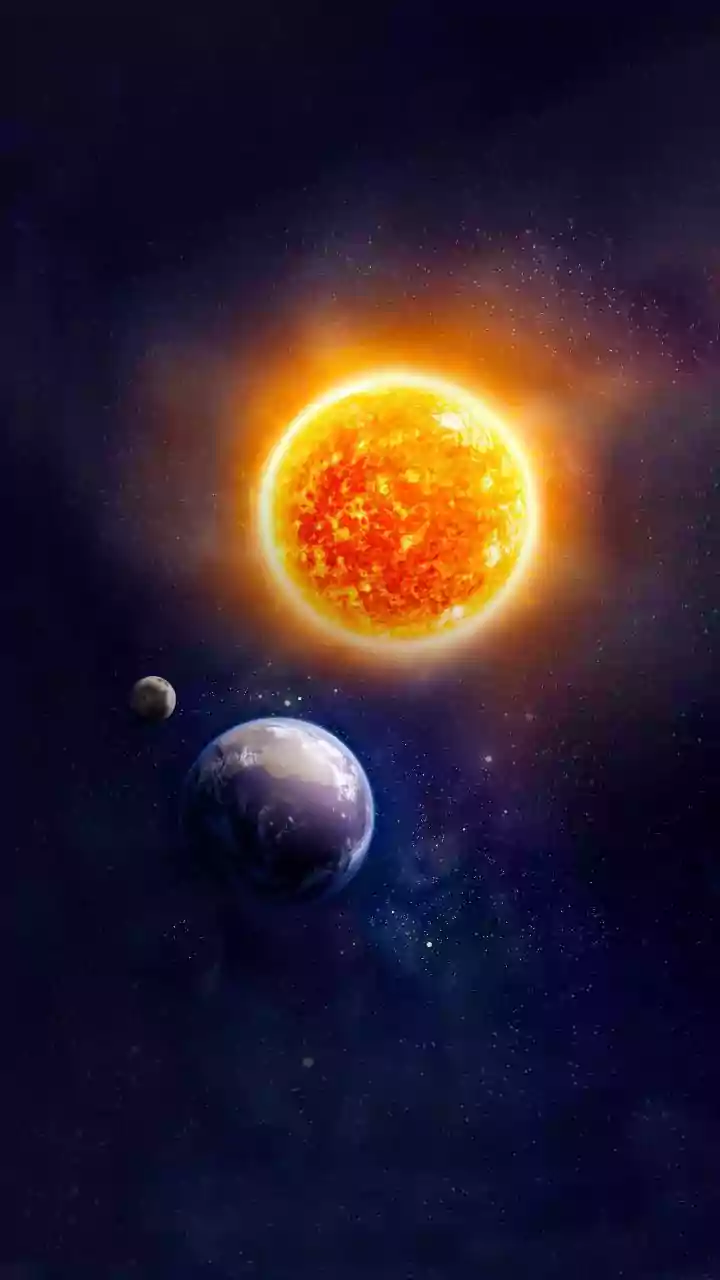
On Earth, the rhythm of our lives is simple and predictable. A day is the time it takes our planet to spin once on its axis, giving us a cycle of light and dark over roughly 24 hours. A year is the time it takes for Earth to complete one full orbit around
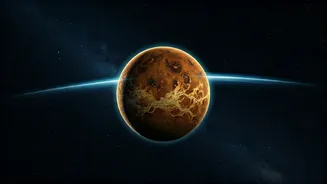
the Sun, approximately 365 days. We use this reliable celestial clockwork to mark everything from our work schedules to our birthdays. But in the grand theatre of the solar system, Earth’s way of doing things isn't the only way. Our so-called ‘sister planet’, Venus, operates on a completely different and utterly bizarre timescale that challenges our basic assumptions about how a planet should behave.
The Venusian Calendar Paradox
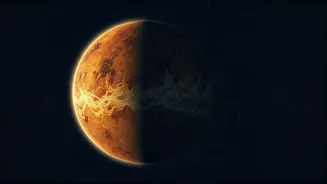
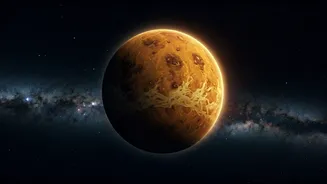
Here is the fact that sounds like a riddle: a year on Venus is shorter than a day on Venus. To be precise, Venus completes one full orbit around the Sun in about 225 Earth days. This is its year. However, it takes Venus a staggering 243 Earth days to rotate just once on its axis. This single rotation is called a sidereal day—the time it takes for the planet to turn 360 degrees relative to the distant stars. So, if you were standing on Venus, a full year would pass before the planet had even finished a single complete spin. You would age a full Venusian year before your first ‘day’ was even over. This makes Venus the only planet in our solar system with a day longer than its year.
The Two Kinds of Day
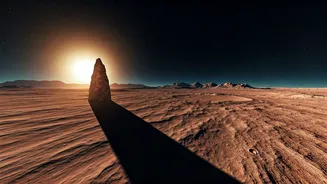
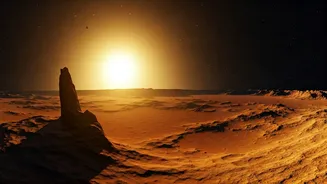
To make things even stranger, the day you’d actually experience on Venus isn't 243 Earth days long. This is because there’s another way to measure a day: the solar day. A solar day is the time it takes for the Sun to appear in the same position in the sky, for instance, from one sunrise to the next. Because Venus rotates incredibly slowly but also orbits the Sun relatively quickly, these two motions interact in a peculiar way. The result is a Venusian solar day that is significantly shorter than its sidereal day, clocking in at about 117 Earth days. So, while a full spin takes 243 days, you’d only have to wait 117 days for the next sunrise—if you could survive to see it, that is.
A Planet Spinning the Wrong Way
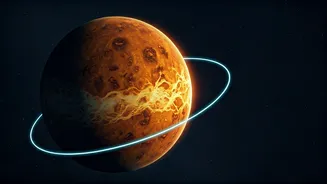
The secret to Venus’s temporal weirdness lies in its rotation. Not only is it the slowest-spinning planet in the solar system, but it also spins backward. While Earth and most other planets rotate counter-clockwise on their axes, Venus has a retrograde rotation, meaning it spins clockwise. If you could stand on the surface of Venus, you would see the Sun rise in the west and set in the east. This slow, backward spin is the engine driving the planet’s bizarre calendar. The combination of this retrograde motion and its orbit path works to create the strange length of its solar day, which is almost exactly half its year.
Why Is Venus So Strange?
Scientists don't have a definitive answer for why Venus is the odd one out, but there are some compelling theories. The leading hypothesis suggests that early in its history, Venus may have been struck by a massive planet-sized object. Such a cataclysmic impact could have been powerful enough to not only slow its rotation to a near-standstill but actually reverse its direction. Another theory points to its incredibly thick, heavy atmosphere. It’s possible that strong atmospheric tides, driven by the Sun’s heat, created so much friction on the planet's surface over billions of years that they gradually slowed its spin and may have even flipped its orientation.