
The Grand Waterways Vision
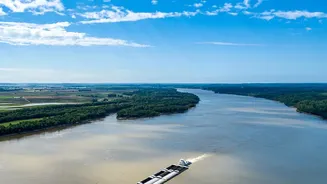
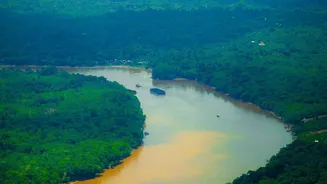
India has about 14,500 km of navigable waterways, but this extensive network is critically underutilised, accounting for less than 5% of the country's total freight transport. In contrast, road and rail networks are heavily congested. The National Waterways
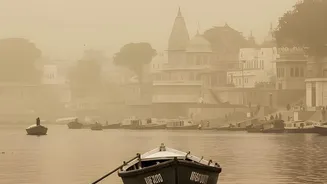
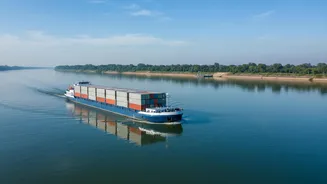
Act of 2016 marked a turning point, designating 111 rivers and canals as National Waterways (NWs) to be developed for commercial shipping. The flagship Jal Marg Vikas Project (JMVP) focuses on augmenting the capacity of National Waterway-1 on the Ganga River. The goal is ambitious: to create a cost-effective, fuel-efficient, and environmentally friendlier mode of transport, especially for bulk goods like coal, cement, and food grains. This shift aims to lower India's logistics costs, which are high compared to other major economies, and increase the modal share of inland water transport significantly.
The Unreliability Hurdle
The primary reason businesses have been hesitant to adopt inland water transport is its notorious unreliability. Unlike a train or truck that can largely operate on a fixed timetable, river transport is subject to a host of variables. Seasonal fluctuations in water levels are a major issue; many rivers become too shallow for large vessels during the dry season. Heavy siltation requires constant and expensive dredging to maintain a navigable channel depth. Furthermore, a lack of critical infrastructure, such as 24/7 navigation aids like night lighting and Differential Global Positioning Systems (DGPS), forces vessels to halt after dark, significantly increasing turnaround times. Inadequate air draft, where low bridges obstruct the passage of taller vessels, and a shortage of modern, mechanised terminals for quick loading and unloading, add to the delays.
How the Expansion Aims to Fix This
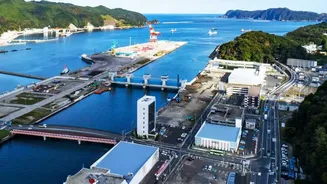
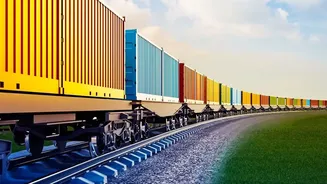
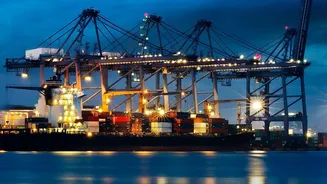
The national expansion plan is a multi-pronged strategy aimed directly at tackling these reliability issues. A core component is capital dredging to ensure a minimum river depth is maintained year-round, making navigation more predictable. This is complemented by the construction of state-of-the-art multi-modal terminals at key locations like Varanasi, Sahibganj, and Haldia on NW-1. These hubs are designed to integrate seamlessly with road and rail networks, solving the crucial last-mile connectivity problem that often negates the cost benefits of water transport. To improve navigation efficiency, modern River Information Systems (RIS) and digital vessel tracking are being implemented. The government is also encouraging private sector participation in building and operating jetties and terminals to accelerate infrastructure growth.
A New Era for Logistics?
If these efforts successfully create dependable schedules, the impact on India’s logistics sector could be transformative. For industries dealing in bulk commodities, the cost savings would be substantial. One litre of fuel can move over 100 km by waterway, compared to just 24 km by road, making it a far cheaper alternative for long-haul freight. Businesses would gain a viable third option, reducing their dependence on the often-strained road and rail networks and protecting their supply chains from disruption. This modal shift would also yield significant environmental benefits by reducing carbon emissions and easing traffic congestion on national highways. The development of freight villages and logistics parks around terminals is expected to create economic hubs, generating employment and boosting regional economies.
The Remaining Challenges
Despite the progress, significant hurdles remain. The scale of investment required is immense, and attracting sufficient private capital is an ongoing challenge. Environmental concerns surrounding large-scale dredging and its impact on riverine ecosystems, including the habitat of species like the Gangetic dolphin, need careful management. Another persistent issue is the lack of 'return cargo'. Vessels often travel full one way but return empty, which can double operational costs and make routes financially unviable. While progress on major waterways like NW-1 and NW-2 is advancing, many of the 111 declared waterways are still far from being commercially viable, with some feasibility studies showing limited potential. Ensuring sustained funding, effective project execution, and solving the return cargo puzzle will be critical for the long-term success of this ambitious plan.