

Your Only Equipment: Your Eyes
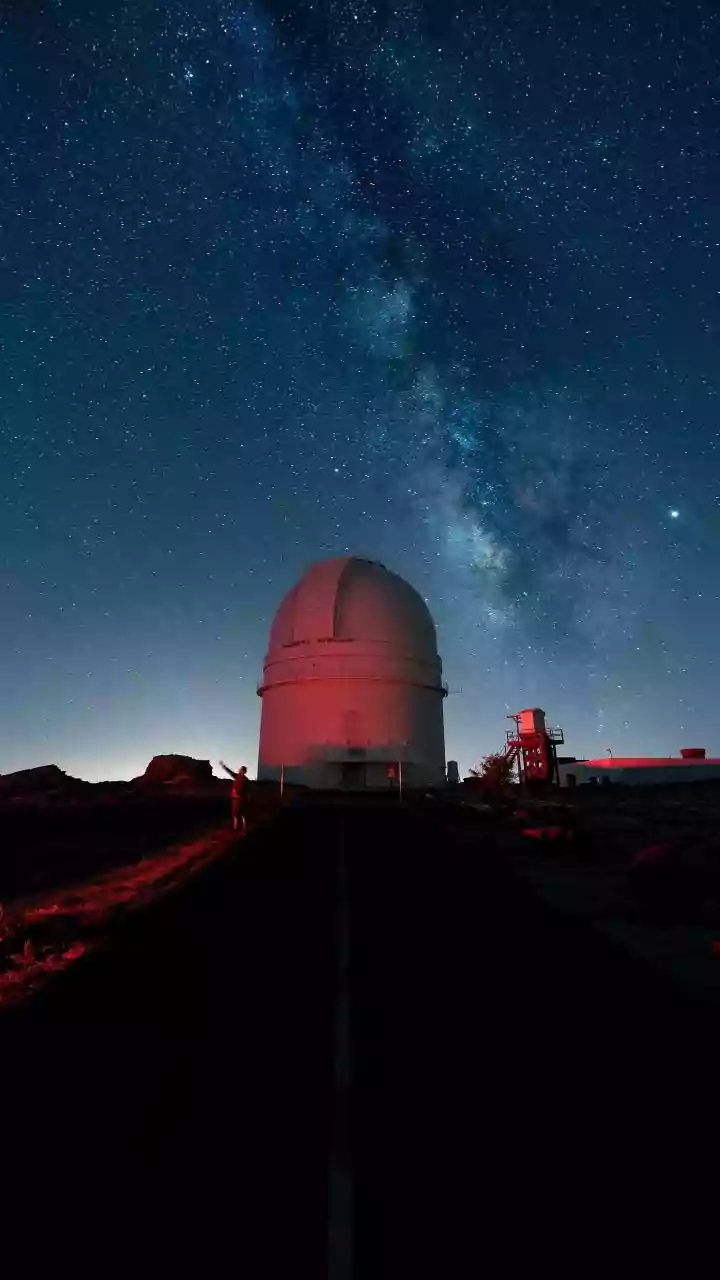
The most important tool for any budding astronomer is curiosity. You don't need an expensive telescope to appreciate the cosmos. In fact, some of the grandest sights are best viewed with the naked eye or a simple pair of binoculars. The key is to get
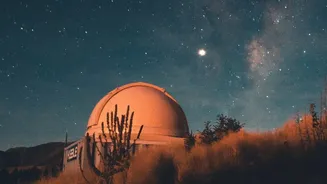
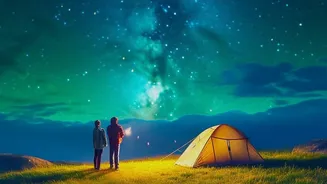
away from the glare of city lights. Find a park, a quiet field, or even a dark corner of your backyard. Give your eyes about 20 minutes to adjust to the darkness, and the celestial theatre will begin to open up. For those in India, destinations like Hanle in Ladakh or the Rann of Kutch offer pristine, dark skies, but any spot with minimal light pollution will reward your patience.
A Dance of Planets and the Moon
September offers a beautiful series of celestial meetups. In the pre-dawn hours of September 6th and 7th, the waning crescent Moon will appear very close to the reddish dot of Mars in the eastern sky. Just a day later, on September 8th, the Moon continues its journey to meet Jupiter, the largest planet in our solar system, again in the pre-dawn sky. Later in the month, look for the brilliant planet Venus, which reaches its peak brightness on September 18th, appearing as a dazzling point of light in the western sky just after sunset. Finally, on September 27th, the nearly full Moon will have a close encounter with Saturn. These conjunctions are slow, graceful events that unfold over hours and are perfect targets for naked-eye observation.
Last Chance for the Milky Way's Core
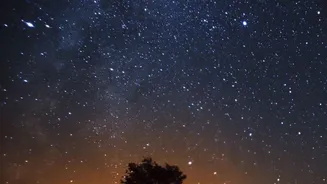
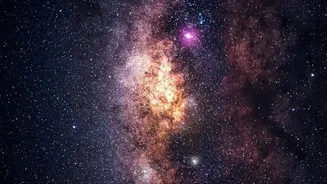
The glowing, hazy band of our own galaxy, the Milky Way, is a breathtaking sight. September provides one of the last best chances in 2026 for observers in the Northern Hemisphere to see its bright, dense core. This is the part of the sky that looks like a celestial river of light, stretching overhead on dark, moonless nights. The best time to view it is around the new moon, which falls on September 11-12. This window of darkness is ideal for seeing the faint, ethereal glow of billions of distant stars. Look south and overhead in the evenings to catch this magnificent sight before it sinks below the horizon for the winter.
Connect the Dots with Autumn Constellations
As the summer constellations begin to drift westward, the stars of autumn take centre stage. Look for the Great Square of Pegasus, a large and easily identifiable square of four stars rising in the east. Another prominent feature is the 'W' or 'M' shape of Cassiopeia in the northeast, which is a helpful guidepost for finding other celestial objects. The famous Summer Triangle, composed of the bright stars Vega, Deneb, and Altair, will still be high in the sky during the evening, making it a familiar landmark for stargazers. These patterns have been watched by cultures for millennia, and learning to spot them is like learning a map of the heavens.
A Sprinkle of Shooting Stars
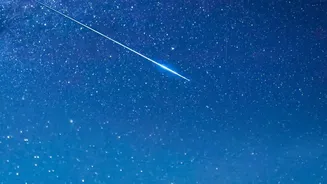
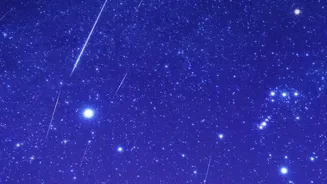
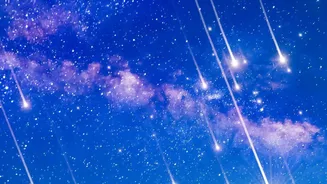
While September doesn't host any major meteor showers, you can still catch a few shooting stars. The September Epsilon Perseids are a minor shower active from September 5th to 21st, with a peak on September 9th. On this night, you might see up to five meteors per hour streaking from the constellation Perseus. The good news is that the peak coincides with the time before the new moon, meaning moonlight won't interfere with the view. Remember, meteor watching requires no equipment at all—just a comfortable chair, a warm blanket, and patience.