






The Sunshine Bottleneck
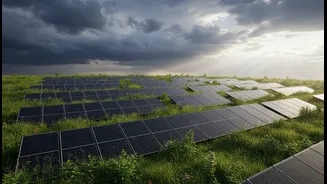
Solar energy's greatest strength is also its most persistent weakness. The same sun that provides a free, abundant source of power is unreliable. Traditional photovoltaic (PV) panels, typically made from silicon, thrive on direct sunlight. When clouds
roll in, their output drops significantly. On a heavily overcast day, a standard solar panel might only produce 10% to 25% of its rated capacity. This intermittency poses a major challenge for energy grids that require a constant, predictable supply of electricity. In a country like India, with ambitious national solar targets but also a long and heavy monsoon season, this bottleneck is particularly acute. It forces a reliance on backup power sources and expensive battery storage, complicating the transition to fully renewable energy.
A Breakthrough in the Clouds
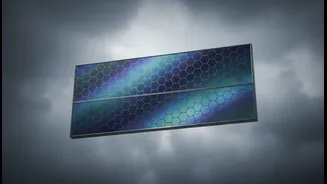
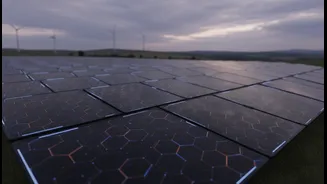
The headline breakthrough isn't a single invention, but a wave of innovations targeting this exact problem. Researchers and companies are pushing the boundaries with new materials and designs that are far more effective in low-light conditions. The most promising of these are tandem solar cells, particularly those combining traditional silicon with a 'wonder material' called perovskite. Unlike standard panels that capture a limited range of the light spectrum, perovskite-silicon tandem cells are designed to absorb different wavelengths of light. The perovskite layer captures high-energy blue light, while the silicon layer below captures lower-energy red light, essentially getting two chances to convert photons into electrons from the same sunbeam. This makes them significantly more efficient at harvesting diffuse light—the kind of scattered light that dominates on a cloudy day.
How It Actually Works
Think of a traditional solar panel like a specialist tool, finely tuned for one specific job: capturing direct, high-intensity sunlight. The new generation of tandem cells is more like a versatile multi-tool. Perovskite's crystal structure is exceptionally good at absorbing the parts of the solar spectrum that silicon struggles with. By stacking these materials, scientists create a layered system where each layer is optimized for different light conditions. Even when thick clouds block direct sunbeams, a significant amount of scattered, or diffuse, light still reaches the ground. Tandem cells, along with other emerging technologies like quantum dots and advanced cell architectures, are specifically engineered to capture this scattered energy with far greater efficiency than their predecessors. This means more consistent power generation throughout the day, from dawn to dusk, and across different weather conditions.
The India Opportunity
For India, a technology that can generate substantial power during the monsoon season is a game-changer. The country's solar capacity has grown exponentially, but it still faces a significant drop in generation during the four-month rainy season. All-weather solar panels would help stabilize the grid, reduce the need for fossil-fuel backups, and make energy supply more predictable year-round. This could accelerate the adoption of solar in regions like the Northeast, which has immense renewable potential but experiences heavy cloud cover for much of the year. Furthermore, more efficient panels mean more power can be generated from a smaller area, a crucial factor for a densely populated country. For rural and off-grid communities, reliable cloudy-day solar could provide a consistent power source for homes, schools, and health clinics, transforming daily life and economic prospects.
From Lab to Rooftop
While lab results are setting new records—with some perovskite-silicon cells surpassing 30% efficiency—a significant gap remains between a laboratory breakthrough and a commercially available product on your roof. The primary challenges are durability, cost, and scaling up manufacturing. Perovskite, while highly efficient, has historically been less stable than silicon, degrading when exposed to moisture and heat over long periods. However, recent advancements are rapidly closing this gap. Companies are now beginning limited commercial production of these tandem panels, but it will take time before they are as affordable and widespread as today's silicon panels. The journey from a promising innovation to a dominant market technology is a marathon, not a sprint, requiring immense investment and industrial engineering.