





It’s More Than Just Less Stuff
When people hear “minimalism,” they often picture stark, white rooms devoid of personality. But in modern home design, minimalism is less about deprivation and more about intention. It’s the practice of editing your space down to its essential components,
keeping only the items that serve a purpose or bring you joy. This isn't about getting rid of everything you own; it's about curating your environment. By consciously choosing what stays, you automatically reduce the visual noise that makes a room feel crowded, creating a foundation for a calmer, more expansive atmosphere.
The Psychology of Open Space
The feeling of spaciousness is deeply psychological. A cluttered room bombards our brains with stimuli, creating a subtle but constant cognitive load. Every object—from a stack of mail to a collection of knick-knacks—demands a sliver of our attention. This visual chaos makes a space feel mentally and physically smaller. A minimalist approach does the opposite. By clearing surfaces and creating uncluttered sightlines, you reduce that cognitive burden. Your eyes can travel freely across the room, and your mind can relax. This mental breathing room directly translates into a perception of physical breathing room.
Let There Be Light (and a Smart Palette)
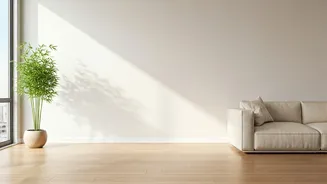
Light is the single most effective tool for making a space feel larger. Minimalist design prioritizes maximizing natural light by keeping window treatments simple and sheer, or forgoing them altogether where privacy allows. Mirrors are another classic trick, strategically placed to bounce light around the room and create an illusion of depth. Color plays an equally important role. Minimalist palettes often lean on light, neutral colors like white, beige, and soft gray. These hues reflect light rather than absorb it, causing walls to visually recede and making the room feel more open and airy. A monochromatic or limited color scheme also unifies the space, preventing it from looking choppy and small.
Mastering Negative Space
In design, the space around and between objects is called “negative space,” and it’s just as important as the objects themselves. Think of it as visual punctuation. A room packed with furniture, with every wall covered in art, has no negative space. The result is suffocating. Minimalist design celebrates negative space. It means not pushing every piece of furniture against a wall, leaving some walls intentionally bare, and allowing a single, beautiful object to command attention on a table. Giving your furniture and decor room to breathe allows each piece to be appreciated individually while contributing to an overall feeling of calm and spaciousness.
Strategic and Multi-Functional Furniture
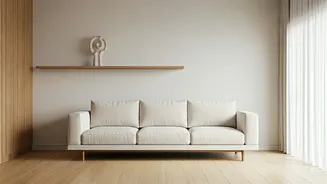
The minimalist ethos doesn’t mean sitting on the floor. It means choosing furniture wisely. Opt for pieces with clean lines and a smaller visual footprint. “Leggy” furniture—sofas, consoles, and chairs raised on slender legs—is a minimalist’s best friend. By allowing you to see the floor underneath, it creates an unbroken visual plane that makes the room feel larger. Multi-functional furniture is another key strategy. A storage ottoman can serve as a coffee table, extra seating, and a place to hide blankets. A sleek, wall-mounted desk can fold up when not in use. These smart choices provide full functionality without the permanent bulk, keeping your floor plan flexible and open.